 Save
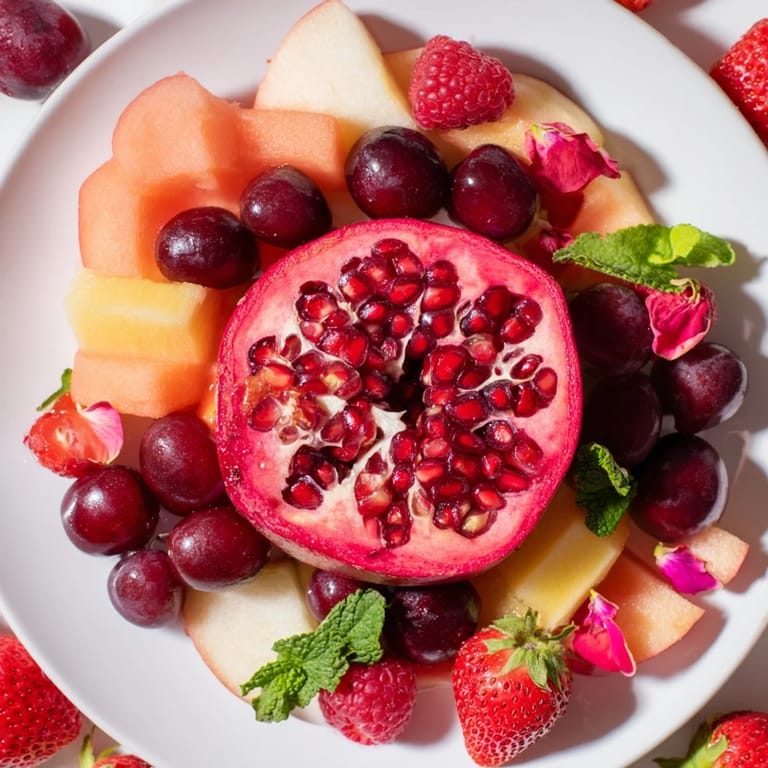
Save I discovered the power of a pomegranate the way most people do—by making a mess of one at a dinner party. But instead of rushing to clean up those jewel-like seeds scattering across my cutting board, I paused and really looked at them. That deep crimson against the cream flesh sparked something: what if I built an entire platter around that color story? The result became my favorite thing to bring when I want to impress without stress, a fruit arrangement that somehow makes people slow down and actually notice what they're eating.
I made this for the first time during a particularly gray spring when I really needed something that felt alive on the table. My daughter stood at the counter while I was arranging it and said, "Mom, this looks like a sunset," and suddenly I understood why I'd been so drawn to the idea. That platter became the centerpiece of a lunch where everyone lingered longer than usual, talking and tasting, because the food itself demanded a moment of attention.
Ingredients
- 1 large pomegranate, halved: This is your showstopper, the focal point that justifies the entire arrangement—choose one that feels heavy for its size, a sign of juice-filled arils inside.
- 1 cup dark cherries, pitted: Their deep burgundy is the richest note you'll hit; pit them ahead of time because it's the one tedious part, but it's worth it.
- 1 cup red grapes: These hold their shape beautifully and catch the light in a way that draws the eye inward toward your pomegranate.
- 1 cup strawberries, hulled: Look for ones that are firm but fragrant; they're the bridge between the deep reds and the softer pinks.
- 1 cup raspberries: Handle these gently and add them last, just before serving, because they bruise if you breathe on them wrong.
- 1 cup watermelon, cubed: The pale pink variety, if you can find it, creates a gentler transition than the hot pink; its sweetness also balances any tartness.
- 1 cup pink grapefruit segments: These bring a slight tang that keeps the platter from feeling one-note sweet.
- 1 cup dragon fruit, cubed: Its pale pink and tiny black seeds add an unexpected elegance and a mild, clean flavor.
- 1 cup apple slices (pink or blush varieties): Pink Ladies or Honeycrisps work beautifully; toss them in a little lime juice the moment you slice them.
- 1 cup pear slices: These are your palest element and should be added close to serving time to prevent browning.
- Fresh mint leaves and edible rose petals (optional): These aren't just garnish—they add aroma and that final touch of intention.
Tired of Takeout? 🥡
Get 10 meals you can make faster than delivery arrives. Seriously.
One email. No spam. Unsubscribe anytime.
Instructions
- Set your stage:
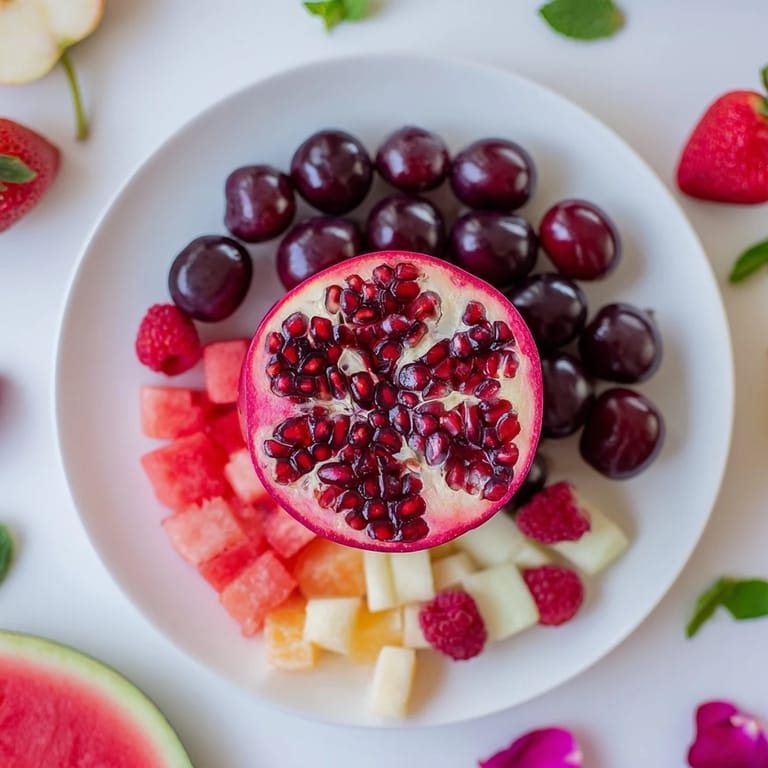
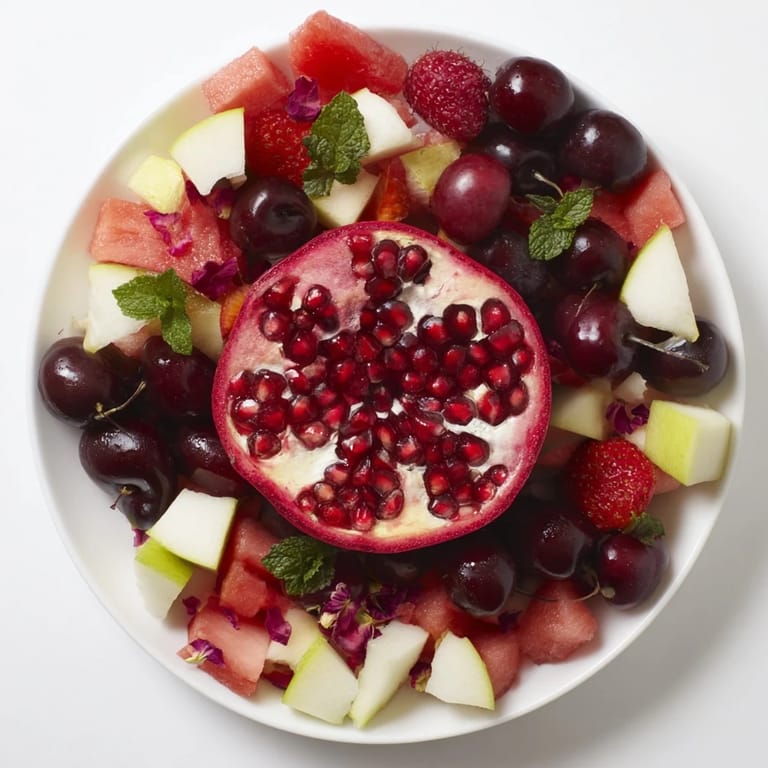
- Place your halved pomegranate cut-side up in the very center of a large, flat platter—this is your anchor, the reason for everything else. Step back and admire it for a moment; it's already beautiful.
- Build the deepest layer:
- Arrange your dark cherries, red grapes, and strawberries in a crescent or circle around the pomegranate, working as if you're painting with color. Let them overlap slightly, creating depth and movement.
- Transition into pink:
- Next come the raspberries, watermelon, and grapefruit segments, nestling beside the reds but distinct from them. This is where the gradient magic happens.
- Fade to pale:
- Layer your dragon fruit, apple slices, and pear slices toward the outer edge of the platter, creating a gentle fade from deep crimson to blush. The eye should travel from center outward like a sunset.
- Finish with flourish:
- Scatter fresh mint leaves and rose petals across the arrangement, tucking them into gaps and along the outer edge. Cover and refrigerate until guests arrive, or serve immediately while everything is at its crispest.
 Save
Save What I love most about this platter isn't just how it looks, though that's undeniable. It's the conversations that happen around it—people actually talking to each other instead of scrolling, pointing out their favorite fruit, wondering why this one simple thing feels special. That's when I remember that food is really just an excuse to slow down together.
The Art of the Gradient
Color gradients are easier than you might think, and this platter is the perfect place to practice. Think of it like ombré hair or a sunset—you're not aiming for perfect lines but rather a gentle flow from one shade to the next. The key is letting each fruit category have its own loose zone on the platter rather than scattering them randomly. This doesn't require precision; in fact, a little organic randomness within each color family makes it look more intentional, like you understood something about beauty that goes beyond following rules.
Seasonality and Substitutions
The magic of this platter is that it adapts beautifully to what's actually in season where you live. In summer, swap in fresh cherries, peaches, and nectarines. In fall, try red currants and pomegranate seeds for extra jewel tones. In winter, persimmons and pomelos work wonderfully. I've made this platter twelve different ways depending on what the farmer's market was offering, and every version has been stunning. The color story remains the same even when the cast of characters changes.
Serving and Storage Wisdom
This platter is best served within an hour or two of assembly, which is actually freeing because it means you can prep everything in the morning and arrange it right before guests arrive. If you need to make it further ahead, hold off on the raspberries and soft fruits until the last possible moment, and definitely add that squeeze of lime juice to the apples and pears to buy yourself a little more time. Keep the platter on a cool surface or lightly covered in the refrigerator, and remember that it's just as beautiful served cold as it is at room temperature.
- Assemble the platter up to two hours before serving for the best texture and visual impact.
- Drizzle lime juice on pears and apples just before serving to prevent oxidation.
- This pairs beautifully with sparkling rosé or sparkling water infused with fresh herbs.
 Save
Save This platter is proof that sometimes the most memorable dishes aren't complicated—they're just thoughtful. Serve it with the confidence of someone who knows that the real gift isn't the food itself, but the moment you've created for people to gather around it.
Recipe Guide
- → How do I prevent browning of the apple and pear slices?
Lightly drizzle the apple and pear slices with lime juice to help maintain their fresh color and prevent browning.
- → Can I substitute any fruits in this arrangement?
Yes, seasonal options like red currants, pomegranate seeds, lychees, or peaches work well to maintain color balance and freshness.
- → What's the best way to arrange the fruits for visual effect?
Layer the fruits in overlapping rows with smooth color transitions, starting from the halved pomegranate center outward for a stunning gradient effect.
- → Are there any allergens to watch for in this platter?
None of the core fruits contain common allergens. Just ensure any garnishes you add are nut-free and safe for guests with allergies.
- → What utensils are recommended for assembly?
Use a sharp paring knife to slice fruits neatly, a large serving platter for arrangement, and small bowls to organize fruit portions before placing them.