 Save
Save The first time I tasted Yemeni saltah, I was sitting cross-legged on a low cushion in a friend's kitchen, watching steam rise from a bowl that seemed to shift and transform as she stirred it—bread softening into the broth, meat becoming impossibly tender, and then she spooned this cloud of fenugreek foam on top that smelled like nothing I'd encountered before. That foam, which they call hulbah, was the magic trick I didn't know existed, and once I learned to make it, I understood why this dish had sustained families through generations. It's not fancy or complicated, but it moves you from the first spoonful.
I made this for a small gathering last winter, and what struck me most wasn't the compliments—it was how everyone stopped talking while they ate, how they kept going back for more, how someone asked if they could have the recipe to make it for their own family. That's when I realized saltah isn't just food; it's an invitation into someone else's story.
Ingredients
- Beef or lamb, cubed: Cut into roughly 2 cm pieces so they stay tender without falling apart during the long simmer; lamb adds deeper flavor but beef is more accessible and works beautifully.
- Vegetable oil: A neutral oil is essential here because you want the spices to shine, not compete with the oil's own personality.
- Onion and garlic: These create the aromatic foundation that makes the whole kitchen smell like something important is happening.
- Tomatoes: Fresh tomatoes add brightness and acidity that balances the richness of the meat and the earthiness of the fenugreek.
- Green chili: Optional but highly recommended—it adds a gentle heat that brings all the flavors into focus without overwhelming anything.
- Potato and carrot: They soften into the broth and add body, but they also soak up the spiced liquid in a way that makes each piece taste like the essence of the stew.
- Cumin, coriander, turmeric, and ground fenugreek: This spice blend is what makes saltah distinctly Yemeni; toast them lightly in your mind's eye before adding them so you can almost smell their transformation.
- Ground fenugreek seeds for hulbah: This is the star ingredient that makes this dish unforgettable—when whipped with water, it becomes an airy foam that tastes nutty and slightly sweet, nothing like what you'd expect from a seed.
- Flatbread: Yemeni malawah or lahoh are ideal, but pita works if that's what you have; the bread is your vehicle for soaking up every drop of broth.
Tired of Takeout? 🥡
Get 10 meals you can make faster than delivery arrives. Seriously.
One email. No spam. Unsubscribe anytime.
Instructions
- Sear your meat and build the base:
- Heat oil in a large pot over medium heat until it shimmers, then add onions and cook until they turn golden and soft, which takes about 5 minutes and fills your kitchen with the most welcoming smell. Add garlic and chili, let them bloom for a minute, then add your meat cubes and let them brown on all sides—don't rush this, because the caramelization is where flavor lives.
- Layer in the aromatics and spices:
- Once the meat has some color, stir in your chopped tomatoes, potatoes, carrots, and all your spices at once, coating everything in that golden, fragrant mixture. Cook for about 5 minutes, stirring occasionally, until the raw spice smell mellows into something deeper and more inviting.
- Simmer until everything surrenders:
- Pour in your water or broth, bring everything to a boil, then reduce heat to low, cover the pot, and let it simmer for 1 to 1.5 hours until the meat is so tender it practically dissolves on your tongue and the vegetables have softened into the broth. The longer, slower simmer makes a difference—rush it and you'll have tough meat; honor the time and you'll understand why this stew is legendary.
- Create the hulbah while the stew cooks:
- Soak your ground fenugreek seeds in cold water for about an hour, then drain off the excess water and whisk or beat the soaked seeds vigorously with a fork or small whisk until it transforms into a light, fluffy foam that looks almost like whipped cream. Once you have that foam, fold in your diced tomato, fresh cilantro, minced chili, lemon juice, and a pinch of salt—this is where the hulbah becomes truly magical.
- Assemble with intention:
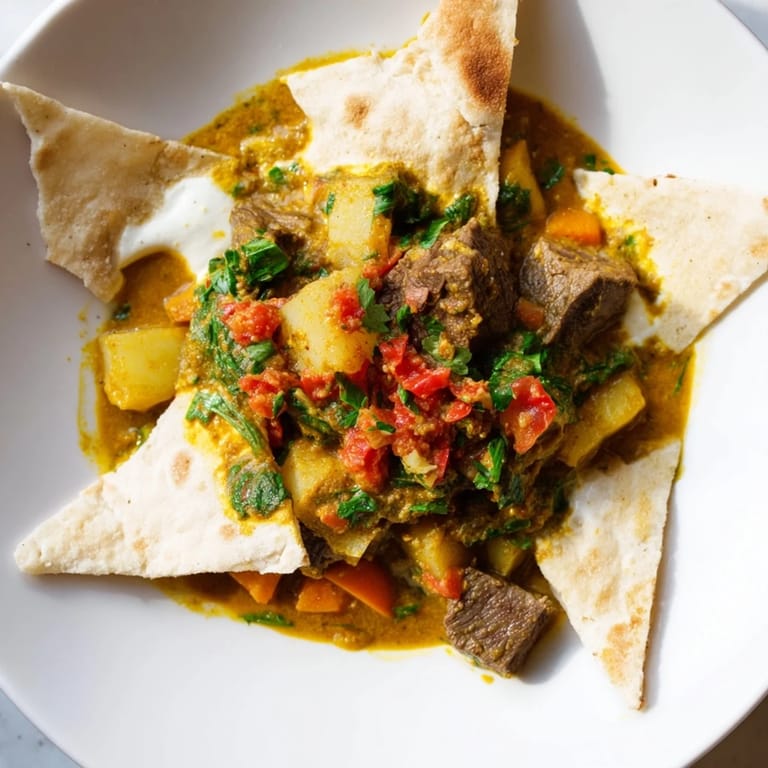
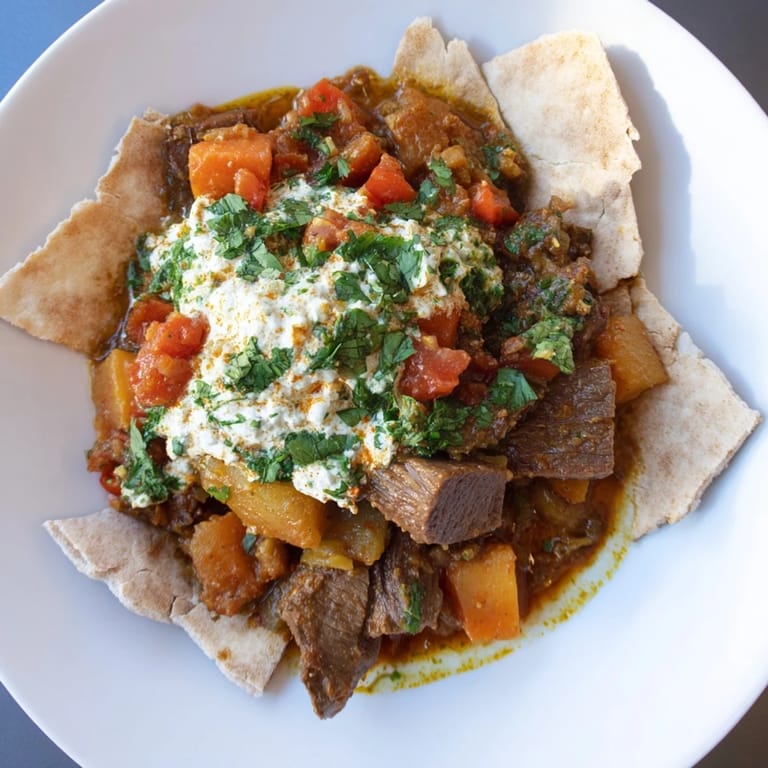
- Tear your flatbread into bite-sized pieces and spread them across the bottom of serving bowls, then ladle the hot stew over the bread so it's soaked but not completely submerged. Top each bowl generously with the hulbah foam, and serve immediately so everyone gets to experience that moment when the warm broth meets the cool, creamy foam.
 Save
Save There's a moment in every saltah experience where the three layers come together on your spoon—the tender meat, the soaked bread, and that ethereal hulbah foam—and it tastes like something both ancient and entirely new. That's when you understand why this dish matters beyond sustenance.
The Story Behind the Hulbah
Fenugreek has been used in Yemeni cooking for centuries, prized not just for its flavor but for the way it transforms when whipped with water into something almost unrecognizable. I spent one afternoon in a friend's kitchen trying to understand the chemistry of it, watching as her grandmother's hands moved with certainty over that little bowl of soaked seeds, her fork creating this miraculous foam as if by magic. She explained that the texture comes from the natural starches and gums in the fenugreek, which break down and trap air when beaten, creating something that's part sauce, part mousse, entirely addictive. What I learned that day was that patience with technique—understanding why something works, not just following steps—transforms cooking from a chore into something almost spiritual.
Adapting Saltah to What You Have
The beauty of saltah is that it's forgiving in some ways and uncompromising in others—you can swap vegetables based on what you have and what the season offers, but the fenugreek foam and slow-simmered broth are non-negotiable elements. I've made this with beef when lamb was too expensive, with whatever root vegetables were in the crisper drawer, and even once with chicken breast because it was what was available, and while each version had its own character, the framework stayed intact. What changed things most was learning that this stew actually improves if you make it a day ahead and reheat it gently; the flavors meld and deepen overnight in a way that makes you think about cooking differently.
Serving Suggestions and Final Touches
Saltah is traditionally served family-style, with everyone gathered around, mixing their own bowl and customizing with extra cilantro, hot sauce, or additional lemon juice based on personal preference. Some families offer zhug, a bright Yemeni herb sauce made with cilantro, mint, and green chilis, as an optional condiment that adds a different kind of heat and freshness. I've learned that the ritual of assembly—everyone tearing bread, everyone deciding how much hulbah they want—is as much a part of the experience as the eating itself.
- Make extra hulbah if you're feeding a crowd because people will want more once they taste it, and there's never quite enough of that foam.
- If you can't find malawah or lahoh, warm your flatbread slightly before tearing it; it tears more cleanly and holds up better to the hot broth.
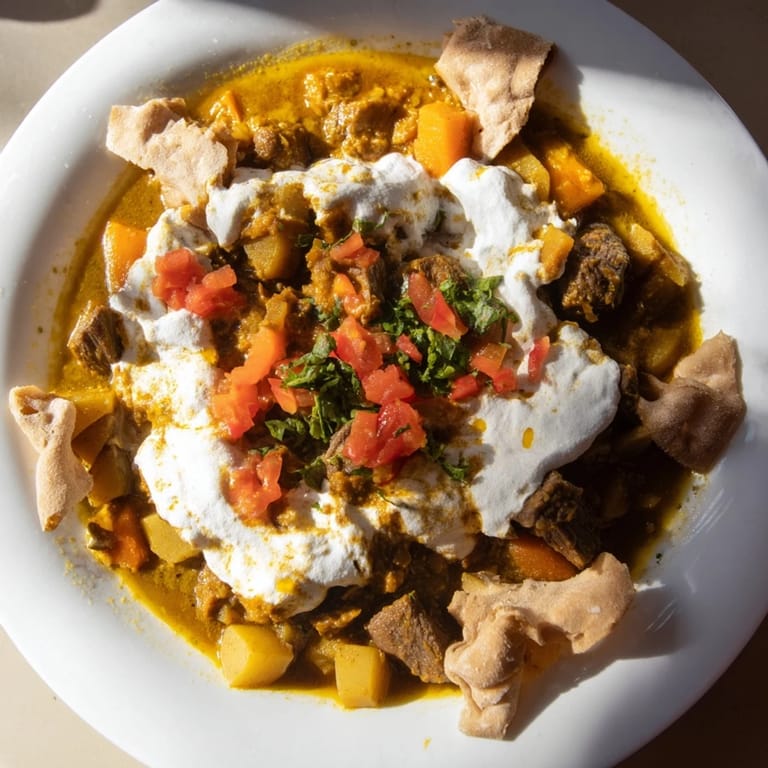
- Serve this in wide, shallow bowls where all three layers are visible and accessible—it elevates the whole experience.
 Save
Save Making saltah taught me that some dishes are vessels for connection, and this one carries generations of flavors and stories in every spoonful. I hope it becomes a favorite in your kitchen too.
Recipe Guide
- → What type of meat is best for this stew?
Beef or lamb cut into medium cubes works best, providing tender, flavorful bites after slow simmering.
- → How is the fenugreek foam (hulbah) prepared?
Ground fenugreek seeds are soaked in water, then vigorously whipped until light and fluffy before mixing with tomato, cilantro, chili, and lemon juice.
- → Can I use a substitute for the flatbread layer?
Yes, Yemeni flatbreads like malawah or lahoh are traditional, but pita or naan can also be used effectively.
- → Is it possible to make a vegetarian version?
Omit the meat and add additional root vegetables or beans to maintain a hearty texture and flavor.
- → What spices are essential for the broth?
Ground cumin, coriander, turmeric, black pepper, and fenugreek create the distinctive, aromatic base of the stew.