 Save
Save There's something about the smell of onions slowly turning golden that stops you in your tracks. My neighbor knocked on my door one October evening, drawn by that exact aroma wafting through our shared wall, and suddenly I was ladling bowls of French onion soup for someone I'd only waved to in passing. That's when I realized this humble soup had a quiet kind of magic—the kind that brings people together without fanfare.
I made this soup for my brother on his first night back after months away, and watching him taste it felt like a small homecoming ceremony. He closed his eyes on the first spoonful, and I knew right then that this recipe had become part of our family's rhythm—the kind of dish you make when you want someone to feel truly seen and cared for.
Ingredients
- 6 large yellow onions, thinly sliced: Yellow onions are sweeter than other varieties, which means they caramelize into something genuinely luxurious; don't skip the slicing step by hand, as a food processor creates too much moisture.
- 3 tbsp unsalted butter & 1 tbsp olive oil: Butter gives richness while olive oil prevents burning during that long, slow caramelize—the combination is non-negotiable.
- 1 tsp sugar & 1 tsp salt: A tiny pinch of sugar accelerates caramelization and deepens the natural sweetness; salt draws out moisture early on, helping the onions break down.
- 2 cloves garlic, minced: Add this late in the process so it doesn't brown and turn bitter alongside the onions.
- 2 tbsp all-purpose flour: This creates a subtle roux that thickens the soup just enough to make it feel substantial without being stodgy.
- 1/2 cup dry white wine: Use something you'd actually drink; the wine's acidity brightens everything and its alcohol cooks off, leaving only flavor.
- 6 cups beef broth: This is where the soul of the soup lives—a good broth makes all the difference, so choose quality or make your own if you have time.
- 2 sprigs fresh thyme & 1 bay leaf: Fresh herbs are gentler and more floral than dried; remove them before serving so no one finds a leaf in their spoon.
- 1 small sourdough baguette, sliced into 1/2-inch rounds: The slight tang of sourdough stands up beautifully to the sweet onions and sharp cheese.
- 1 cup Gruyere cheese, grated: Gruyere melts into silky, nutty perfection; pre-grate it yourself from a block for better melting than pre-shredded.
- 1/2 cup Parmesan cheese, grated (optional): Adds a salty, umami punch that makes people ask what your secret ingredient is.
Tired of Takeout? 🥡
Get 10 meals you can make faster than delivery arrives. Seriously.
One email. No spam. Unsubscribe anytime.
Instructions
- Melt butter and oil, prepare your onions:
- Use a large, heavy-bottomed pot—it distributes heat evenly and prevents scorching. Medium heat is your friend here; rushing with high heat creates bitter, burnt onions instead of that deep, sweet caramel.
- Begin the long caramelize:
- Add sliced onions with sugar, salt, and pepper, then stir frequently for 35–45 minutes. You'll watch them transform from pale and juicy to amber and concentrated; this patience is the entire technique, so embrace it and maybe read a book nearby.
- Add garlic and flour:
- Once onions are properly golden, stir in minced garlic for just one minute—enough to release its flavor but not burn it—then sprinkle flour over everything and cook for 2 minutes, stirring constantly to coat the onions evenly.
- Deglaze with wine:
- Pour in white wine and scrape the bottom of the pot with your wooden spoon to lift all those browned, flavorful bits. Simmer for 2–3 minutes to cook off the sharp alcohol taste, leaving only the wine's depth behind.
- Build the broth:
- Add beef broth, thyme sprigs, and bay leaf, then bring gently to a boil before lowering heat to a quiet simmer for 25–30 minutes. The soup should barely bubble; aggressive boiling muddles the delicate flavors you've built.
- Toast your bread while soup simmers:
- Preheat oven to 400°F, arrange baguette slices on a baking sheet, brush lightly with olive oil, and toast for 5–7 minutes until they're golden and crisp but still have a slight chew inside.
- Top crostini with cheese:
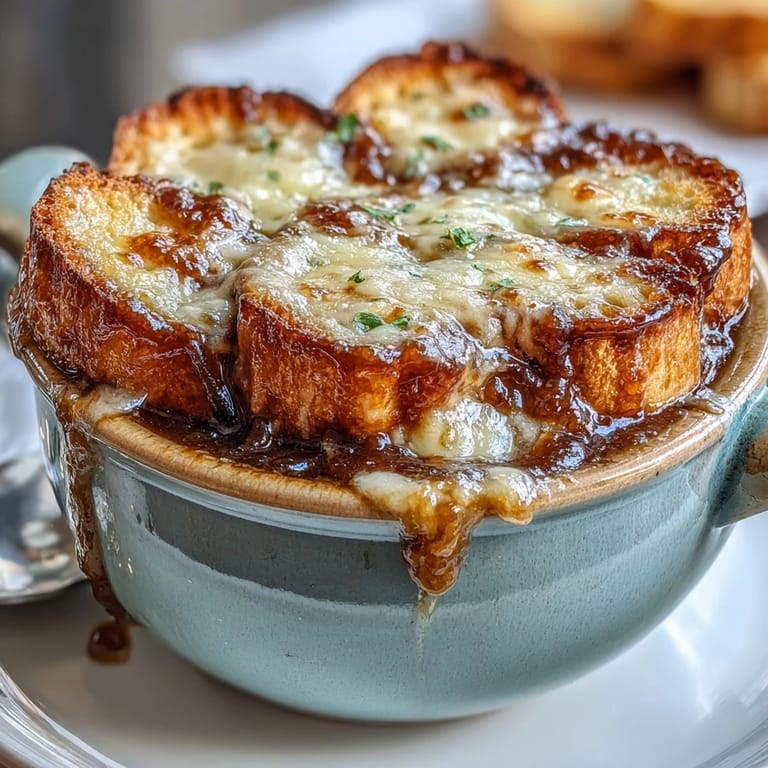
- Pile Gruyere (and Parmesan if using) onto each warm toast, then return to the oven for 3–4 minutes until the cheese melts into a bubbling, golden layer. If you want extra indulgence, broil for 1–2 minutes instead for a darker, crispier top.
- Taste, adjust, and serve:
- Remove thyme sprigs and bay leaf from the soup, then taste and add more salt and pepper as needed. Ladle into bowls, top with a warm crostini, and serve immediately while the cheese is still melty and the soup steams.
 Save
Save There's a moment when you ladle the first bowl and watch the steam rise, when the cheese on top is still bubbling slightly and the onions have released their whole soul into the broth. That's when you understand why this soup has been beloved for centuries—it's not complicated, but it's completely honest.
The Caramelization Secret
I spent years making this soup and wondering why mine never looked as dark and beautiful as restaurant versions, until I realized I was getting impatient and turning up the heat. Low and slow is the only rule that matters; the onions release their natural sugars gradually, and high heat just burns them instead. Once you stop fighting the clock and let them do their thing, the color deepens on its own, rich and mahogany-brown, like nothing you could fake.
Why Quality Broth Changes Everything
A homemade beef broth will make this soup sing in ways store-bought can't quite reach, but I'm realistic—not everyone has hours for stock. If you're buying broth, spend a little extra on something from the butcher or a quality boxed brand; the difference shows up immediately in depth of flavor. Weak broth means the onions have to carry the whole dish, which they can do, but they shouldn't have to.
Timing and Temperature Tips
The beauty of this recipe is that you can build it in layers—caramelize your onions earlier in the day if you want, then finish the broth an hour before serving. Oven-safe bowls make the optional broil step easier, and room-temperature bowls might crack from the heat, so warm them first or just serve in regular bowls with the crostini balanced on top.
- If your broth is cold, warm it slightly before adding to the onions so the soup heats through evenly without shocking the pot.
- The crostini can be toasted an hour ahead and stored in an airtight container; add cheese and final bake just before serving for maximum crispness.
- This soup tastes even better the next day once flavors have mingled, so make it ahead without guilt.
 Save
Save This soup is a reminder that some of the best dishes in cooking come from restraint—just onions, time, and patience, allowed to become something greater than their parts. Make it for someone you want to impress, or make it just for yourself on a cold evening and understand why people have loved it for generations.
Recipe Guide
- → How do I caramelize onions perfectly for this soup?
Cook thinly sliced onions slowly over medium heat with butter and oil, stirring frequently until deep golden and soft, which usually takes 35–45 minutes.
- → Can I make this dish vegetarian?
Yes, substitute the beef broth with vegetable broth and omit the Parmesan cheese for a vegetarian friendly version.
- → What cheeses work well on the crostini?
Gruyere is classic for its melting qualities and flavor, but you can also use Emmental or Swiss cheese as alternatives.
- → How do I achieve crispy, golden crostini?
Brush sourdough slices with olive oil, toast at 400°F (200°C) for 5–7 minutes until golden, then top with cheese and bake again until bubbly.
- → Can I add extra richness to the soup?
A splash of brandy or sherry added before serving can enhance depth and warmth in the flavor profile.
- → What herbs complement the onion soup?
Fresh thyme and bay leaf provide subtle earthy and aromatic notes, elevating the broth's complexity.