 Save
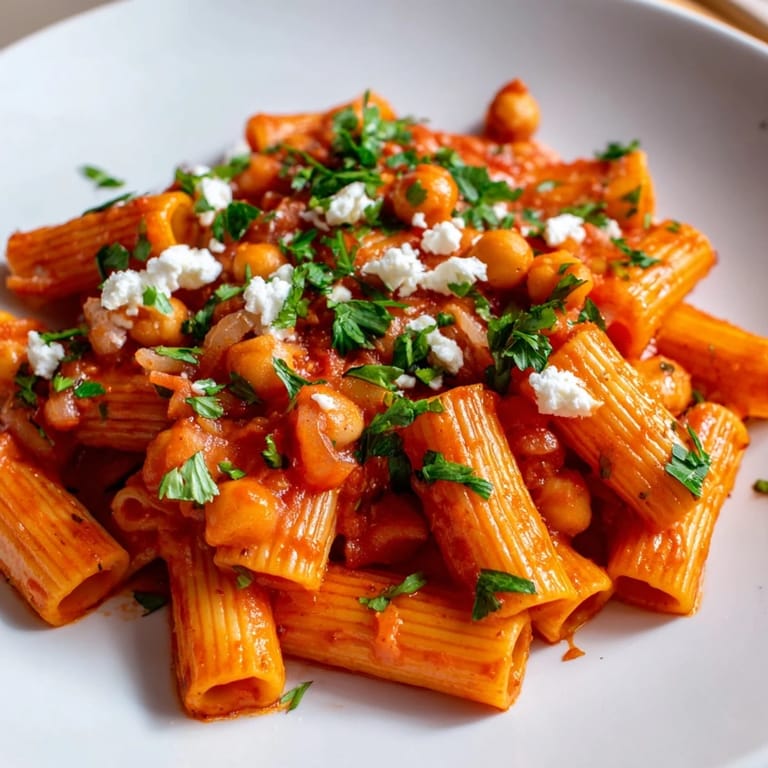
Save I discovered harissa pasta on a rainy Tuesday when I had nothing in my pantry except chickpeas and that red tube of harissa I'd bought months earlier. I didn't have a plan, but I knew harissa belonged with tomatoes, and tomatoes belonged with pasta. Twenty-five minutes later, I was twirling a fork through something so alive with spice and depth that I couldn't believe it came from impulse. That dish taught me that some of the best meals aren't planned—they're stumbled upon.
My sister came over one evening when I made this, and she actually paused mid-bite and asked what I'd done differently to the pasta. Nothing fancy, I told her—just good ingredients and a sauce that knows what it wants. She asked for the recipe that night, and now it's her go-to when she needs something fast but feels like a proper meal.
Ingredients
- Dried short pasta (penne, rigatoni, or fusilli): 350 g of any shape that catches sauce well—the ridges and tubes are your friends here, holding onto every spicy drop.
- Olive oil: 2 tbsp as your base, the foundation for coaxing out garlic and spice.
- Medium onion, finely chopped: This is your sweetness and body; don't rush the chopping.
- Garlic cloves, minced: 3 cloves, because harissa without garlic feels incomplete.
- Harissa paste: 2 tbsp (adjust up or down based on your courage and palate)—this is where the personality lives.
- Ground cumin: 1 tsp to echo the North African warmth already in the harissa.
- Smoked paprika: 1/2 tsp for depth without adding extra heat.
- Diced tomatoes, canned: 400 g because canned tomatoes are reliable, bright, and often better than fresh ones trying too hard.
- Chickpeas, drained and rinsed: Two 400 g cans for protein and substance that makes this feel complete.
- Vegetable broth or water: 1/2 cup to let the sauce breathe and coat everything evenly.
- Lemon: Zest and juice from 1 whole lemon to finish—this brightness is what transforms good into unforgettable.
- Fresh parsley or cilantro, chopped: 2 tbsp for color and a final herbal lift.
- Feta cheese, crumbled: Optional, but tangy and welcome if you want it.
- Salt and black pepper: To taste, tasted thoughtfully at the end.
Tired of Takeout? 🥡
Get 10 meals you can make faster than delivery arrives. Seriously.
One email. No spam. Unsubscribe anytime.
Instructions
- Set your water to boil:
- Fill a large pot with water, salt it generously—the water should taste like the sea—and bring it to a rolling boil. This is the stage that makes pasta taste like itself, not just starch.
- Cook the pasta:
- Add your pasta and cook to al dente, which means it has a tiny bit of resistance when you bite it. Reserve 1/2 cup of that starchy water before draining; it's liquid gold for loosening sauce later.
- Start the sauce base:
- While pasta bubbles away, warm olive oil in a large skillet over medium heat. Add the chopped onion and let it soften for 4 to 5 minutes until it turns translucent and starts to smell sweet.
- Build the spice:
- Stir in the minced garlic, harissa paste, cumin, and smoked paprika, letting them cook together for about a minute until the kitchen smells like North Africa and your mouth starts to water.
- Add the tomatoes and chickpeas:
- Pour in the diced tomatoes with their juice and add the drained chickpeas. Stir in the vegetable broth and season with salt and pepper—taste as you go, remembering that harissa is already bringing heat.
- Let it simmer:
- Cover the skillet and let the sauce bubble gently for 10 to 12 minutes, stirring now and then. You'll watch it thicken, deepen in color, and smell even better as the spices settle into the tomatoes.
- Bring it together:
- Add the cooked pasta to the skillet, tossing everything with a wooden spoon so each strand gets coated in sauce. If it looks too thick, add a splash of that reserved pasta water to loosen it just slightly.
- Finish with brightness:
- Remove from heat and stir in the lemon zest, lemon juice, and chopped herbs. Taste one more time and adjust the salt or heat as needed—this final moment is where the dish comes alive.
- Plate and serve:
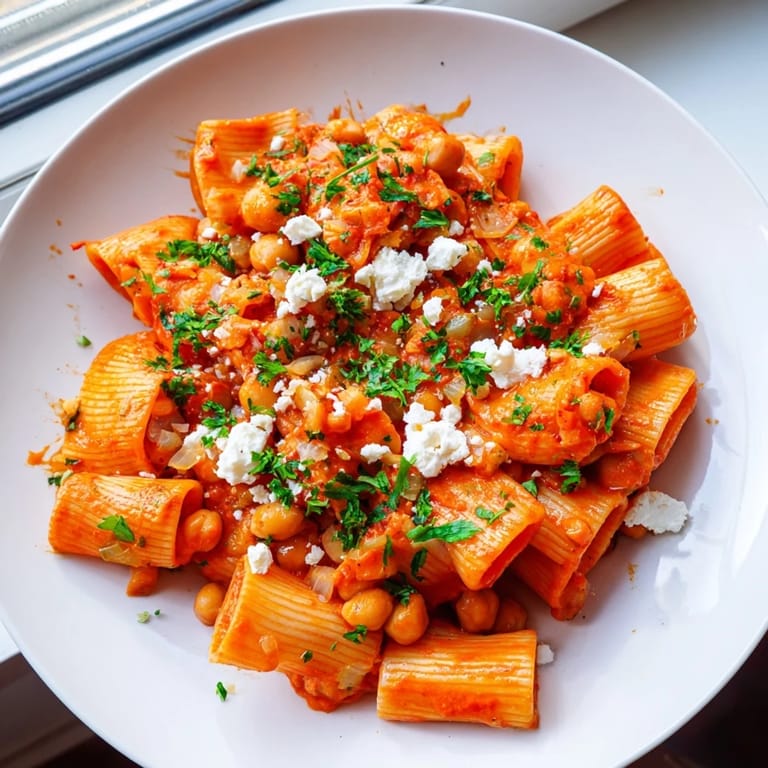
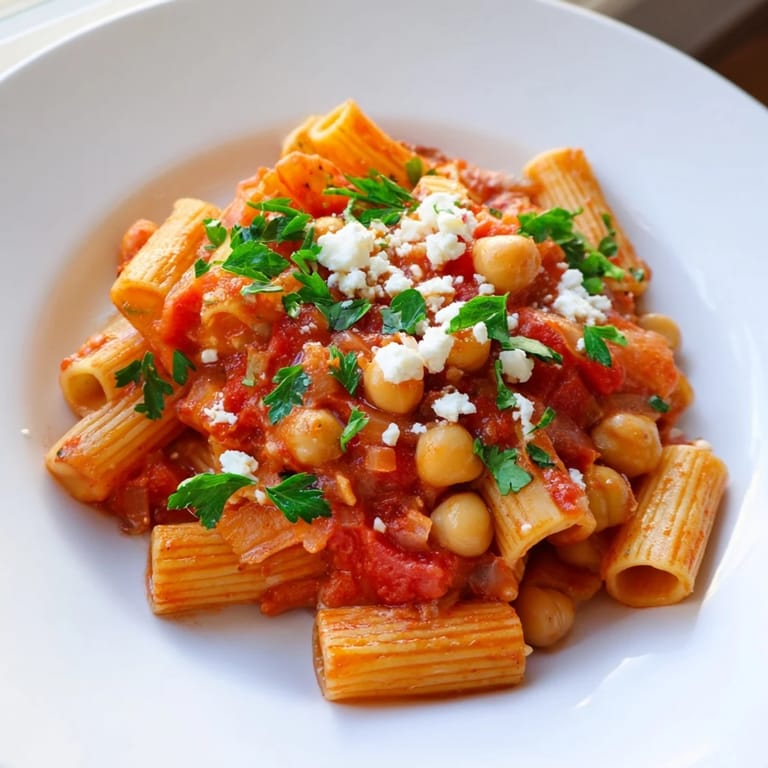
- Serve hot into bowls, finishing with more fresh herbs and crumbled feta if you're using it. This is a dish that rewards generosity with the garnish.
 Save
Save I learned something important making this pasta repeatedly: it's one of those rare dishes that tastes good warm, becomes even better at room temperature the next day, and somehow transforms into a completely different (but still excellent) experience eaten cold straight from the container at your desk. I've done all three, depending on the day.
Why Harissa Works Here
Harissa is a North African chile paste that feels like it was invented specifically for moments when you want warmth and complexity without fussing over multiple spices. It brings red pepper, garlic, coriander, and other layers all at once, so you don't have to build a spice cabinet just to make one pot of pasta. When you pair it with the sweetness of tomatoes and the earthiness of chickpeas, something almost magical happens—the heat becomes refined instead of aggressive, the flavors feel like they've known each other for years.
How to Make This Your Own
This recipe is forgiving because its bones are strong, which means you can play with it confidently. Some nights I add a handful of spinach or roasted red peppers; other times I've stirred in white beans instead of chickpeas or thrown in some sautéed zucchini. I've even crumbled a piece of feta directly into the pasta and let it get warm and creamy. The thing is, the sauce is bold enough to carry whatever you add, and the lemon and herbs are flexible enough to balance almost any variation.
The Moment This Became Essential
This pasta moved from my 'sometimes' rotation to my 'always have ingredients for' list when I realized how often I return to it when I'm tired but don't want to eat something unmemorable. It asks almost nothing of you in terms of technique or time, yet it delivers something that feels intentional and nourishing. It's become my reliable friend, the dish I make when I need to prove to myself that good food doesn't require complexity or stress.
- Keep harissa in the fridge after opening; it keeps for months and becomes more useful the longer you know how to use it.
- If you buy good feta, use it—the tang against the warm spice is something special worth noticing.
- Make extra sauce if you can; it's wonderful tossed with roasted vegetables the next day or stirred into yogurt as a dip.
 Save
Save This is a dish that asks very little and gives back generously—a quick dinner that feels like you actually tried, built on ingredients that keep and flavors that work. Make it tonight.
Recipe Guide
- → What type of pasta works best for this dish?
Short pasta shapes like penne, rigatoni, or fusilli hold the sauce well and provide the ideal texture.
- → How can the heat level be adjusted?
Increase or decrease harissa paste according to taste, or add chili flakes for extra spice.
- → Can chickpeas be substituted?
Yes, white beans or roasted vegetables can be used for variation while keeping the texture hearty.
- → What finishing touches enhance the flavor?
Lemon zest, lemon juice, and fresh parsley or cilantro add brightness and fresh contrast to the spicy sauce.
- → Is this suitable for dairy-free diets?
Omitting the optional crumbled feta makes the dish dairy-free without sacrificing flavor.