 Save
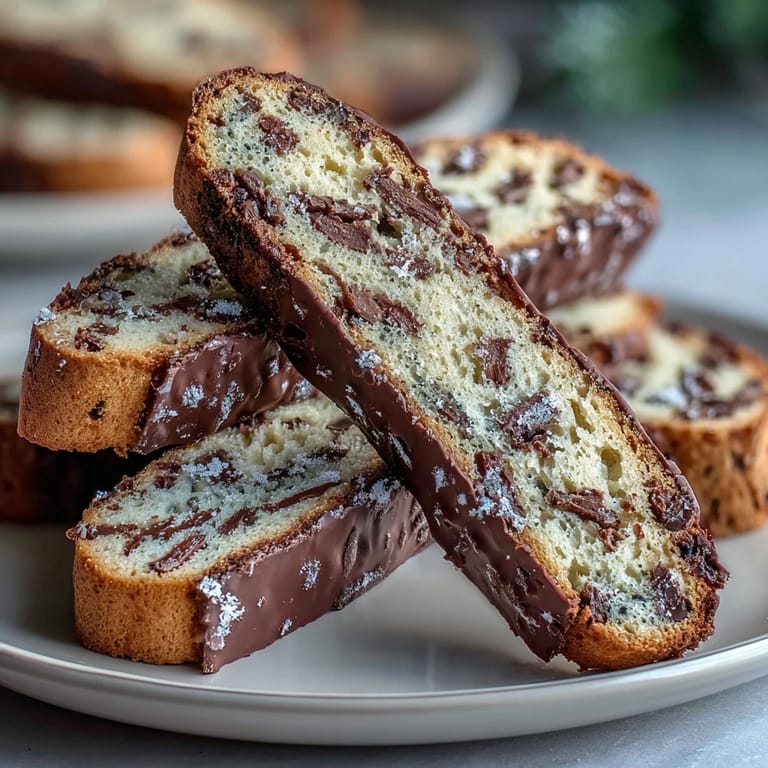
Save There's something about the smell of candied orange peel hitting a warm oven that makes you stop whatever you're doing. I discovered these biscotti on a gray afternoon when a friend brought a tin from her Italian grandmother's kitchen, and I couldn't stop dunking them in coffee until they were gone. Years later, I finally asked for the method, and what surprised me most wasn't the recipe itself but how alive these cookies felt in my hands during that twice-baking ritual. Now they're my answer to anyone who needs something elegant but not fussy, something that tastes like you spent hours when you really spent just over an hour.
I'll never forget my sister's face when she bit into one of these after I'd mastered the double-bake technique. She was sitting at my kitchen table at seven in the morning before work, holding her coffee in one hand and a biscotti in the other, not saying anything, just nodding. That's when I knew I'd gotten it right.
Ingredients
- All-purpose flour (2 cups): This is your foundation, so measure it right by spooning into the cup rather than scooping directly from the bag, which packs it too tight.
- Baking powder (1 1/2 teaspoons): It's what gives these cookies their tender crumb on the first bake, creating the perfect texture for slicing.
- Salt (1/4 teaspoon): A small amount that wakes up the chocolate and balances the sweetness without being noticeable.
- Large eggs (2): Room temperature eggs incorporate more evenly and help create that light, airy structure you want.
- Granulated sugar (2/3 cup): Beaten with eggs until pale, it aerates the dough and creates those tiny air pockets that make biscotti crisp.
- Unsalted butter, melted and cooled (1/4 cup): Melted butter keeps the dough tender rather than tough, and cooling it prevents cooking the eggs.
- Pure vanilla extract (1 teaspoon): Don't skip this or use imitation because it adds a subtle warmth that ties everything together.
- Fresh orange zest (1/2 teaspoon): This is where the magic starts, lending bright fragrance that makes people ask what that incredible smell is.
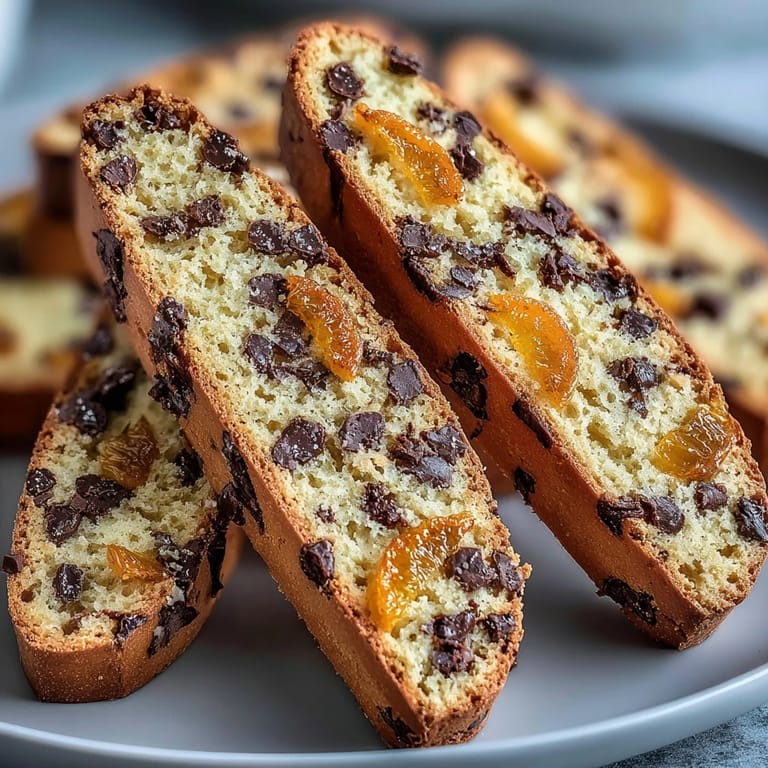
- Candied orange peel, finely chopped (3/4 cup): Buy quality candied peel or make your own, as cheap versions taste like plastic and ruin the whole experience.
- Dark chocolate 60-70%, roughly chopped (3/4 cup): The higher cocoa percentage stands up to the sweetness and won't disappear into the cookie.
Tired of Takeout? 🥡
Get 10 meals you can make faster than delivery arrives. Seriously.
One email. No spam. Unsubscribe anytime.
Instructions
- Set your stage:
- Preheat your oven to 350°F and line your baking sheet with parchment paper while it heats. This small act of preparation means you're never scrambling, and you actually enjoy the process.
- Build the dry base:
- Whisk together flour, baking powder, and salt in a medium bowl until the baking powder is evenly distributed. You want no lumps hiding anywhere.
- Create the wet mixture:
- Beat eggs and sugar in a large bowl until the mixture looks pale, fluffy, and slightly thick, about two minutes of steady beating. This is where air enters, and it matters more than you'd think.
- Bring it together:
- Whisk in your cooled melted butter, vanilla, and orange zest until smooth, then gently fold in the dry ingredients until just combined. Stop as soon as you don't see streaks of flour because overmixing toughens the dough.
- Add the good stuff:
- Fold in the candied orange peel and dark chocolate, distributing them evenly throughout. It's tempting to stir aggressively here, but gentle folding keeps the dough tender.
- Shape into logs:
- Divide dough in half and, with lightly floured hands, shape each half into a 10-inch log about 2 inches wide on your parchment-lined sheet. Space them at least two inches apart because they spread slightly.
- First bake:
- Bake at 350°F for 25 minutes until golden on top and the logs feel firm when you press gently. The kitchen will smell absolutely incredible at this point.
- Cool and prepare for slicing:
- Let the logs rest for 15 minutes until they're cool enough to handle but still warm, which makes slicing easier. During this time, reduce your oven to 300°F.
- Slice with precision:
- Using a serrated knife and gentle sawing motions, cut the logs diagonally into 3/4-inch slices, rotating the log occasionally so you don't flatten one side. Take your time here because neat slices bake more evenly.
- Second bake, first side:
- Arrange slices cut side down on the baking sheet and bake for 12 minutes at 300°F until the bottoms are dry and beginning to color. You're essentially toasting them to crispness.
- Flip and finish:
- Flip each biscotti and bake for another 10 to 12 minutes until both sides are dry and golden. They'll seem slightly soft coming out of the oven but will crisp as they cool completely.
- Cool completely:
- Transfer to a wire rack and let them cool entirely before storing or dipping in chocolate. This final rest period is when they achieve that perfect snap.
 Save
Save My neighbor once asked for a dozen biscotti to bring to a book club, and I watched through her kitchen window as she casually dunked one in her evening wine like it was the most natural thing in the world. That image stayed with me because it captured exactly what I love about these cookies: they're not trying too hard, but they make any moment feel a little more intentional.
The Art of the Double Bake
Biscotti literally means twice-baked in Italian, and this technique transforms a soft dough into something with genuine staying power. The first bake creates structure and sets the crumb, while the second bake at lower heat slowly removes moisture without browning the exterior. I learned this the hard way by trying to rush the process, and the resulting cookies were either too soft or slightly burnt on the edges. Now I treat it like meditation rather than a chore, checking them halfway through the second bake just to make sure they're crisping evenly.
Candied Orange Peel Wisdom
The quality of your candied orange peel absolutely determines whether these cookies taste homemade and elegant or cheap and artificial. I've used versions from three different sources, and the difference is staggering: some taste waxy and overly sweet, while others are bright and properly balanced. My favorite discovery was learning to chop it finely rather than leaving chunks because small pieces distribute flavor more evenly and create a more refined texture in the finished cookie.
Storage and Serving Secrets
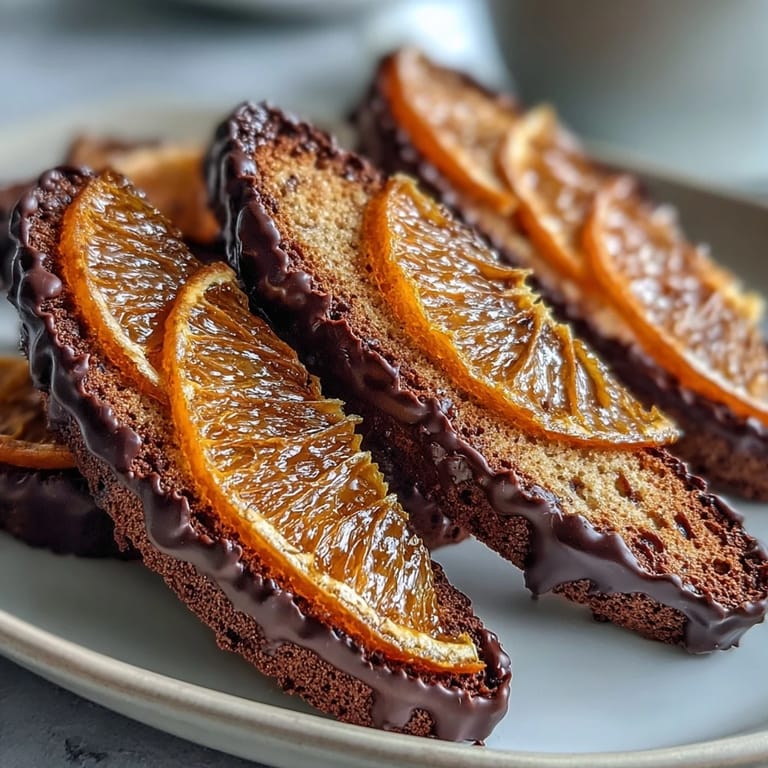
These biscotti are incredible because they actually improve slightly as they sit, becoming even crispier and allowing flavors to meld together. Store them in an airtight container at room temperature, and they'll keep for up to two weeks, which means you can make a batch and gradually enjoy them rather than finishing them all at once. For special occasions, dip one end in melted dark chocolate and let it set on parchment paper for an extra touch of indulgence.
- Check your airtight container for actual sealing because humidity is the enemy of crispness.
- If they soften slightly from humidity, pop them back in a 300°F oven for five minutes to re-crisp.
- Make them ahead for gifts because homemade biscotti always feels more thoughtful than store-bought cookies.
 Save
Save These candied orange and dark chocolate biscotti remind me that some of the best kitchen projects are the ones that feel simple but deliver real elegance. Make them when you want to impress without stress.
Recipe Guide
- → What makes biscotti crisp?
Twice baking the dough—first shaped into logs, then sliced and baked again—removes moisture and creates the signature crunch.
- → Can I substitute candied orange peel?
Yes, candied lemon peel or other citrus zest can provide a different but equally delightful citrus note.
- → What type of chocolate works best in these biscotti?
Dark chocolate with 60-70% cocoa content adds rich flavor and balances the sweetness from the candied orange peel.
- → How should biscotti be stored to maintain freshness?
Store in an airtight container at room temperature for up to two weeks to keep crispness intact.
- → Are these biscotti suitable for vegetarians?
Yes, they include no meat products but contain eggs and dairy, fitting a vegetarian diet.