 Save
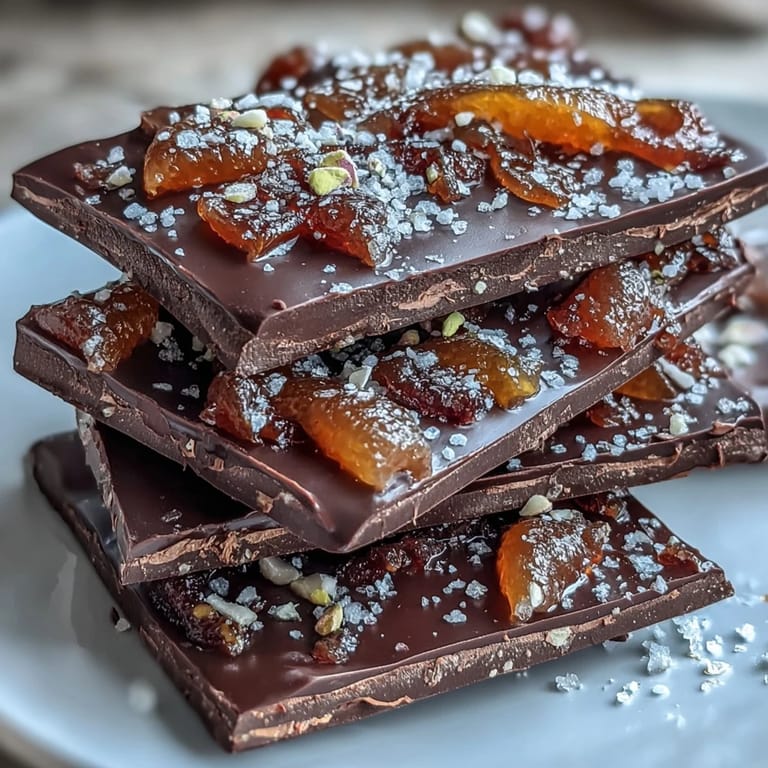
Save My friend texted me a photo of a chocolate bark she'd seen at a fancy chocolatier, and I remember thinking, why pay thirty dollars for something I could make in my kitchen on a Tuesday afternoon? The real magic wasn't the dark chocolate—it was the shock of bright, tangy candied orange peel breaking through all that bittersweet richness. I made my first batch almost by accident, melting chocolate while waiting for water to boil, and the candied peel just happened to be sitting on my counter. That happy accident became something I now make whenever I want to feel a little fancy without the fuss.
Last winter, I made this for my book club and watched everyone's faces light up when they tasted it—that moment when they realized the citrus wasn't overpowering, just singing underneath the chocolate. One person asked if I'd bought it from somewhere fancy, and I loved being able to say no, it came from my own hands. That's when I realized bark isn't just candy; it's a small, edible way to tell someone you thought of them.
Ingredients
- High-quality dark chocolate (70% cocoa), 300 g chopped: The cocoa percentage matters here—anything lower and the sweetness overpowers the orange, anything higher and it becomes too intense. I learned this by trial and a few slightly bitter batches, so buy chocolate you'd actually enjoy eating on its own.
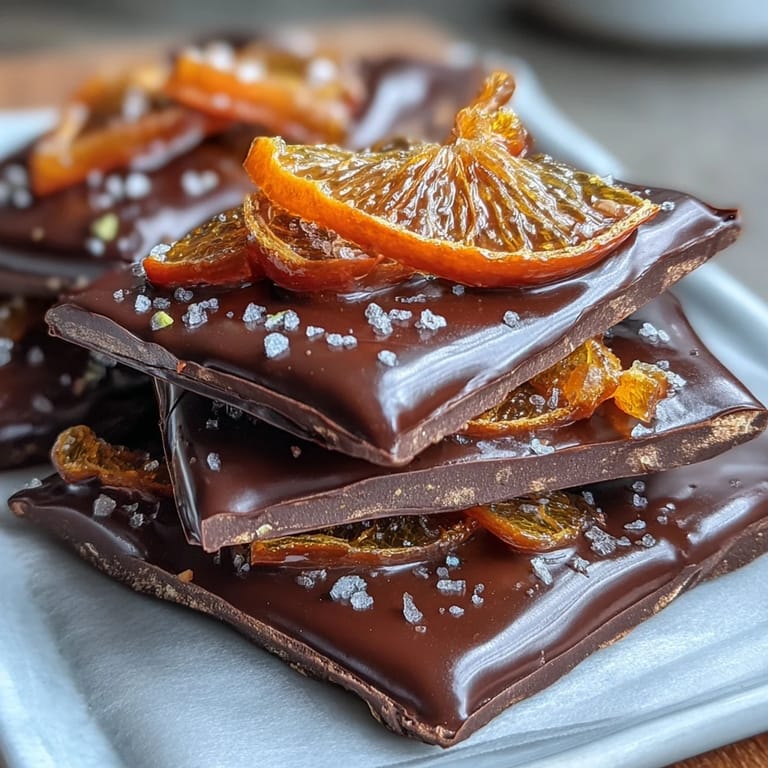
- Candied orange peel, 80 g finely chopped: This is your star ingredient, so don't skip it or substitute with something mediocre. Look for pieces that are vibrant and slightly chewy, not hard as rocks.
- Roasted pistachios, 2 tbsp chopped (optional): They add a subtle earthiness that keeps the bark from feeling one-note, plus a little textural surprise when you bite down.
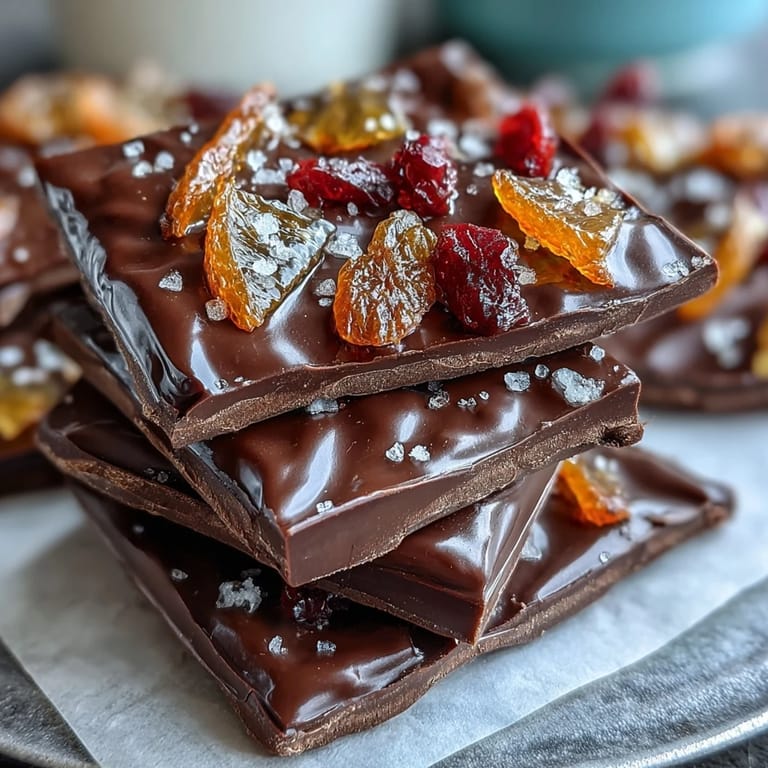
- Freeze-dried raspberries, 2 tbsp (optional): These bring a whisper of tartness and visual pop without adding moisture that could ruin your set.
- Sea salt flakes, pinch: Don't underestimate this—a tiny sprinkle brings everything into focus and makes the chocolate taste more chocolatey somehow.
Tired of Takeout? 🥡
Get 10 meals you can make faster than delivery arrives. Seriously.
One email. No spam. Unsubscribe anytime.
Instructions
- Set your stage:
- Line your baking sheet with parchment paper or a silicone mat—this is non-negotiable because bark sticks like it has a personal vendetta. Take a breath and gather everything you need before you start melting chocolate, because once the chocolate is soft and glossy, you won't want to hunt around.
- Melt gently:
- Use a double boiler if you have the patience, or melt the chocolate in thirty-second bursts in the microwave, stirring between each one. The key is coaxing the chocolate to silky perfection without overheating it—chocolate has feelings, I swear.
- Spread with intention:
- Pour the chocolate onto your prepared sheet and use an offset spatula to spread it into a rectangle about a quarter-inch thick. This thickness matters because too thin and the bark becomes brittle, too thick and it becomes candy you have to work your jaw on.
- Scatter your treasures:
- While the chocolate is still warm, scatter the candied orange peel evenly across the surface, then add pistachios, raspberries, and a pinch of salt if you're using them. Press everything down gently so the toppings nestle into the chocolate and stay put when you break it apart later.
- Let time do its work:
- Set the bark on your counter and let it firm up for an hour, or speed things along with the refrigerator for twenty to thirty minutes. You'll know it's ready when it's completely firm and breaks with a satisfying snap.
- Break and store:
- Cut or break the bark into twelve pieces—they don't have to be perfect or even the same size, honestly. Keep everything in an airtight container at room temperature, and it'll stay fresh and crisp for up to two weeks if you can resist eating it all in two days.
 Save
Save There's something deeply satisfying about breaking bark apart and hearing that clean crack of set chocolate, like you've accomplished something real. I gave a box to my neighbor once, and she told me months later that she'd been saving the pieces, eating just one with her morning coffee—which somehow mattered more to me than any compliment about the taste.
Choosing Your Chocolate Wisely
Don't buy chocolate from the baking aisle if you can help it—walk over to the fancy food section or better yet, find a real chocolatier nearby. The difference between decent and genuinely good dark chocolate becomes crystal clear once you taste them side by side, and this recipe is simple enough that every ingredient shows up in the final flavor. I used to think it was pretentious to care this much about chocolate, until I realized I was just defending my own mediocre choices.
Making It Your Own
This bark is a canvas if you want it to be, and some of my favorite versions have come from switching things up based on what I had on hand or what sounded good that day. I've done candied lemon peel for brightness, added dried lavender for a subtle floral note, and once tried crushed honeycomb and almost married it. The beauty is that chocolate and citrus are such a classic pairing that you can experiment without much risk of failure.
Storage and Gifting
This bark keeps beautifully, which makes it perfect for making ahead if you're gifting or just want to feel prepared for unexpected moments when you need something special to share. Layer it between parchment in a box with a ribbon, and it looks like you spent all day in the kitchen instead of barely thirty minutes. If you live somewhere warm, keep it in a cool spot or the chocolate might soften at the edges, which doesn't ruin it but does make it look less polished.
- Break the bark into pieces no bigger than you'd comfortably eat in one bite—people always prefer smaller pieces even if they don't admit it.
- If you're mailing this to someone, pack it tightly so pieces don't shift around and get broken, and maybe warn them not to leave it in a hot car.
- Make a double batch because you'll want to keep some for yourself once you taste it.
 Save
Save This little bark has become my quiet answer to wanting to make something feel special without overthinking it. Give it to people you like, keep some for yourself, and let the chocolate and orange do the talking.
Recipe Guide
- → What type of chocolate is best for this bark?
Use high-quality dark chocolate with around 70% cocoa for rich flavor and smooth melting.
- → Can I substitute another citrus for orange peel?
Yes, candied lemon peel works well to add a different bright citrus note.
- → How should I melt the chocolate to avoid burning?
Melt gently using a double boiler or microwave in short bursts, stirring frequently until smooth.
- → Are there nut-free topping alternatives?
Omit pistachios and use sunflower seeds or just fruit toppings to keep it nut-free.
- → How long does the bark keep fresh?
Store in an airtight container at a cool room temperature for up to two weeks to maintain freshness.