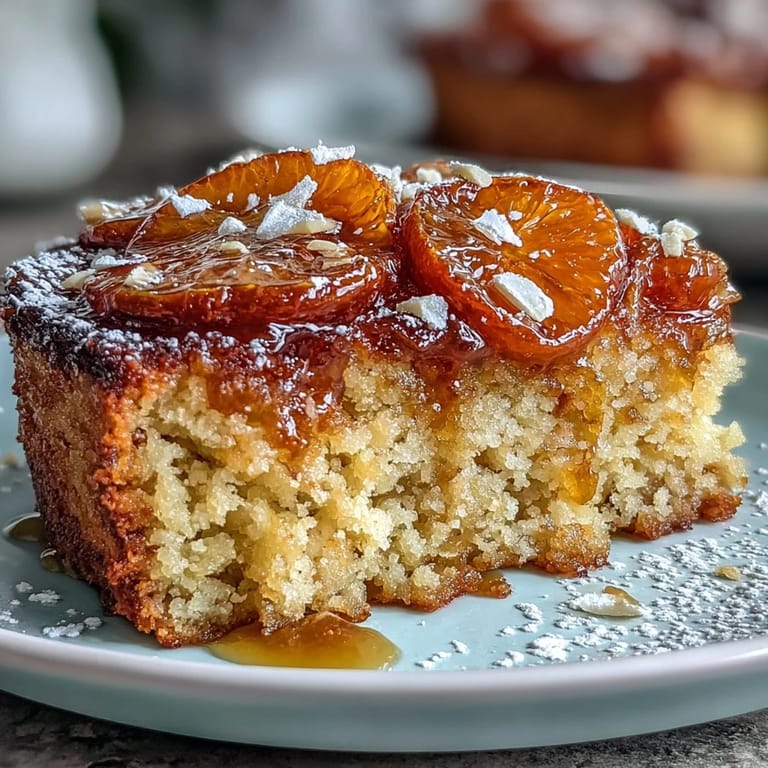
 Save
Save There's a particular afternoon I won't forget—sitting in a small café in Seville, watching a baker arrange candied orange slices on top of an almond cake like she was composing a painting. The scent of olive oil and citrus hung in the air, and I realized then that some desserts aren't just about sweetness; they're about balance. Years later, standing in my own kitchen with a batch of oranges I'd preserved myself, I finally understood what she was doing. This cake became my way of capturing that moment.
I made this for my neighbor who mentioned offhandedly that she missed her grandmother's baking. When she took that first bite and closed her eyes, something shifted in the kitchen. She told me it tasted like memory, which sounds dramatic until you've actually created that moment for someone else. That's when I knew this recipe mattered.
Ingredients
- 2 medium oranges, thinly sliced: The star of the show—slice them as thin as you can without losing patience, because those translucent rings are what make people gasp when they see the cake.
- 1 cup granulated sugar (for candying): This transforms the oranges from bitter to this perfect sweet-tart thing that balances everything.
- 1 cup water (for candying): Just enough to barely submerge those slices while they simmer.
- 2 cups almond flour: This is your foundation—it brings nuttiness and moisture that regular flour never could.
- 1/2 cup gluten-free flour blend or all-purpose flour: Just enough structure to hold everything together without making it heavy.
- 1 1/2 tsp baking powder: Don't skip this or your cake will be sad and dense.
- 1/4 tsp salt: A tiny pinch that makes everything taste more like itself.
- 3 large eggs at room temperature: They whip up better when they're not cold, trust me.
- 3/4 cup granulated sugar (for batter): Sweetness, obviously, but also helps trap air when you beat it with the eggs.
- 1/2 cup extra-virgin olive oil: Use one you actually like tasting, because it's doing serious flavor work here.
- 1/2 cup Greek yogurt: This keeps the cake tender and adds a subtle tang that plays beautifully with the citrus.
- Zest of 1 orange: Microplane it so you get all those oils, none of the bitter white pith.
- 1 tsp vanilla extract: A familiar note that ties everything together.
- Powdered sugar and mint (optional): Finishing touches that make it look like you actually know what you're doing.
Tired of Takeout? 🥡
Get 10 meals you can make faster than delivery arrives. Seriously.
One email. No spam. Unsubscribe anytime.
Instructions
- Make the candied oranges first:
- Combine the sugar and water in a medium saucepan and bring it to a gentle simmer—you want it to bubble quietly, not aggressively. Once the sugar dissolves, lay those orange slices in a single layer and let them cook for 20 to 25 minutes, turning them every few minutes so they cook evenly. You'll watch them go from opaque to almost translucent, and that's when you know they're done. Spread them on parchment to cool while you make the batter.
- Set up your cake pan:
- Preheat your oven to 350°F and get a 9-inch round pan ready with a light coating of oil or butter and a circle of parchment on the bottom. Once those candied oranges are cool, arrange them in overlapping circles on the parchment—this is your moment to be artistic, or not, depending on your mood.
- Combine the dry ingredients:
- Whisk the almond flour, gluten-free flour (or regular), baking powder, and salt in a large bowl until everything is evenly distributed. There shouldn't be any lumps of baking powder hiding anywhere.
- Beat the eggs and sugar:
- In a separate bowl, beat the eggs and sugar together for about 2 to 3 minutes until it looks pale and slightly thickened—almost like soft mousse. This is where the air gets incorporated, and it matters.
- Build the wet mixture:
- Whisk in the olive oil, Greek yogurt, orange zest, and vanilla extract until smooth and well combined. You're creating an emulsion that feels luxurious and smells incredible.
- Fold it together gently:
- Pour the wet mixture into the dry ingredients and fold with a spatula until just combined—overworking this will make the cake tough, and we don't want that. A few streaks of flour are fine; you can fold those out gently.
- Into the pan and into the oven:
- Pour the batter over your candied orange arrangement and smooth the top with a spatula. Bake for 40 to 45 minutes until a toothpick inserted in the center comes out clean or with just a few moist crumbs.
- Cool and flip:
- Let the cake sit in the pan for 10 minutes—this helps it set just enough to flip without falling apart. Place a serving plate on top, take a breath, and invert it quickly and confidently. Peel off that parchment to reveal your candied orange design on top.
- Finish and serve:
- Dust with powdered sugar if you want that bakery look, add some fresh mint if you're feeling fancy, and serve at room temperature where all the flavors shine.
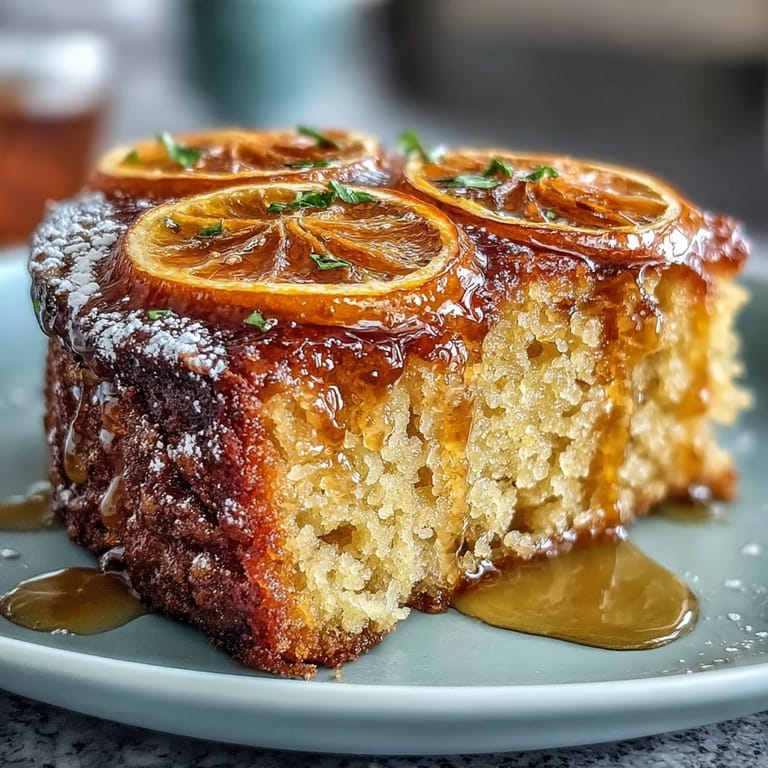 Save
Save The best part of this cake happens the next day, when it's been sitting at room temperature and all the flavors have gotten to know each other better. It's become less a showcase and more a comfort, which feels right somehow.
Why Almond Flour Changes Everything
Almond flour does something that wheat flour simply cannot—it brings this natural richness and moisture that makes the cake taste indulgent without being heavy. When I first started baking with it, I expected it to be delicate or require special handling, but it's actually quite forgiving. The nutty flavor also echoes the olive oil and candied oranges in a way that feels intentional, like all the ingredients were meant to be together.
The Magic of Greek Yogurt in Baking
I used to think Greek yogurt was just for breakfast until a baker friend convinced me to add it to cake batter. The acidity and protein in it interact with the baking powder to create this perfect tender crumb, and it adds a subtle tang that prevents the sweetness from becoming cloying. Now I use it in everything, and this cake is where it truly shines alongside the bright citrus.
Candying Oranges at Home
Learning to candy oranges yourself is a small kitchen victory that changes how you think about cooking. You get to control the sweetness, you can use whatever citrus is in season, and your kitchen smells like a dream while they simmer. The syrup left behind is liquid gold—I've drizzled it over ice cream, stirred it into coffee, and used it as a glaze for other desserts. There's something deeply satisfying about making something beautiful from scratch.
- Blood oranges create an absolutely stunning visual effect if you can find them, with a deeper color and slightly more complex flavor.
- You can make the candied oranges up to three days ahead, which means you can spread the work across different days if you're not feeling ambitious.
- Don't waste that syrup—keep it in a jar in the fridge and use it as a fancy syrup for everything from drinks to desserts.
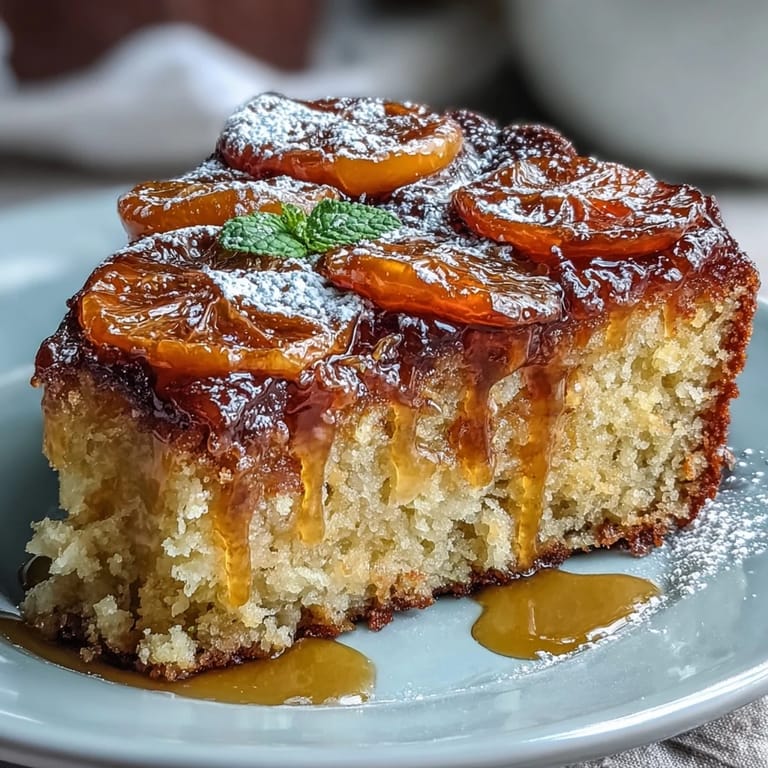 Save
Save This cake sits somewhere between nostalgia and discovery for me, a reminder that some of the best kitchen moments come from standing still and paying attention. I hope it brings that same kind of joy to your table.
Recipe Guide
- → How do you make candied orange slices?
Thinly slice oranges and simmer them in a mixture of sugar and water until translucent, then cool before use.
- → What flour types are best for this cake?
Almond flour combined with a gluten-free or regular all-purpose flour creates a moist and tender crumb.
- → Can I substitute Greek yogurt in the batter?
Dairy-free yogurt can be used as an alternative to Greek yogurt for a similar moist texture.
- → What causes the cake’s moistness?
The extra-virgin olive oil and yogurt contribute to the cake's rich and moist consistency.
- → How should the cake be served?
Serve at room temperature, optionally dusted with powdered sugar and garnished with fresh mint for added freshness.
- → Can blood oranges be used instead?
Yes, blood oranges provide a vibrant color and unique flavor twist to this cake.