 Save
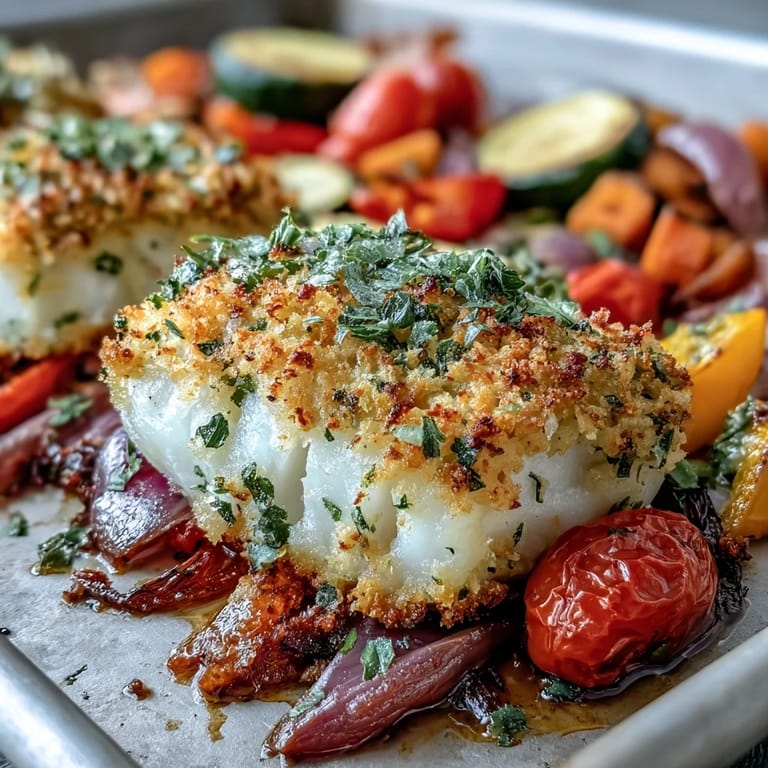
Save My neighbor knocked on my door one Tuesday evening with a bag of pristine cod filets from the fish market, asking if I knew what to do with them. I didn't have a fancy plan, but I had panko in the pantry and a handful of vegetables that needed using. Twenty minutes later, we were pulling a golden, bubbling sheet pan from the oven, and she looked at me like I'd performed actual magic. That moment sparked something—the realization that the simplest meals, when done with intention, become the ones people remember.
I made this for my sister during a hectic Sunday when she was stressed about meal prep for the week. Watching her face light up when she tasted how the Parmesan had turned almost nutty and caramelized on top—that's when I knew this wasn't just dinner, it was the kind of thing that loosens shoulders and makes people feel cared for. She's made it four times since.
Ingredients
- Cod filets (4, about 5-6 oz each): Look for filets that are pale pink and smell like the ocean, not fishy—that's your first sign of freshness. They cook quickly and won't fall apart on you if you're gentle.
- Panko breadcrumbs (1/2 cup): Regular breadcrumbs get dense and heavy; panko stays light and airy, which is the whole secret to that crispy exterior.
- Asiago and Parmesan cheese (1/4 cup each, grated): The combination gives you both sharp flavor and browning power—use freshly grated if you can, pre-shredded ones have anti-caking agents that interfere with texture.
- Fresh parsley (2 tbsp chopped): This isn't just green fluff; it brightens the whole dish and adds a fresh herbal note that cuts through the richness of the cheese.
- Garlic powder, black pepper, salt (1 tsp, 1/2 tsp, 1/2 tsp): These three do the heavy lifting on flavor—don't skimp or skip any of them.
- Olive oil (2 tbsp plus extra for drizzling): You need enough to bind the crust mixture and create that golden crust, plus a light drizzle on the fish itself keeps it moist.
- Large egg (1): This is your glue—it helps the cheese and panko cling to the fish without being heavy.
- Bell peppers, red and yellow (1 each, sliced): They stay slightly crisp even when roasted and add genuine sweetness without needing added sugar.
- Red onion (1 small, cut into wedges): Roasting mellows onion's bite and makes it almost jammy and sweet—I learned this the hard way by over-slicing once.
- Cherry tomatoes (1 cup, halved): They burst slightly and concentrate their flavor, creating little pockets of brightness on the pan.
- Zucchini (1 small, sliced): A neutral vegetable that soaks up the olive oil and oregano without overpowering the delicate fish.
- Dried oregano (1/2 tsp): Just enough to tie the vegetables together with Mediterranean flavor without making them taste like pasta sauce.
Tired of Takeout? 🥡
Get 10 meals you can make faster than delivery arrives. Seriously.
One email. No spam. Unsubscribe anytime.
Instructions
- Get Your Oven Ready:
- Preheat to 425°F and line your sheet pan with parchment paper or foil. This is worth the thirty seconds it takes—cleanup becomes effortless and nothing sticks.
- Build Your Crust Mixture:
- In a medium bowl, combine panko, Asiago, Parmesan, parsley, garlic powder, pepper, and salt. Drizzle in the 2 tablespoons of olive oil and mix with your fingers until it looks like wet sand—you want some texture, not a paste.
- Coat the Fish:
- Beat the egg in a shallow bowl, then dip each cod filet quickly, letting excess drip back into the bowl. Press the filet firmly into the cheese mixture, coating both sides with confidence—gently does it, but coat it completely. Arrange the filets on one side of your sheet pan, giving them breathing room.
- Prepare the Vegetables:
- Toss peppers, onion, tomatoes, and zucchini in a large bowl with 2 tablespoons olive oil, oregano, salt, and pepper. Spread them on the other half of the sheet pan so they're not crowded—crowded vegetables steam instead of roast.
- Add the Final Touch:
- Give the fish a light drizzle of olive oil. This keeps the delicate flesh moist while the crust gets golden and crispy.
- Roast It All:
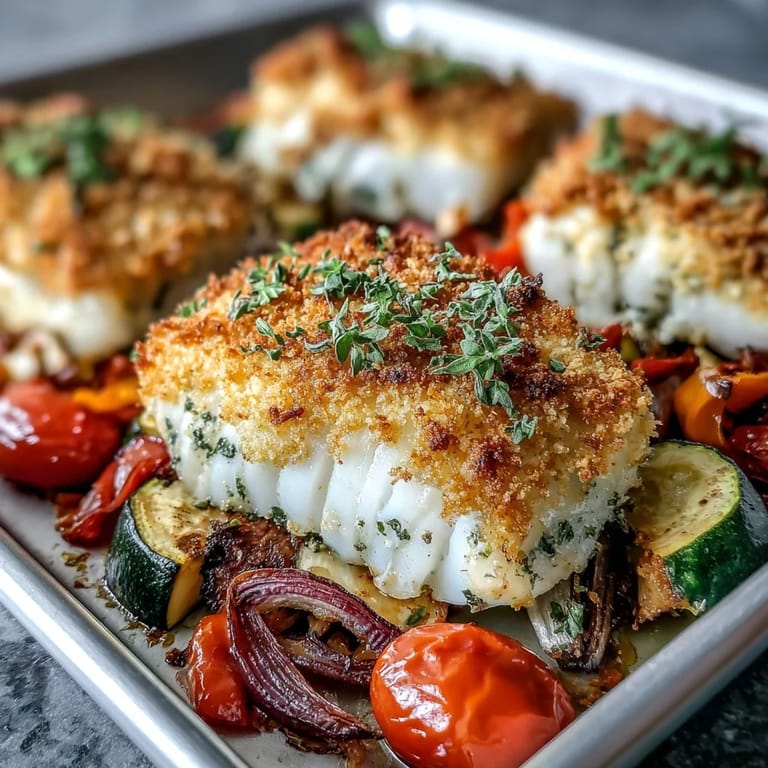
- Slide the pan into the oven for 20 to 25 minutes. The fish is done when it flakes easily with a fork and the crust is deep golden. About halfway through, give the vegetables a stir so they brown evenly—I learned this the hard way with charred peppers.
 Save
Save There's something deeply satisfying about pulling a sheet pan from the oven and seeing everything perfectly cooked at the same moment. It's the kind of meal that feels restaurant-quality but asks nothing difficult of you—just attention and a hot oven.
Why the Crust Works So Well
The magic happens when three things meet: the moisture from the egg helps everything stick, the olive oil in the panko mixture toasts the breadcrumbs and cheese into something golden and nutty, and the high oven temperature creates a crispy shell while the gentle heat ensures the delicate fish underneath stays tender. I've tried versions without the oil mixed into the crust, and they turn out pale and disappointing—the oil is non-negotiable.
Fish Selection and Substitution
Cod is reliable and forgiving, but this method works beautifully with haddock, tilapia, or even halibut if you're feeling indulgent. The key is choosing a firm white fish that won't fall apart when you press the crust onto it. Avoid delicate fish like sole or flounder—they're too fragile for this treatment. I once used whatever was on sale and grabbed a softer fish, and it shredded when I tried to coat it; that taught me to read what I'm buying.
Vegetable Flexibility and Timing
The vegetables I've listed are just a starting point. Root vegetables like baby potatoes or carrots take longer, so if you're adding them, cut them small and add them to the pan for the first 10 minutes before the fish goes on. Delicate vegetables like spinach or asparagus should go on for just the last 5 minutes or they'll turn to strings. The real lesson I learned is this: think about how long each vegetable takes and stagger them accordingly. It sounds fussy, but it becomes intuitive after one try.
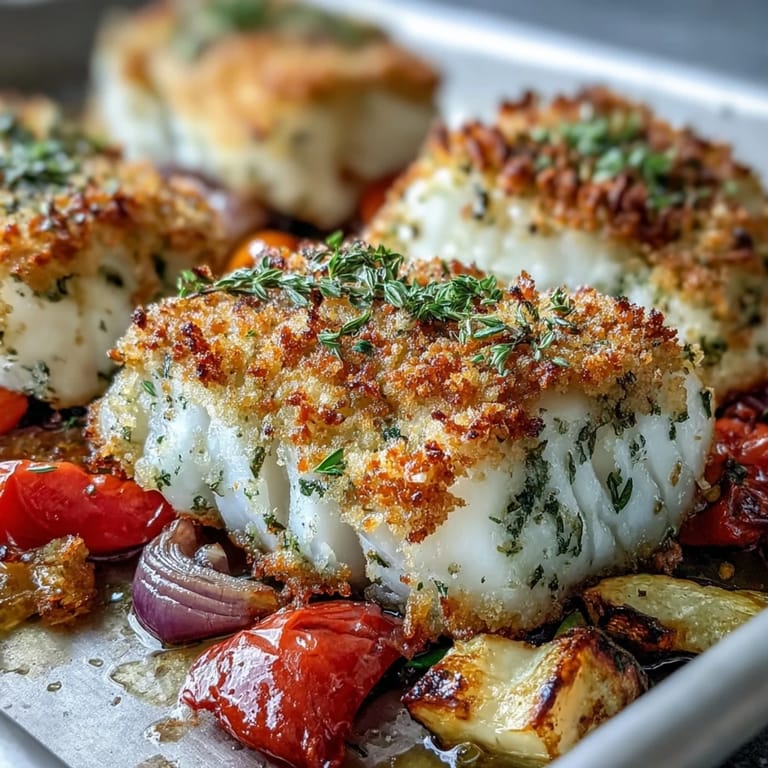
- Cherry tomatoes add brightness and create little bursts of juice on the pan.
- Red onion wedges caramelize beautifully and lose their sharp edge when roasted long and slow.
- Zucchini and bell peppers are forgiving and brown evenly without much fussing.
 Save
Save This is the kind of meal that turns a regular evening into something feel-good and nourishing, without demanding hours of your time or miles of your focus. Make it once, and you'll find reasons to make it again and again.
Recipe Guide
- → What type of fish works best for this dish?
Firm white fish like cod, haddock, tilapia, or halibut work well. These fillets hold up to the coating and bake evenly without falling apart.
- → Can I make the crust gluten-free?
Use gluten-free breadcrumbs or crushed gluten-free crackers instead of panko. The coating will still provide excellent crunch and flavor.
- → How do I know when the fish is done?
The fish is ready when it flakes easily with a fork and the crust turns golden brown. The internal temperature should reach 145°F (63°C).
- → Can I prepare this ahead of time?
Coat the fish and chop vegetables up to 4 hours ahead. Refrigerate separately, then assemble on the sheet pan just before baking.
- → What vegetables can I substitute?
Try broccoli florets, baby potatoes, carrots, or asparagus. Adjust cooking time—denser vegetables like potatoes may need 5-10 extra minutes.
- → How do I get the crust extra crispy?
Broil the fish for the final 1-2 minutes of cooking. Watch closely to prevent burning. Ensure the coating is pressed firmly onto the fillets.