 Save
Save The first time I truly understood the magic of Thai basil was standing in a humid Bangkok night market, watching a vendor's wok catch flames while he tossed rice with a confidence that made it look effortless. Years later, I recreated that moment in my own kitchen, and what struck me wasn't just how fast it came together, but how the basil's peppery, almost licorice-like aroma filled every corner the moment it hit the heat. That's when fried rice stopped being leftover rice strategy and became something I craved on tired weeknights. This recipe is my attempt to bottle that feeling, that speed, that aromatic intensity that makes you feel like you're cooking something far more complicated than you actually are.
I remember making this for a friend who claimed they'd never tasted real Thai food, and watching their face when the basil hit the plate—that moment when the aroma reaches you before the fork does. They went back for seconds, and I realized then that this dish has a quiet power. It's not showy, but it lingers. It makes people slow down and actually taste their food, which feels like a small victory in a world of rushed meals.
Ingredients
- Boneless, skinless chicken thighs or breasts (400g): Slice them thin so they cook fast and absorb all the sauce, and use thighs if you have them—they stay more forgiving and flavorful than breasts.
- Cooked jasmine rice (4 cups, day-old): This is non-negotiable; day-old rice grains stay separate and crispy instead of turning into a mushy clump, so plan ahead or spread hot rice on a plate to cool.
- Medium onion: Chop it fine so it disappears into the rice and gives you sweetness without crunch.
- Garlic (3 cloves), minced: Don't hold back here—garlic is the foundation of flavor, and mincing it small means it crisps up and distributes evenly.
- Thai red chilies (2–3), finely sliced: These are the voice of the dish, so taste as you go and adjust; you can always add more but you can't take it back.
- Holy basil leaves (1 cup): This is the soul of the recipe, so source it if you can because Thai basil is close but not quite the same—the peppery, anise-forward notes are what make this sing.
- Red bell pepper (1 medium, sliced): Optional, but it adds sweetness and color that balances the heat and umami beautifully.
- Soy sauce (2 tbsp): Use good soy sauce—it makes a difference—because it's doing heavy lifting for saltiness and depth.
- Oyster sauce (1 tbsp): This adds umami and a subtle sweetness that rounds out the sharp salty edges.
- Fish sauce (1 tbsp): I know it smells like low tide, but trust it; it's the invisible ingredient that makes everything taste more like itself.
- Sugar (1 tsp): Just a pinch to balance the salt and heat, nothing more.
- White pepper (½ tsp): Ground fresh if possible for a brighter, less dusty heat than black pepper.
- Vegetable oil (2 tbsp): Use neutral oil with a high smoke point so your wok gets hot enough to actually fry, not steam.
Tired of Takeout? 🥡
Get 10 meals you can make faster than delivery arrives. Seriously.
One email. No spam. Unsubscribe anytime.
Instructions
- Get your wok screaming hot:
- Heat the oil in a large wok or skillet over high heat until it shimmers and moves like water, about 1–2 minutes. If the oil's not hot enough, everything will stew instead of fry, so wait for that shimmer.
- Build your aromatics:
- Add the minced garlic and sliced chilies, stirring constantly for about 30 seconds until the air around you smells bright and alive. This is the moment everything changes.
- Cook the chicken through:
- Add the sliced chicken and let it sit for 10 seconds before stirring, so it gets a chance to sear. Keep moving it until it turns opaque and the edges are lightly golden, about 3–4 minutes total.
- Add the vegetables:
- Toss in the chopped onion and bell pepper if you're using it, stirring everything together for another 2 minutes until the onion softens slightly and turns translucent at the edges.
- Introduce the rice:
- Add the cooked jasmine rice a handful at a time, breaking up any clumps with your spatula as you go. This takes patience, but it's worth it—you're aiming for every grain to be separate and touched by heat.
- Coat everything in sauce:
- Pour in the soy sauce, oyster sauce, fish sauce, sugar, and white pepper all at once, then toss everything together with urgency for about 1–2 minutes until the rice is evenly coated and heated through. The rice should look darker and smell incredible.
- Add the basil at the end:
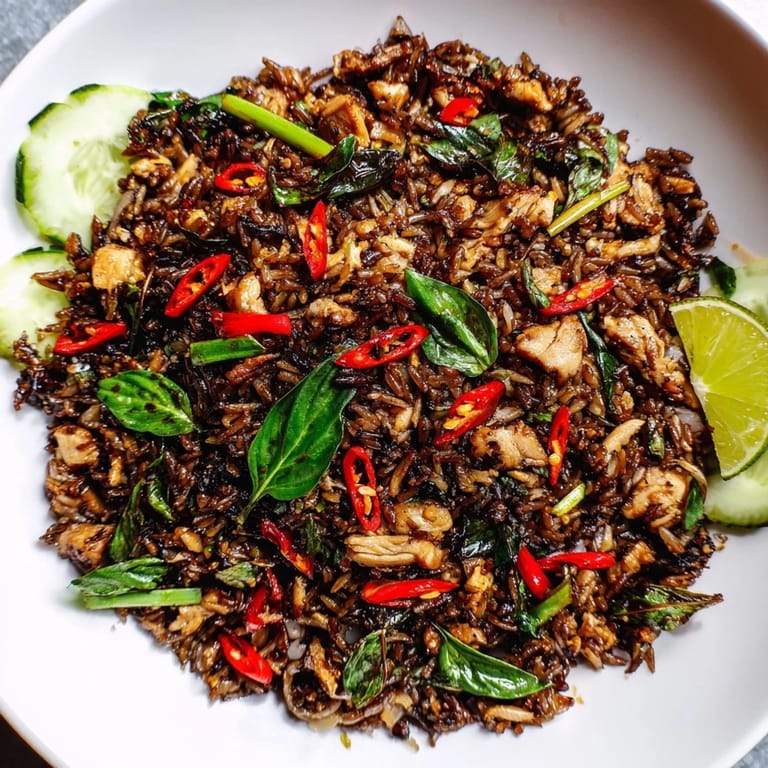
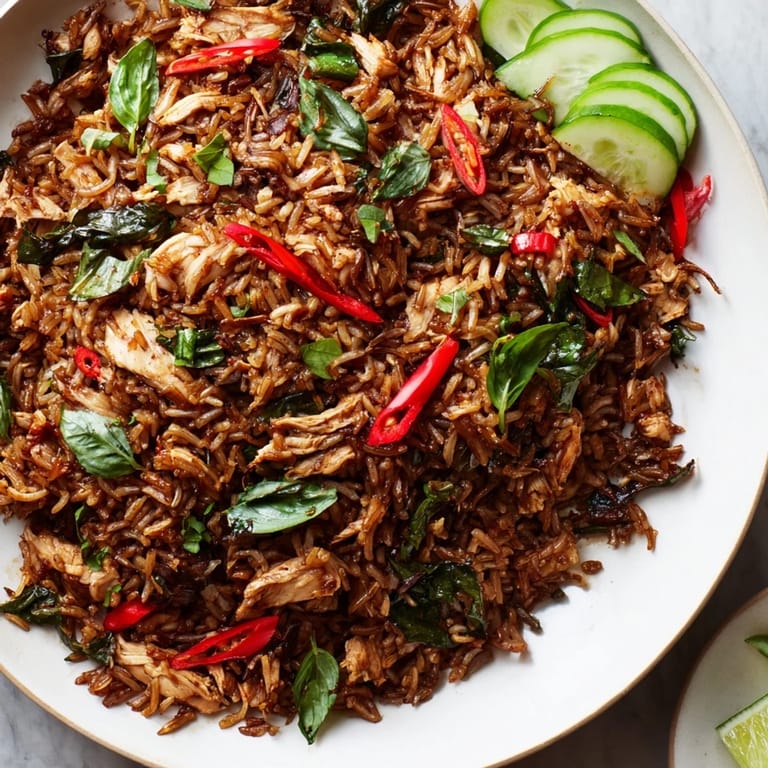
- Remove from heat and fold in the holy basil leaves with a gentle hand, stirring until they're just wilted and release their essential oils. Don't cook them; they should stay bright and aromatic.
- Serve immediately:
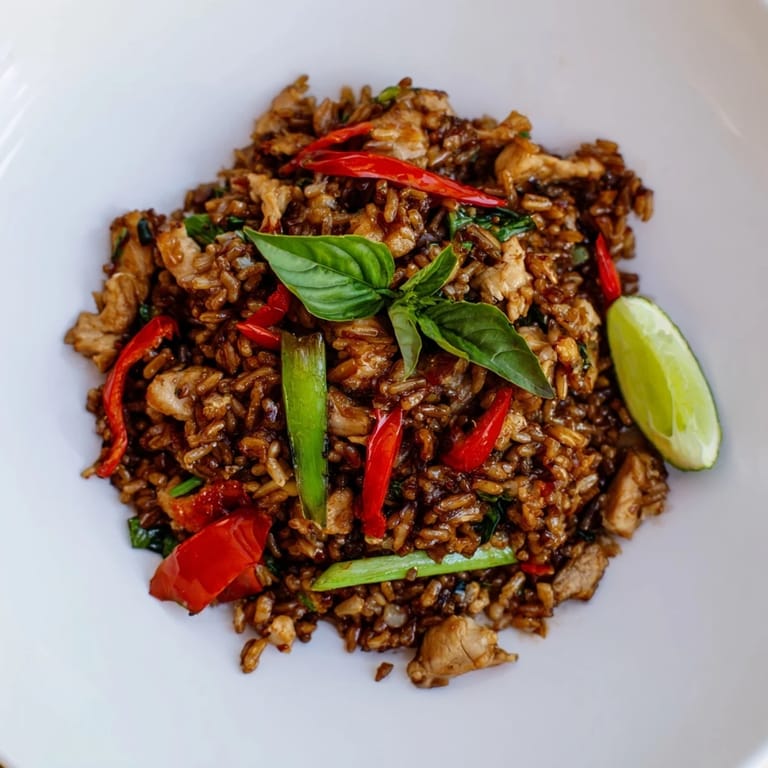
- Transfer to a plate and garnish with lime wedges and cucumber slices, squeezing the lime over just before you eat so the brightness cuts through the richness.
 Save
Save There's a moment in this recipe, right when you fold in the basil and the smell just explodes—that's when I know I've made something worth making. It's the moment the dish stops being ingredients on a plate and becomes an experience, a small escape that costs almost nothing and takes less time than ordering delivery.
Why Day-Old Rice Changes Everything
I learned this the hard way on a night when I got impatient and tried to use rice I'd made an hour before. The result was a gluey mess that tasted right but felt wrong, and I realized then that texture is half the story in fried rice. When rice sits overnight, the grains firm up and separate, creating pockets of space that let sauce coat each grain individually instead of clumping everything together. It's the difference between rice that tastes cooked and rice that tastes fried, which is everything. If you're short on time, spread hot rice on a baking sheet and stick it in the fridge for 20 minutes to cool it down and dry it out slightly.
The Holy Basil Hunt
Holy basil is worth seeking out because it has a peppery, almost medicinal depth that Thai basil can't quite match, though Thai basil works in a pinch. I found mine at a Southeast Asian market tucked between the dragon fruit and morning glory, and the vendor told me that holy basil is actually the traditional choice in Thailand because it grows there wild and prolific. Since then, I've learned to grow it in a pot on my windowsill, pinching leaves as needed, and having it fresh when I want it has made this dish a more frequent visitor to my table. If you can't find either one, regular basil is better than nothing, though you'll miss some of the spiced complexity that makes this recipe feel less like basic fried rice and more like something you traveled for.
Making It Your Own
This recipe is a framework, not a prison, so don't hesitate to swap chicken for shrimp if that's what you have, or crumbled tofu if you're vegetarian. I've made versions with leftover roasted duck that felt decadent, and versions with scrambled eggs stirred in at the end that were equally good but in a different way. The magic isn't in any single ingredient—it's in the technique of high heat, the aromatics coming first, and the basil at the very end. Once you understand that, you can improvise endlessly.
- Shrimp cooks even faster than chicken, so watch it carefully and pull it from heat the moment it turns pink.
- For a vegetarian version, use mushrooms or cauliflower as your protein and substitute soy sauce for fish sauce if you want to keep it plant-based.
- Leftover cooked vegetables transform this into a clean-out-the-fridge situation that somehow always tastes intentional.
 Save
Save This is the kind of meal that reminds me why I love cooking—something fast that tastes like care, a recipe that comes together in the time it takes to think about it. It's the fried rice I make when I want to feel like I'm eating somewhere far away but without leaving my kitchen.
Recipe Guide
- → What type of basil is used in this dish?
Holy basil is preferred for its distinctive aroma, but Thai basil can be used as a substitute.
- → Can I use other proteins instead of chicken?
Yes, shrimp, tofu, or pork are great alternatives that work well with the seasonings and cooking method.
- → Is day-old rice necessary for the best texture?
Using day-old jasmine rice helps prevent clumping and maintains a fluffy, separate grain texture when stir-fried.
- → How can I adjust the spiciness of this dish?
Add more Thai red chilies or drizzle chili oil according to your heat preference.
- → What equipment is recommended for cooking?
A wok or large skillet with a spatula works best to quickly stir-fry ingredients at high heat.