 Save
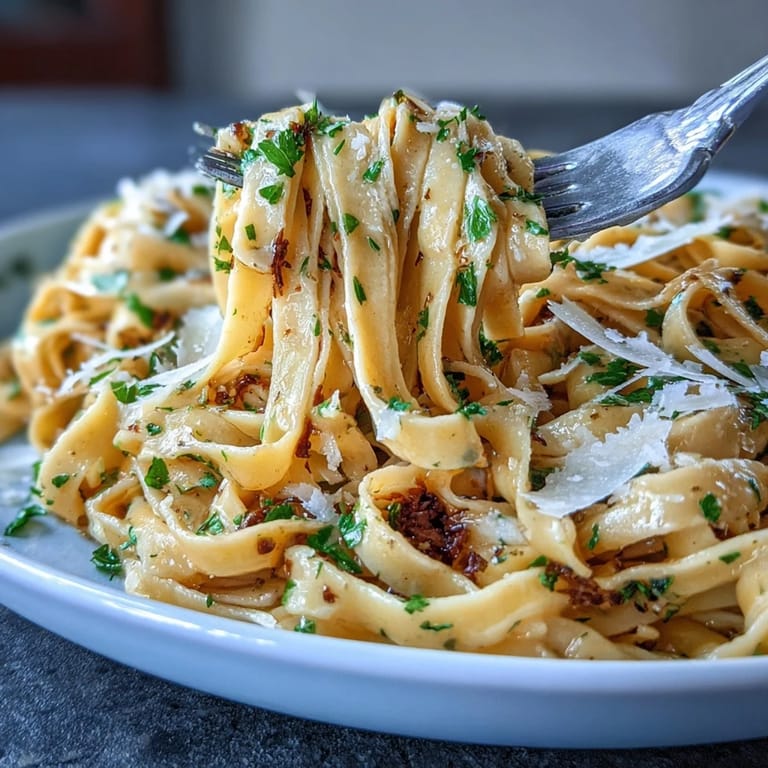
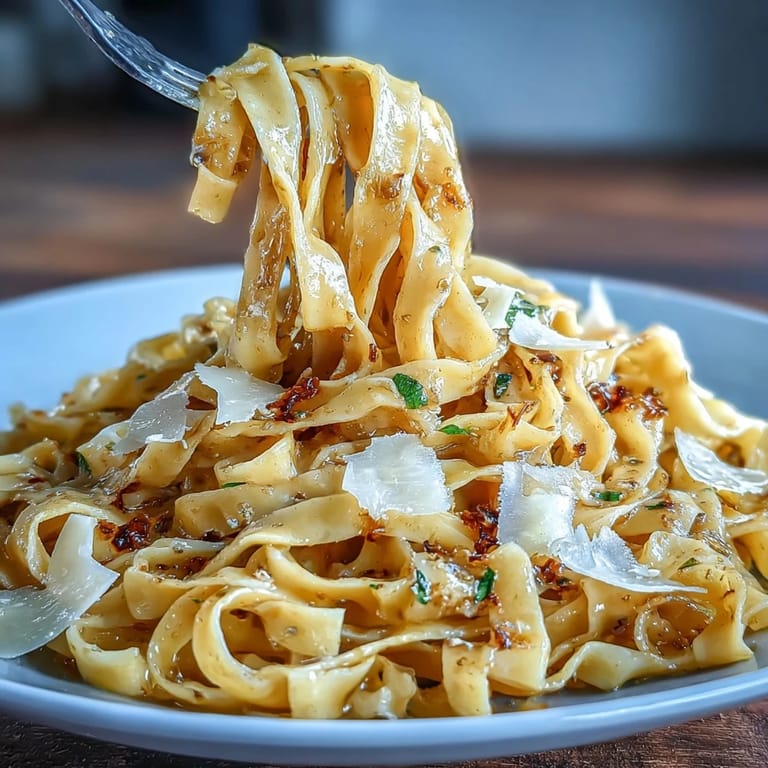
Save There's a particular silence that falls over a kitchen when you're making fresh pasta by hand—the scrape of dough against marble, the whisper of flour clouds settling. I discovered truffle-infused egg pasta years ago, not through fancy restaurants but through a mistake at my farmer's market when I grabbed a bottle of truffle oil instead of regular olive oil. That happy accident led to this dish, which has since become my answer to every question that starts with, "What should we make for dinner when we want to feel special?"
I'll never forget the evening I made this for my partner after a particularly long week, when we both needed reminding that ordinary Tuesday nights could feel extraordinary. The pasta ribbons caught the kitchen light like silk, and watching them disappear into that buttery truffle sauce—well, that's when I understood why people talk about food as love. We ate slowly, deliberately, and didn't say much beyond "this is perfect," which meant everything.
Ingredients
- All-purpose flour (2 cups/250 g): This is your foundation, and weight matters more than volume—it keeps the dough consistent every time you make it.
- Eggs (3 large): Room temperature eggs blend smoother into the dough, creating silkier pasta; cold eggs resist incorporation.
- Extra-virgin olive oil (1 tablespoon): This adds richness to the dough itself and helps prevent it from drying out during kneading.
- Truffle oil (1 tablespoon in dough, 2 teaspoons for finishing): Use a quality bottle—the difference between good and mediocre truffle oil is everything in a simple dish like this.
- Fine sea salt (1/2 teaspoon in dough, plus to taste): Salt in the dough seasons it from within, not just on the surface.
- Unsalted butter (3 tablespoons): Butter is the vehicle for the truffle fragrance; use good butter, the kind where you can taste cream.
- Freshly grated Parmesan cheese (1/2 cup/50 g): Grate it yourself right before serving—pre-grated cheese has anti-caking agents that muddy the flavor.
- Freshly ground black pepper: The final crack of pepper matters as much as the truffle oil itself.
Tired of Takeout? 🥡
Get 10 meals you can make faster than delivery arrives. Seriously.
One email. No spam. Unsubscribe anytime.
Instructions
- Create your well:
- Mound your flour on a clean, dry surface and use your fingers to press a crater into the center—think of it like a volcano waiting to erupt. This small detail keeps the dough from spreading everywhere and makes the whole process feel controllable.
- Combine without chaos:
- Crack your eggs into that well, add the oils and salt, then use a fork to beat them lightly before dragging flour in from the walls. Go slowly; this is where patience prevents flour from escaping across your counter.
- Knead until the dough transforms:
- Once it becomes shaggy, use the heel of your hand to push the dough away from you, fold it back, rotate it, and repeat for 8–10 minutes. You're building gluten structure, and you'll feel it happen—the dough will shift from rough to smooth to almost silky.
- Let it rest and relax:
- Wrap your dough and let it sit at room temperature for 20 minutes; this resting period is non-negotiable, allowing the gluten to settle and the dough to become easier to roll. I use this time to wash my hands, breathe, and appreciate that something delicious is already happening.
- Roll with intention:
- Divide the dough and feed it through a pasta machine, thinning it with each pass, or use a rolling pin with steady, gentle pressure. The goal is thin enough to see your hand through it—about 1–2 mm—without tearing.
- Cut your ribbons:
- Cut the rolled dough into tagliatelle or fettuccine width; the width matters less than consistency, but aim for ribbons wide enough to catch sauce. Fresh pasta forgives minor imperfections in width far better than store-bought.
- Cook with attention:
- Salted boiling water and fresh pasta take 2–3 minutes, not more; you're looking for al dente texture, where the pasta has a tiny bit of resistance. Reserve your pasta water before draining—this starchy liquid is liquid gold for sauce-making.
- Finish the sauce with confidence:
- Melt butter in a skillet over medium heat, add your cooked pasta with a splash of reserved water, and toss gently to emulsify the sauce. This final tossing creates that silky coating you taste in great Italian restaurants.
- Crown with truffle and cheese:
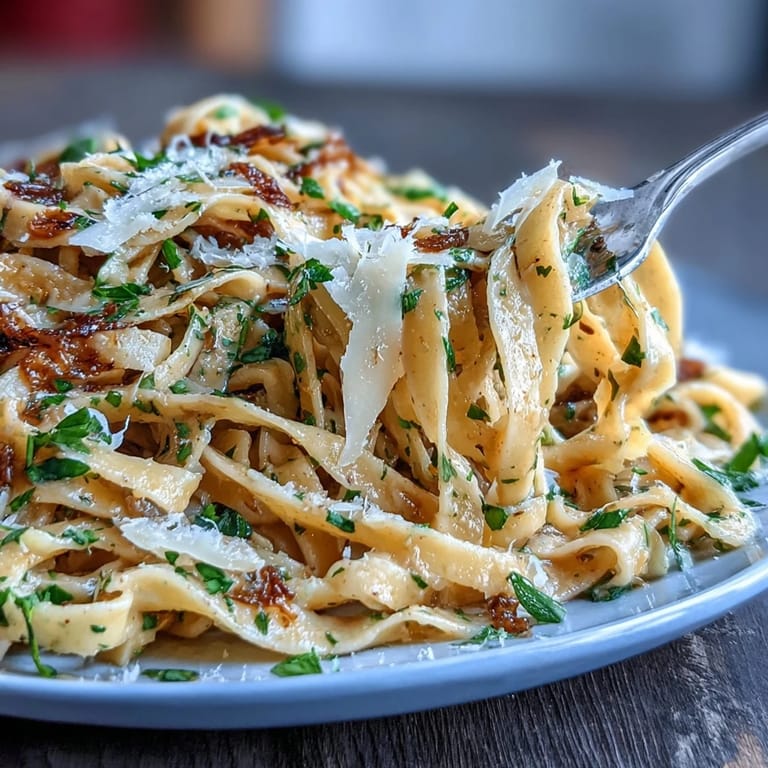
- Remove from heat, drizzle with remaining truffle oil, shower with freshly grated Parmesan, and toss one final time. Season with salt and pepper to taste, knowing that simplicity this refined relies on each ingredient being the best version of itself.
 Save
Save The thing I treasure most about this dish is that it proved to me that sophistication doesn't require complexity—just intention and good ingredients. My kids now ask for it on their birthdays, which tells you something about how a simple plate of truffle pasta has become more meaningful than I ever expected.
Making Fresh Pasta Without a Machine
I grew up without a pasta machine, and I still make this dough the old-fashioned way sometimes, rolling it with a rolling pin on the same marble countertop my grandmother used. It takes longer, maybe 15 extra minutes of rolling and folding, but something happens when you work the dough by hand—you develop an intuition for what it needs. The physical rhythm becomes meditative, and honestly, the pasta tastes exactly the same.
Truffle Oil Quality and Storage
Not all truffle oils are created equal, and I learned this the expensive way by buying discount bottles that tasted like dirt instead of earthy elegance. A good truffle oil should smell earthy, complex, and slightly peppery—not chemical or musty. Store it in a cool, dark place, away from direct light, and it'll last longer than you think, ready to elevate whatever you're cooking.
Variations and Additions
While the simplicity of this dish is intentional, the recipe welcomes gentle improvisation if you're in the mood. I've added a handful of sautéed wild mushrooms, which marry beautifully with truffle's forest-floor notes, and once tried it with crispy sage leaves scattered on top, which added an unexpected textural contrast. The base is so elegant that additions should be treated like jewelry—chosen carefully and applied sparingly.
- Wild mushrooms can be sautéed in a separate pan and tossed in with the pasta during the final butter step.
- Fresh thyme or crispy sage leaves add visual interest and flavor without overwhelming the truffle.
- A touch of shaved white truffle cheese takes it from fancy to genuinely decadent, if you're feeling adventurous.
 Save
Save This dish has taught me that sometimes the most memorable meals are built from nothing more than flour, eggs, butter, and the decision to make something beautiful for someone you care about. That's everything.
Recipe Guide
- → What is the best way to incorporate truffle oil into the pasta?
Truffle oil is added to both the dough and finishing sauce to infuse a consistent aromatic flavor throughout the dish.
- → How thin should the pasta dough be rolled?
Roll the dough until it's about 1–2 mm thick for a delicate texture that cooks quickly and evenly.
- → Can I substitute Parmesan with another cheese?
Pecorino Romano can be used as an alternative to Parmesan for a sharper, saltier finish.
- → How long should the pasta be cooked?
Boil the fresh pasta for 2 to 3 minutes until al dente, then toss with butter and reserved pasta water.
- → What are some suggested pairings for this dish?
This pasta pairs beautifully with a crisp Chardonnay or a dry sparkling wine to complement its rich flavors.
- → Are there any tips for enhancing the flavor?
Adding sautéed wild mushrooms can bring additional earthiness that complements the truffle oil perfectly.