 Save
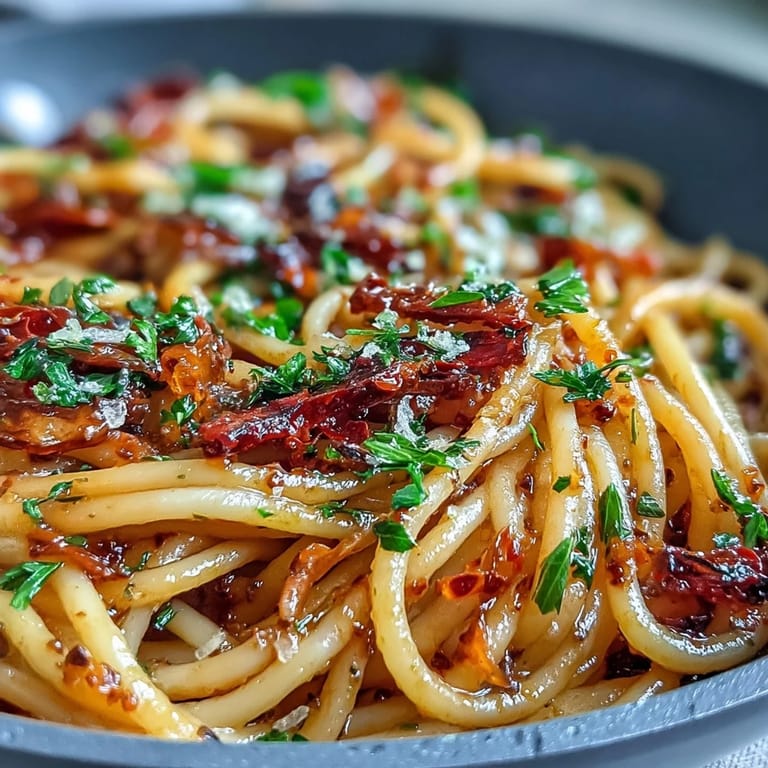
Save My first real encounter with Calabrian chilies happened on a humid August evening when a friend arrived with a small glass jar from her family's trip to Italy. She opened it right there in my kitchen, and the smell hit me like walking into a spice market—smoky, fruity, intense in a way that made my eyes water a little. That night, we threw together bucatini, garlic, and those chilies, and I've been chasing that exact feeling ever since. There's something about Southern Italian cooking that doesn't apologize; it shows up bold and asks you to either embrace it or step aside. This pasta became my love letter to that moment.
I made this for my roommate after she'd had the worst day imaginable—a project fell apart at work, and she came home looking completely deflated. I didn't want to make a big fuss, so I just quietly cooked this while she sat at the counter. When that aroma started filling the apartment, she actually looked up. By the time we sat down with bowls of it, she was already smiling. Food doesn't fix everything, but sometimes it reminds you that someone's thinking of you, and that matters more than you'd expect.
Ingredients
- Bucatini: This hollow pasta is like a tiny straw that drinks in the chili oil—spaghetti works if that's what you have, but bucatini really holds onto the sauce in a way that matters here.
- Extra virgin olive oil: Don't cheap out on this; it's literally four of your six ingredients, so get one you'd actually want to drink (or at least enjoy the smell of).
- Calabrian chili paste: The star of the show—look for it in Italian markets or online, and yes, the paste in oil version is worth seeking out because those oils are liquid gold.
- Garlic cloves: Slice them thin so they cook evenly and turn just slightly golden; thick chunks will overpower everything, and burned garlic tastes like regret.
- Anchovy fillets: They're not about fish flavor here; they're about depth, saltiness, and umami that makes people say the sauce tastes incredible without knowing why.
- Red pepper flakes: Optional only if you're nervous, but this is where you fine-tune the heat to match your mood.
- Sea salt and black pepper: Season as you go, tasting near the end—the anchovies bring salt too, so you don't need much.
- Fresh flat-leaf parsley: The brightness at the end cuts through all that richness and makes your mouth feel alive again.
- Lemon zest: This is the secret weapon that nobody talks about but everyone notices; it's what makes people ask for the recipe.
- Pecorino Romano: Sharp, salty, and optional—a light grating at the end if you want it, or skip it if you prefer the pure sauce.
Tired of Takeout? 🥡
Get 10 meals you can make faster than delivery arrives. Seriously.
One email. No spam. Unsubscribe anytime.
Instructions
- Get your water boiling and pasta going:
- Fill a large pot with salted water—it should taste like the sea, not a swimming pool. This is where the pasta begins to season itself, so don't skip this step. Once it's at a rolling boil, add your bucatini and cook until it's just barely tender, with a tiny bit of resistance when you bite it; that's al dente, and it's worth waiting for because mushy pasta is nobody's victory.
- Start the sauce while pasta cooks:
- Pour olive oil into a large skillet over medium heat and let it warm for about a minute. Add your sliced garlic and the chopped anchovies—watch them carefully as they start to soften and basically melt into the oil within 2-3 minutes, releasing their salty, savory magic.
- Bloom the chilies in the warm oil:
- Once the garlic is golden and fragrant, add your Calabrian chili paste and a pinch of red pepper flakes if you're feeling brave. Let this sit for just 1-2 minutes, letting the heat wake up all those spicy compounds without burning anything; you want it fragrant, not scorched.
- Marry the pasta and sauce:
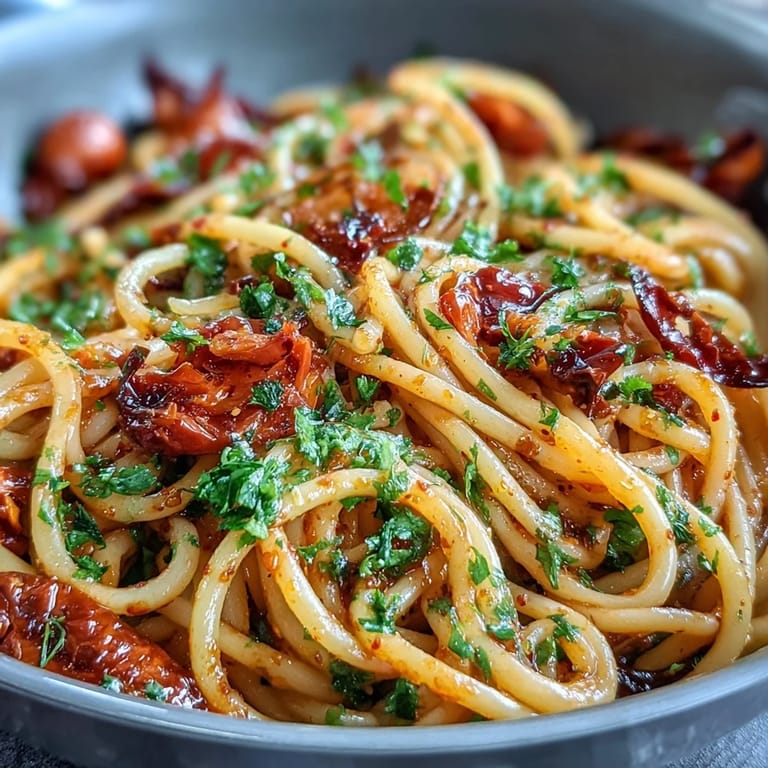
- Drain your bucatini but save that starchy, salty pasta water—it's your secret ingredient for making everything stick together. Toss the hot pasta directly into the skillet with the oil and chilies, then add pasta water a splash at a time, stirring everything together until it looks silky and the sauce coats each strand.
- Finish with brightness:
- Remove from heat, then stir in your chopped parsley and lemon zest; this is where the dish goes from hot and heavy to vibrant. Season with a little salt and grind of black pepper, taste it, and adjust—trust your mouth more than any recipe.
- Get it to the table while it's hot:
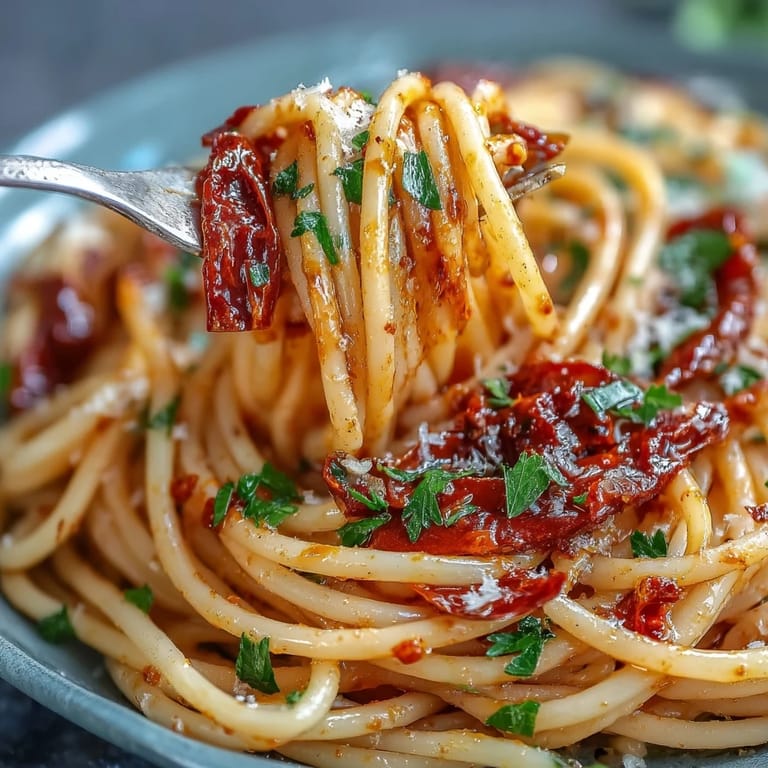
- Serve immediately into bowls, and if you're using cheese, just a light grating over the top. This dish doesn't get better as it cools; it's best eaten while everything is still steaming and alive.
 Save
Save Years later, I was cooking this for a group of near-strangers at a dinner party, and halfway through, one of them appeared at my shoulder asking what that incredible smell was. By the end of the meal, they were asking for the recipe and already planning to make it. That's when I realized this pasta isn't just food—it's a small piece of conversation, a moment where people relax and remember that simple food made with intention is its own kind of generosity.
Why This Calabrian Approach Matters
Southern Italian cooking doesn't play it safe, and that's exactly why it works so beautifully. Calabria, at the tip of Italy's boot, has its own spice tradition—it's not about copying Thai or Mexican heat, but about a specific fruitiness and depth that comes from centuries of using local chilies. When you use Calabrian chili paste, you're not just adding spice; you're borrowing a culinary perspective that says bold flavors served simply are better than complicated dishes with quiet ones. This pasta is an argument for that philosophy.
The Anchovy Question
I used to be nervous about anchovies too, so I get it—they look intimidating in the tin and they smell intense on their own. But here's what I learned: they're like the bass line in music; most people don't consciously hear them, but everything sounds wrong without them. In warm oil, they simply dissolve and vanish, leaving behind a savory, briny depth that makes people wonder why your sauce tastes so incredible. If you genuinely can't do it, capers work as a substitute, or try miso paste, which gives you that umami hit another way.
Timing, Heat, and Those Perfect Small Moments
This recipe lives or dies by the heat level staying at medium—too high and your garlic burns before the anchovies even dissolve; too low and nothing happens fast enough and you're standing there waiting. Listen for the gentle sizzle, not the aggressive roar. The whole sauce comes together in maybe 5 minutes, which means you need to have everything prepped and your pasta almost done before you start. It feels a little rushed, but that's kind of the point—keeping everything moving means flavors stay bright and no single component overstays its welcome.
- Slice your garlic thin and uniform so it cooks at the same rate and turns an even, barely-golden color.
- Keep that pasta water nearby because you'll need it, and cold water doesn't work the same magic as the starchy, warm version.
- Taste as you finish—the lemon zest might be exactly what it needs, or you might need a tiny pinch more salt; your palate is the real expert here.
 Save
Save Every time I make this, it reminds me that sometimes the most satisfying food is the simplest—just good ingredients, heat, and the courage to let them taste like themselves. Make this when you want to feel a little bit alive.
Recipe Guide
- → What pasta works best for this dish?
Bucatini is ideal for holding the chili oil sauce, but spaghetti or other long pasta can be substituted if unavailable.
- → Can the heat level be adjusted?
Yes, modify the amount of Calabrian chili paste or red pepper flakes to suit your spice preference.
- → Is anchovy essential for the sauce?
Anchovy adds a savory depth but can be omitted or replaced with capers for a vegetarian-friendly twist.
- → How should the sauce cling to the pasta?
Reserve some pasta water to add gradually, helping the oil-based sauce coat the noodles evenly and silky.
- → What cheese complements this pasta?
Grated Pecorino Romano or Parmesan enhances the dish with a salty, nutty finish but is optional.