 Save
Save The first time I tasted muhammara, I was at my cousin's apartment in a cramped kitchen that smelled like charred peppers and something I couldn't quite name—until she told me it was pomegranate molasses. That tangy-sweet heat hit differently than anything I'd made before, and I spent the next hour watching her hands move through the food processor, asking a thousand questions. She laughed and said it was just roasted peppers and walnuts, but there was something about the way she let it pulse and breathe that made it feel less like a recipe and more like a conversation between ingredients.
I remember making this for a dinner party where someone had suddenly gone vegetarian, and I had maybe three hours' notice. The muhammara became the unexpected star—people returned to it between courses, dragging torn pita through it like they were mining for gold. By the end of the night, the bowl was scraped clean and someone asked for the recipe, which made me feel like I'd actually accomplished something instead of just roasting vegetables.
Ingredients
- Red bell peppers (3 large): The foundation of everything—look for peppers that are heavy for their size, which means they're full of juice and flavor.
- Walnuts (1 cup, lightly toasted): Toasting them first wakes them up; raw walnuts taste almost bitter by comparison.
- Pomegranate molasses (2 tbsp): This is the secret ingredient that makes people stop and wonder what you did; it's tart and deep, nothing like pomegranate juice.
- Garlic (2 cloves): Don't skip this or double it—two cloves is the exact amount where you taste it without it overwhelming the roasted peppers.
- Breadcrumbs (2 tbsp): They thicken the dip and give it body; use gluten-free if you need to, and don't skip them thinking the nuts are enough.
- Smoked paprika (1/2 tsp) and Aleppo pepper (1/2 tsp): These add depth and a gentle heat that builds as you eat, not a shock.
- Extra virgin olive oil (2 tbsp, plus more for drizzling): Use one you actually like tasting on its own, because you will taste it.
- Lemon juice (1–2 tbsp): Balance everything; start with 1 tbsp and taste before adding more.
- Toasted sesame seeds, cumin, salt, and black pepper: The finishing touches that make it feel intentional.
Tired of Takeout? 🥡
Get 10 meals you can make faster than delivery arrives. Seriously.
One email. No spam. Unsubscribe anytime.
Instructions
- Char the peppers until they're blistered and blackened:
- Preheat your oven to 220°C (425°F) and lay the whole peppers on a baking tray. Roast them for 20–25 minutes, turning them every few minutes so they char evenly on all sides. The skin should look almost burnt in spots—that's exactly what you want.
- Let them steam and soften in their own warmth:
- Transfer the hot peppers to a bowl and cover it tightly with plastic wrap or a plate. This traps the steam and makes the skins slip off like they never belonged there in the first place. After 10 minutes, peel them gently, remove the seeds and stems, and try not to rinse them if you can help it—you'll lose flavor.
- Build the base in the food processor:
- Combine the roasted peppers, toasted walnuts, garlic, breadcrumbs, cumin, smoked paprika, Aleppo pepper, salt, and black pepper. Pulse everything together until it's coarse and chunky, like wet sand—this is where you establish texture.
- Add the bright, tangy elements and blend to silky life:
- Pour in the pomegranate molasses, olive oil, and lemon juice, then process until the dip is smooth but still has some pleasant grain to it. Taste as you go, because you might want more lemon if you like brightness, or more molasses if you want that deep, almost mysterious finish.
- Finish and serve with intention:
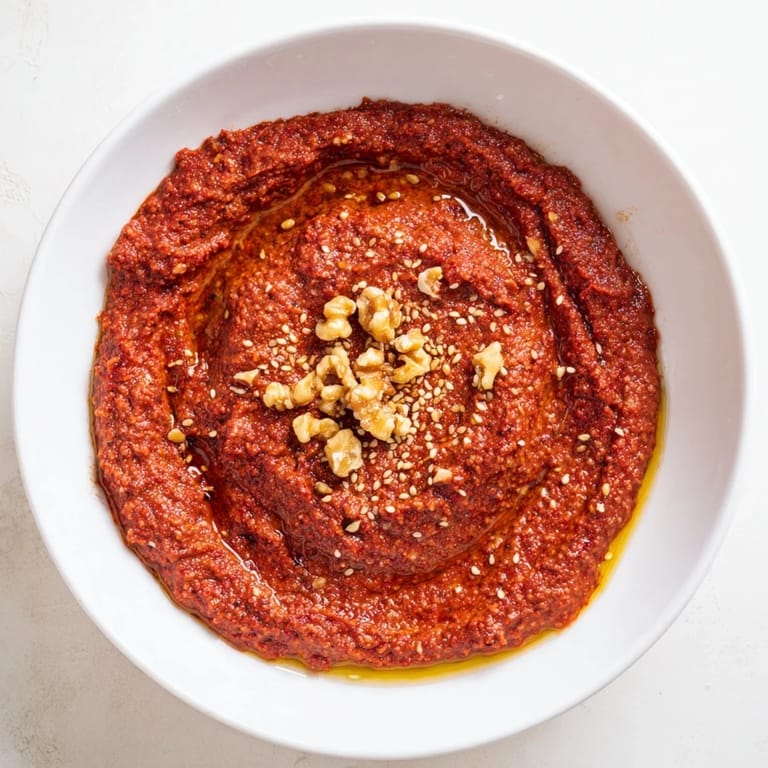
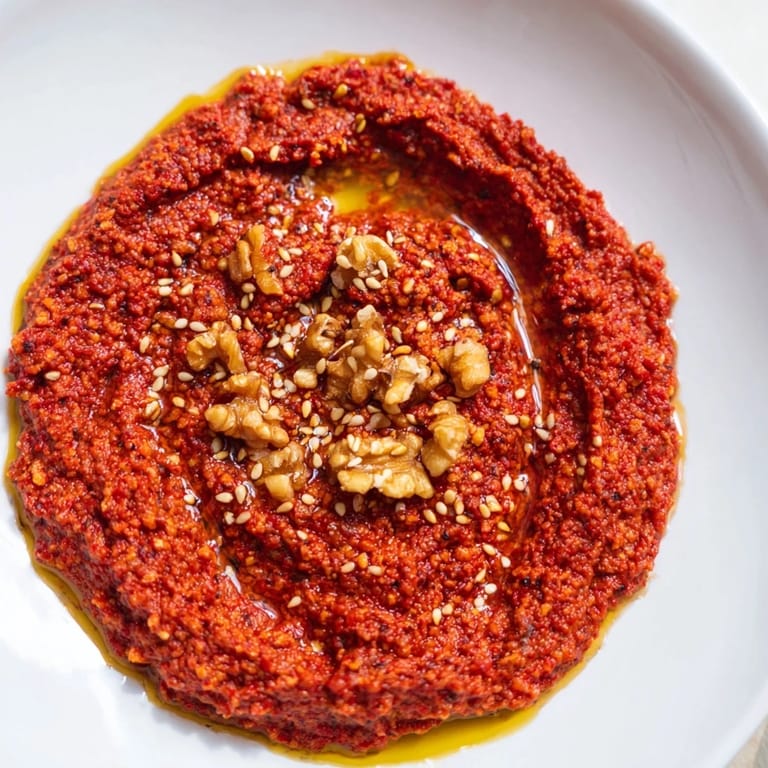
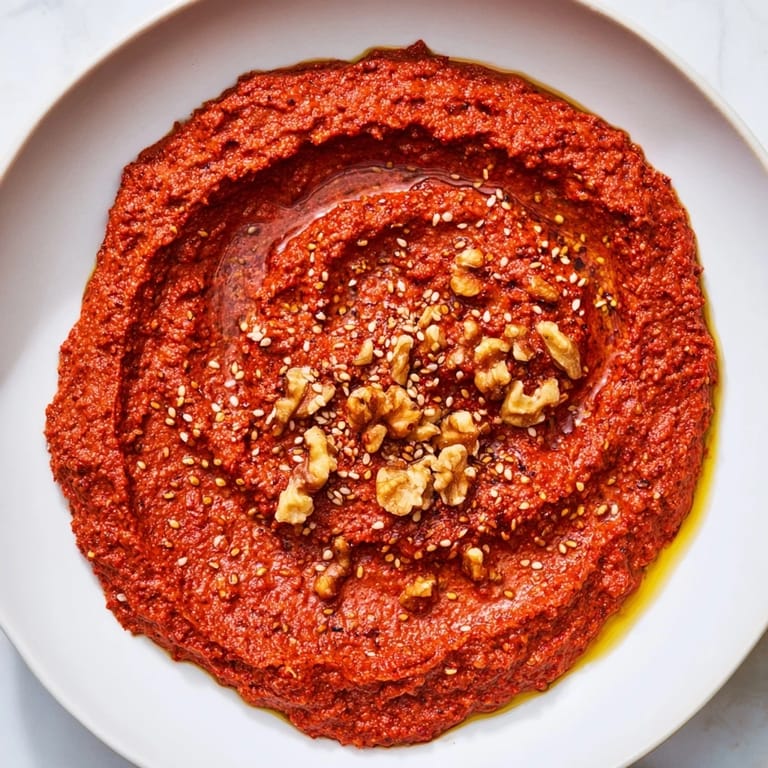
- Spoon the muhammara into a shallow bowl, drizzle with more olive oil (this makes it look beautiful and adds richness), and scatter toasted sesame seeds over the top if you have them. Serve it surrounded by warm pita, crackers, or fresh vegetables.
 Save
Save One evening, I brought muhammara to a potluck and watched someone's face light up when they recognized it—they'd grown up eating it and hadn't found a version they loved in years. We stood in someone's kitchen talking about roasted peppers and pomegranate molasses like we were sharing a secret language. That's when I understood that this dip wasn't just food; it was a small bridge between someone's past and their present.
The Smoke and the Sweetness
The magic of muhammara lives in the contrast between that charred, smoky pepper and the bright tug of pomegranate molasses. Every element has a reason—the walnuts add earthiness and body, the sesame seeds bring a subtle nuttiness, and the Aleppo pepper whispers heat instead of shouting it. If you're used to smooth, predictable dips, this one will feel alive in your mouth.
Variations and Flexibility
Some cooks grill their peppers over an open flame instead of roasting them, which deepens the smoke and adds a primal quality to the flavor. Others add a pinch of sugar if their pomegranate molasses leans too sour, or swap the walnuts for pine nuts if they want something lighter and more delicate. The recipe can take small adjustments without losing its identity.
How to Make It Your Own
This is the kind of dish that rewards tiny experiments. You might find you prefer it with more lemon, or you might love it with an extra pinch of cumin. The heat level is entirely yours to control—Aleppo pepper is forgiving and won't blow up the whole dish if you add too much, but it will gently build if you go conservative.
- Make it ahead of time; it actually tastes better after a day in the refrigerator, when all the flavors have learned to talk to each other.
- Keep it refrigerated for up to 5 days, and always drizzle fresh olive oil on top before serving, because that matters.
- Serve it as part of a mezze platter alongside hummus, baba ghanoush, and olives for a complete story.
 Save
Save This dip sits at that perfect intersection of simple and special, the kind of recipe you make when you want to taste something real without spending your whole evening in the kitchen. Once you make it, it becomes part of your repertoire—the thing you bring when you want to impress without trying too hard.
Recipe Guide
- → What gives muhammara its smoky flavor?
Roasting the red bell peppers until their skins char imparts a rich, smoky depth essential to muhammara’s signature taste.
- → Can I substitute walnuts with another nut?
Pine nuts or almonds can be used, but walnuts provide a uniquely creamy texture and earthy flavor that define this blend.
- → How should I adjust the spice level?
Modify the amount of Aleppo pepper or red chili flakes according to your heat preference for a milder or spicier result.
- → What is the role of pomegranate molasses in this dish?
Pomegranate molasses adds a vibrant tanginess and sweetness that balances the smoky and nutty flavors beautifully.
- → How long does the dip keep in the refrigerator?
Stored in an airtight container, it remains fresh for up to five days, making it great for advance preparation.
- → Is there an alternative to breadcrumbs for gluten-free diets?
Gluten-free breadcrumbs or crushed gluten-free crackers can be substituted without compromising texture.