 Save
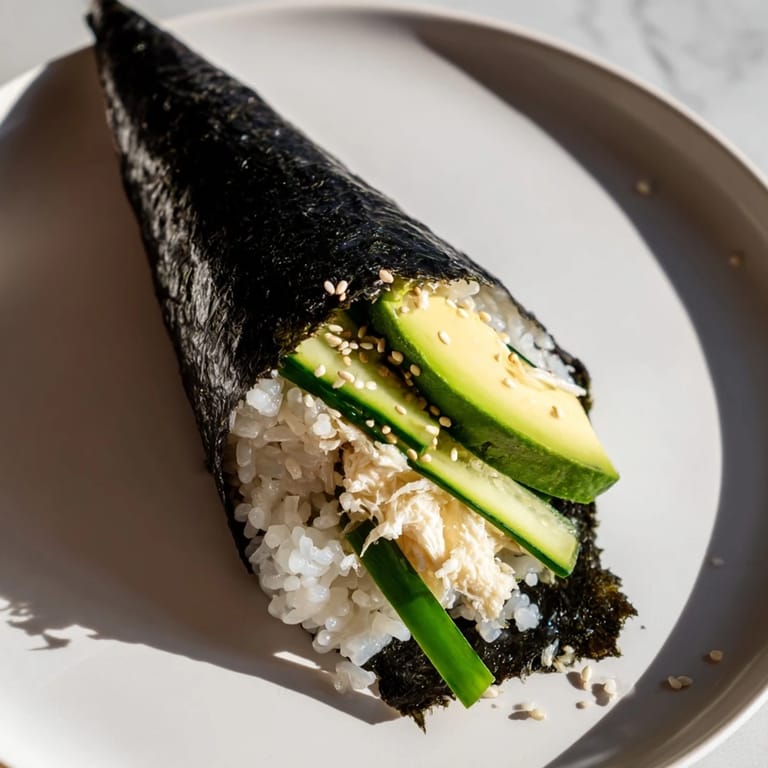
Save There's something almost meditative about making hand rolls at home—no special equipment, just your palm and a sheet of nori. The first time I made these, my hands were clumsy and the rice wouldn't stick quite right, but my kitchen smelled like sesame and vinegar, and somehow that made the imperfect cone taste like victory. Now these are my go-to when friends drop by unexpectedly because everyone can build their own, and suddenly you're all standing around the counter like you're in some casual izakaya, not a Tuesday night in your apartment.
I remember making these for a small dinner party where one guest had never had fresh sushi before, and watching their face light up when they bit into that first hand roll—the way the crab sweetness mixed with cool cucumber—felt like I'd given them something small but genuine. That's when I realized hand rolls aren't just food; they're an invitation to slow down and enjoy something together.
Ingredients
- Sushi rice (1 cup): Short-grain Japanese rice matters here because the starches make it sticky enough to hold together; regular rice will fall apart in your hand.
- Water (1 1/4 cups): The ratio keeps the rice tender but structured—too much water makes it mushy.
- Rice vinegar (2 tbsp): This tang is what makes sushi rice taste like sushi, not just seasoned rice; don't skip it.
- Sugar (1 tbsp) and salt (1/2 tsp): They dissolve into the rice and balance each other—the salt keeps it from tasting cloying.
- Ripe avocado: Use one that yields slightly to thumb pressure; if it's hard, it won't slice cleanly, and if it's bruised, the flavor gets mushy and off.
- English cucumber (1/2): The thinner seeds mean fewer watery pockets and a crisp bite that contrasts beautifully with the creamy avocado.
- Crab meat (120 g): Real crab has a subtle briny sweetness that imitation crab tries to copy; either works, but real crab makes you feel less like you're making a shortcut.
- Mayonnaise (1 tbsp, optional): A tiny bit mixed into the crab adds richness and helps it stick to the rice.
- Toasted sesame seeds: A whisper of umami and a little crunch that makes people think you went to more trouble than you did.
- Nori sheets, halved: The roasted side should feel papery and smell faintly oceanic; stale nori tastes like cardboard, so buy it fresh and store it in an airtight container.
Tired of Takeout? 🥡
Get 10 meals you can make faster than delivery arrives. Seriously.
One email. No spam. Unsubscribe anytime.
Instructions
- Rinse and cook the rice:
- Rinse under cold water, stirring gently with your fingers, until the water runs clear—this washes off extra starch so your rice isn't gummy. In a covered saucepan, bring 1 cup rice and 1 1/4 cups water to a boil, then drop the heat to low and let it steam for 15 minutes, undisturbed.
- Season while warm:
- Mix the vinegar, sugar, and salt until they fully dissolve, then fold this gently into the still-warm rice with a wooden spoon. The heat helps the seasoning soak in; don't stir too hard or you'll smash the grains.
- Cool to room temperature:
- Spread the rice on a shallow plate or wooden board and let it sit for 10–15 minutes; warm rice feels slippery in your hand, but cool rice grains cling together just right.
- Prep your fillings:
- Slice the avocado lengthwise around the pit, twist gently, scoop onto a cutting board, and slice into thin wedges. Julienne the cucumber into matchsticks—uniformity matters because thin, even pieces are easier to layer and less likely to poke through the nori.
- Assemble the hand roll:
- Place a half-sheet of nori, shiny side down, in your palm or on a mat. Spread about 2–3 tablespoons of rice diagonally across one corner in a thin layer, leaving room at the edges so it doesn't ooze out.
- Layer your fillings:
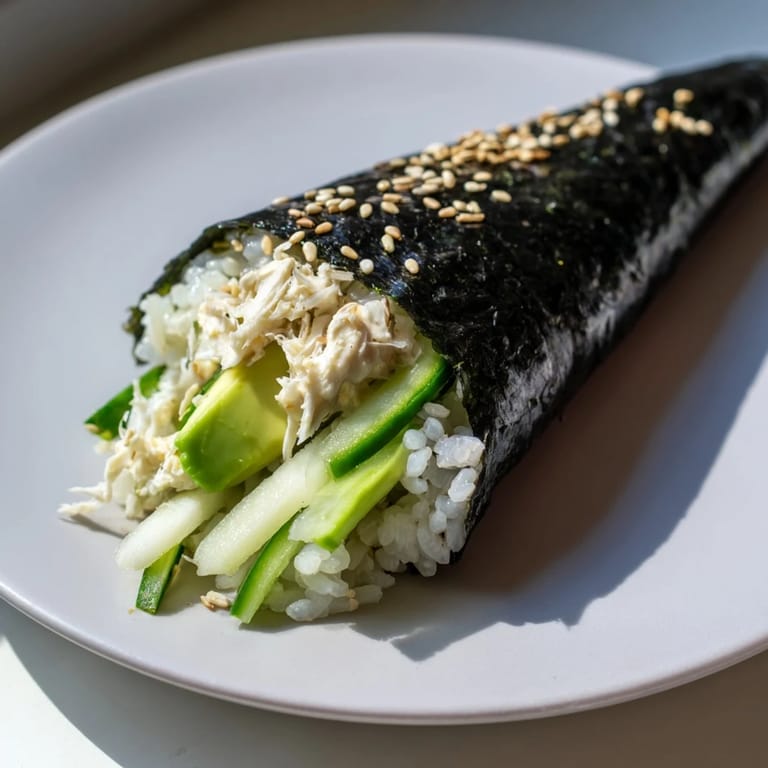
- Arrange a few slices of avocado, a small handful of cucumber, and a pinch of crab on top of the rice. A light hand here prevents the roll from bursting; you can always add more to the next one.
- Roll into a cone:
- Starting from the corner with the rice and fillings, fold the nori tightly toward the opposite corner, pressing gently so it holds. The seam should line up neatly; seal it with a single grain of rice pressed into the edge, which acts like glue.
- Serve immediately:
- Fresh nori has that satisfying snap; after 10 minutes, it starts absorbing moisture from the rice and loses its texture. Serve with small dishes of soy sauce, pickled ginger, and wasabi for dipping or dolloping.
 Save
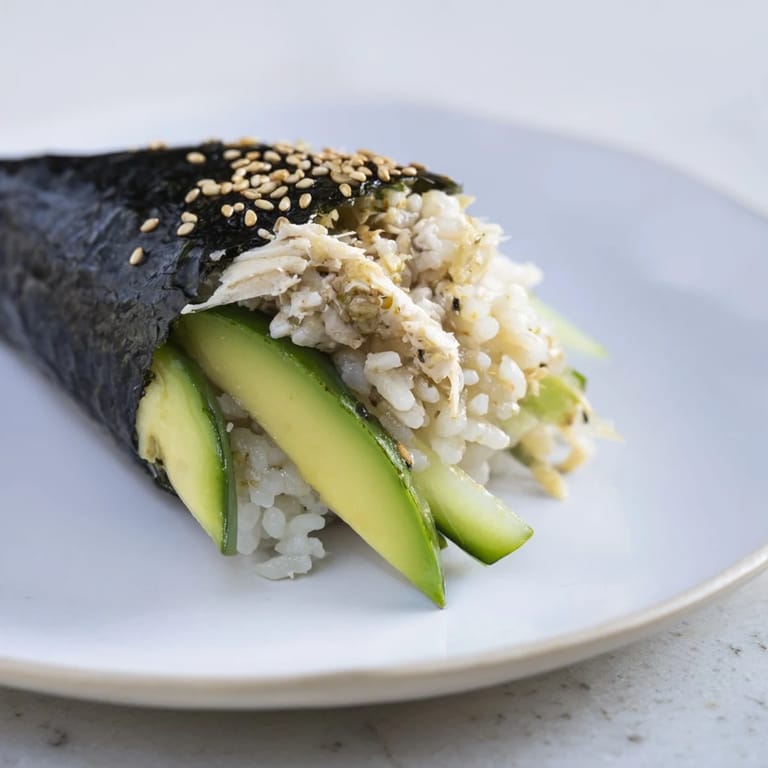
Save There's a quiet joy in hand rolls that you don't get with other cooking—maybe because you're meant to eat them with your hands, right then, with people beside you. I've found that the best part isn't the perfect technique; it's the moment when someone picks up a roll you made and takes that first bite without hesitation, trusting you completely.
Why Nori Matters More Than You Think
Nori is the first thing that hits your mouth, and if it's stale or low-quality, your entire roll suffers, no matter how perfect the rice is. I learned this the hard way when I bought a bulk pack from a restaurant supply store, thinking I was being economical; halfway through, the nori tasted like dried kelp smells—harsh and salty. After that, I switched to buying smaller packages from Japanese markets, checking the harvest date, and storing them in a sealed container with a silica packet. The difference is immediate: fresh nori tastes sweet and oceanic, with a subtle umami depth that makes you want to keep eating.
Customization Without Chaos
The beauty of hand rolls is that they adapt to whatever you have and whoever you're cooking for—I've made versions with cooked shrimp when crab wasn't available, replaced cucumber with thinly shaved radish for a peppery snap, and even used ripe mango for a friend who doesn't eat raw fish. The structure stays the same: something cool and crisp, something creamy, something with umami depth, all held together by rice and nori. Once you understand those flavor pillars, you can riff endlessly without the roll falling apart.
Rice Vinegar and the Science of Sticky
The seasoning mixture—vinegar, sugar, and salt—isn't just flavor; it's structural. The vinegar adds just enough acid to tighten the rice's starches, making it stickier and easier to handle without making it taste sour. I once tried substituting with white vinegar in a pinch, thinking it would work the same way, but the rice got gluey instead of cohesive, and my rolls started falling apart as I assembled them. Since then, I keep rice vinegar on hand like it's part of my backbone.
- Fold the seasoning in gently with a wooden spoon—aggressive stirring bruises the rice grains and turns them into mush.
- If your rice seems dry after cooling, sprinkle a tiny bit of water and fold it in; sushi rice should feel slightly moist, not sticky.
- Make rice about 15–20 minutes before you start rolling so it's neither hot nor cold when you handle it.
 Save
Save Hand rolls are proof that the simplest meals can feel like an occasion, as long as you make them with intention and eat them with people you like. Every time I make these, I'm reminded that cooking isn't about perfection—it's about showing up and sharing something fresh.
Recipe Guide
- → What type of rice is best for these hand rolls?
Short-grain Japanese sushi rice is preferred for its sticky texture, which helps hold the rolls together.
- → Can I substitute crab with other fillings?
Yes, cooked shrimp or smoked salmon work well as alternatives to crab in these hand rolls.
- → How should the sushi rice be seasoned?
Mix rice vinegar, sugar, and salt into the hot cooked rice, then let it cool to room temperature before assembling.
- → What is the best way to roll the hand rolls tightly?
Place a small amount of rice diagonally on the nori half-sheet, add fillings, then carefully roll into a cone shape, sealing with a few grains of rice.
- → Are there any recommended accompaniments?
Serve with soy sauce, pickled ginger, and wasabi to enhance flavors and add traditional condiments.
- → How can I add a spicy kick to these rolls?
Add a small amount of Sriracha to the crab mixture before assembling for a subtle heat.