 Save
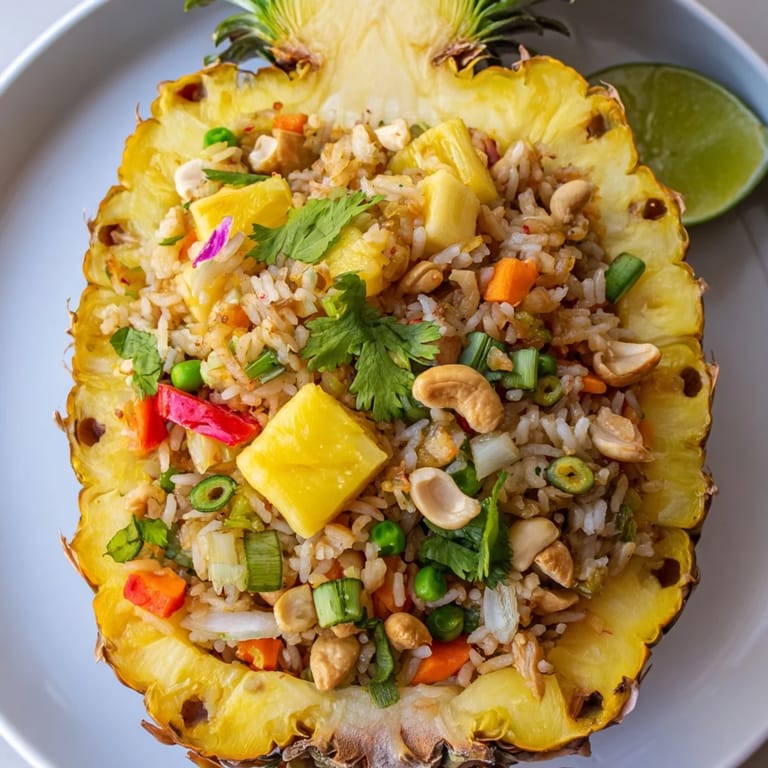
Save The first time I served pineapple fried rice, it wasn't planned—I had a ripe pineapple sitting on my counter and leftover rice from the night before, and something clicked. I'd been craving that sweet-savory balance I remembered from a small Thai restaurant tucked behind my old apartment, but I wanted to recreate it at home, on my own terms. Hollowing out that pineapple felt like opening a gift I was making for myself. The moment the golden rice hit the shell and released that toasted aroma, I knew I'd stumbled onto something special.
I made this for my sister on a humid July evening when she'd had a rough week. She walked in, saw the pineapple sitting there like some kind of tropical centerpiece, and actually laughed—a real one, the kind that had been missing for a while. We ate straight from the shells on her back porch, lime juice dripping down our hands, and she asked me to make it again before she'd even finished. That's when I understood: this dish isn't just about flavor; it's a moment.
Ingredients
- 1 large ripe pineapple: Pick one that smells sweet at the base and yields slightly to pressure—this is where your whole presentation lives, so choose carefully and don't rush this part.
- 3 cups cooked jasmine rice (preferably day-old): Cold rice is non-negotiable; fresh rice will turn mushy and sad, while day-old rice has firmed up just enough to stay separated and distinct in the pan.
- 2 tablespoons vegetable oil: Use something neutral that can handle high heat without smoking—neutral oil lets the other flavors shine.
- 1 small onion, finely diced: Dice it small so it melts into the rice rather than fighting for attention.
- 2 cloves garlic, minced: Mince it fine and watch it carefully—burnt garlic tastes bitter, so keep the heat lively but not vicious.
- 1 medium carrot, diced: Cut it into small cubes so it cooks through in the short time you have; bigger pieces won't soften enough.
- 1 red bell pepper, diced: Red peppers have more natural sweetness than other colors, which echoes the pineapple beautifully.
- 2 eggs, lightly beaten (optional; omit for vegan): Eggs add richness and protein, and they scramble into little pockets throughout the rice if you push them to the side first.
- 1/2 cup frozen peas: Frozen peas are actually ideal here—they thaw perfectly in the residual heat and stay bright green.
- 1/2 cup unsalted roasted cashews: The crunch against soft rice matters; raw cashews will feel waxy, and salted ones will make the whole dish too salty.
- 1/2 cup pineapple flesh, diced (from the hollowed pineapple): Dice the flesh you carve out so the pieces are roughly the size of peas—larger chunks feel awkward when you're eating.
- 3 scallions, sliced: Add these at the very end so they keep their freshness and bite; cooking them makes them meek.
- 1/4 cup raisins or golden sultanas (optional): These add a subtle chewiness and sweetness that deepens the flavor without screaming themselves into the dish.
- 2 tablespoons soy sauce: Use tamari if you need gluten-free, and taste as you go—soy sauce is your main seasoning, so respect it.
- 1 tablespoon fish sauce (optional; omit for vegetarian/vegan): A small amount adds umami depth that makes people wonder what the secret ingredient is, but skip it without guilt if needed.
- 1 teaspoon curry powder: A gentle warmth rather than heat; it ties all the flavors together like a quiet thread.
- 1/2 teaspoon white pepper: White pepper is warmer and less sharp than black pepper, which means it plays nicer with sweet flavors.
- 1 teaspoon sugar: A pinch to balance salt and warm spices—you're not making dessert, just rounding out the savory profile.
- Salt, to taste: Taste everything before you finish; soy sauce brings salt, but the final balance is yours to decide.
- Fresh cilantro leaves: A handful scattered on top adds brightness and freshness that makes people feel like they're eating something alive.
- Lime wedges: Squeeze these over as you eat; the acidity wakes up the whole dish.
Tired of Takeout? 🥡
Get 10 meals you can make faster than delivery arrives. Seriously.
One email. No spam. Unsubscribe anytime.
Instructions
- Carve Your Canvas:
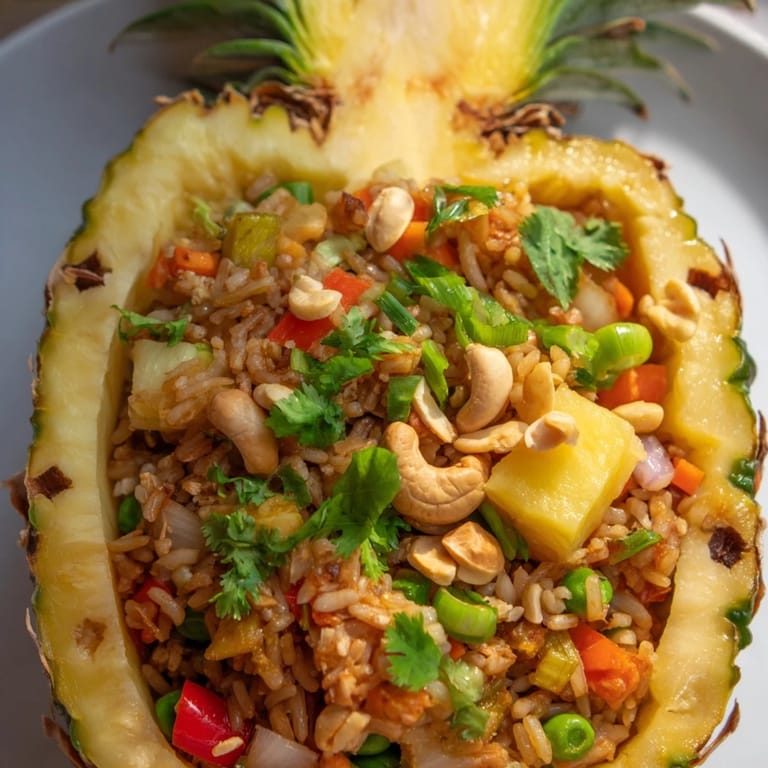
- Slice the pineapple in half lengthwise, keeping the crown of leaves intact—this is your serving vessel and your visual magic. Using a small sharp knife and a steady hand, carve out the flesh carefully, leaving a sturdy half-inch shell so the pineapple doesn't collapse under the weight of warm rice. Dice half a cup of the removed flesh into small chunks and set it aside; if you have extra, eat it or save it for something else.
- Get Your Wok Hot:
- Set a large wok or skillet over medium-high heat and let it get genuinely hot—you want that first shimmer of oil to move freely across the surface. The heat is what gives fried rice its character, so don't rush this or start cooking before the pan is ready.
- Build Your Flavor Base:
- Pour in the vegetable oil and let it coat the pan. Once it shimmers, add your diced onion and minced garlic, stirring constantly for about a minute until the kitchen smells like something warm and inviting. You're not looking for color here, just fragrance.
- Develop the Vegetables:
- Add the carrot and bell pepper to the pan and keep the heat high. Stir-fry for two to three minutes, listening for the slight sizzle and watching the vegetables soften just at the edges while staying crisp at their centers—this texture contrast is important.
- Scramble the Eggs:
- Push all the vegetables to one side of the pan. Pour your beaten eggs into the empty space and let them sit for a moment before gently scrambling them with your spatula until they're just set. If you're skipping eggs, just move to the next step.
- Introduce the Rice:
- Add your cold rice to the pan and break up any clumps with the back of your spatula or spoon—you're separating every grain so heat reaches everywhere at once. This takes a minute or two of patient work, but it's the difference between fluffy fried rice and gluey fried rice.
- Build the Flavor:
- Scatter in the peas, diced pineapple, cashews, and raisins if you're using them. Pour in the soy sauce, fish sauce, curry powder, white pepper, and sugar. Stir everything together and let it cook for two to three minutes so the seasonings can marry and the rice heats through. Taste a bite and adjust salt if needed.
- Finish with Brightness:
- Take the pan off the heat and toss in the sliced scallions, stirring just once or twice so they stay fresh and sharp. The residual heat will warm them enough.
- Present Your Masterpiece:
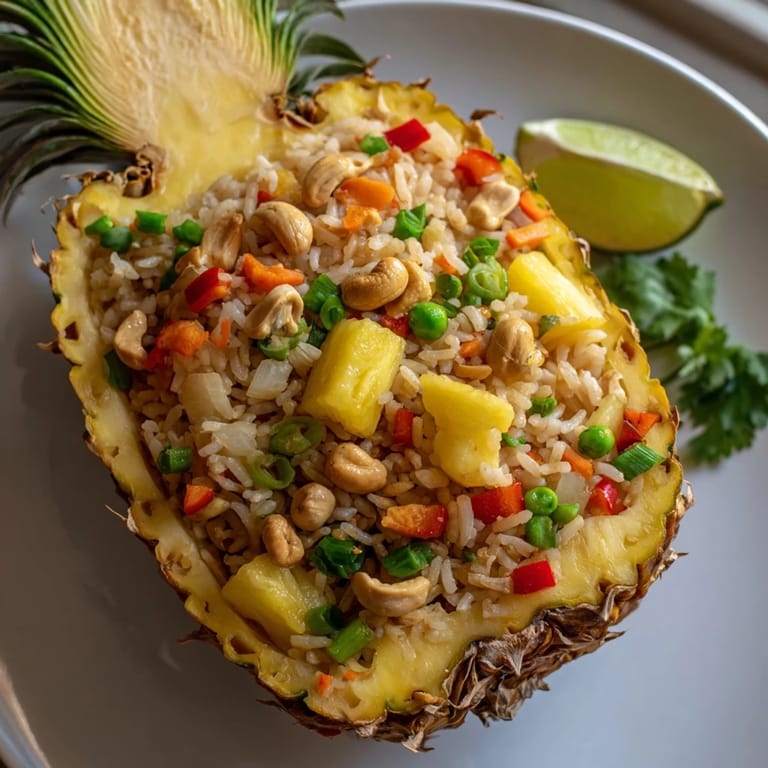
- Using a large spoon, mound the warm fried rice into each pineapple half, piling it generously so it looks abundant. Scatter fresh cilantro over the top and set lime wedges alongside each shell, then bring it to the table and watch people's faces when they realize they're eating from a pineapple.
 Save
Save My grandmother, who grew up in Thailand, made pineapple fried rice exactly once for me before she passed, and I've been trying to capture that meal ever since. She didn't measure anything—just moved around the kitchen with the kind of certainty that comes from making something a thousand times. This dish taught me that food isn't just about following steps; it's about remembering people and bringing them back to your table through flavor.
Why This Works as a Showstopper
The pineapple shell does something almost magical—it transforms a simple stir-fry into an experience, and suddenly you're serving something that feels special even though you didn't spend hours in the kitchen. The natural sweetness of the pineapple plays against the salt and umami of the seasonings, creating a balance that feels almost balanced without being boring. The texture contrast of soft rice, snappy cashews, and bright fresh herbs makes each bite interesting, so people actually slow down and taste what they're eating instead of rushing through a meal.
Customizing Without Losing the Soul
The beauty of this dish is that it adapts without falling apart—add shrimp or chicken in step five if you want protein, or crumble tofu in for a vegan version that's just as satisfying. I've made this for friends with different diets and allergies, and every version worked because the foundational flavors are strong enough to support these changes. The only thing I wouldn't mess with is the day-old rice and the high heat; those two things are what make this taste like restaurant fried rice instead of something you threw together.
Serving and Storage Wisdom
This dish is best eaten fresh from the pan while the rice is still warm and the pineapple shell is cool against your hands. If you do have leftovers, store the rice separately from the pineapple shell and reheat gently in a pan with a splash of oil—the shell keeps well in the fridge for a few days but the rice is always better eaten the same day it's made. Serve with Thai chili sauce on the side if your guests like heat, and always have lime wedges within arm's reach.
- Make this dish a day ahead up to the frying stage, then cook it fresh when you're ready to serve.
- The pineapple shell can be carved the morning of and stored covered in the fridge until you need it.
- Leftover fried rice reheats beautifully in a hot pan with a little oil, and it's actually better the next day because the flavors have time to settle and deepen.
 Save
Save This dish reminds me that the best meals happen when you're not trying too hard—when you work with what you have and trust your instincts. Every time I make it, someone asks for the recipe, and I always hand it over knowing they're about to discover something small but real.
Recipe Guide
- → What type of rice works best for this dish?
Day-old cooked jasmine rice is ideal as it helps prevent clumping and ensures a fluffy texture during stir-frying.
- → Can I make this dish vegan?
Yes, simply omit the eggs and fish sauce, and use tamari instead of regular soy sauce to keep it plant-based.
- → How do I prepare the pineapple for serving?
Slice the pineapple lengthwise and carefully hollow out the flesh, reserving about half a cup to dice into the rice. Use the hollow pineapple halves as natural serving bowls.
- → What spices add key flavor to the fried rice?
Curry powder, white pepper, and a touch of sugar balance the savory soy and fish sauces, contributing warmth and complexity to the dish.
- → Are there protein options to include?
Yes, cooked chicken, shrimp, or tofu can be added during cooking to increase protein and complement the flavors.