 Save
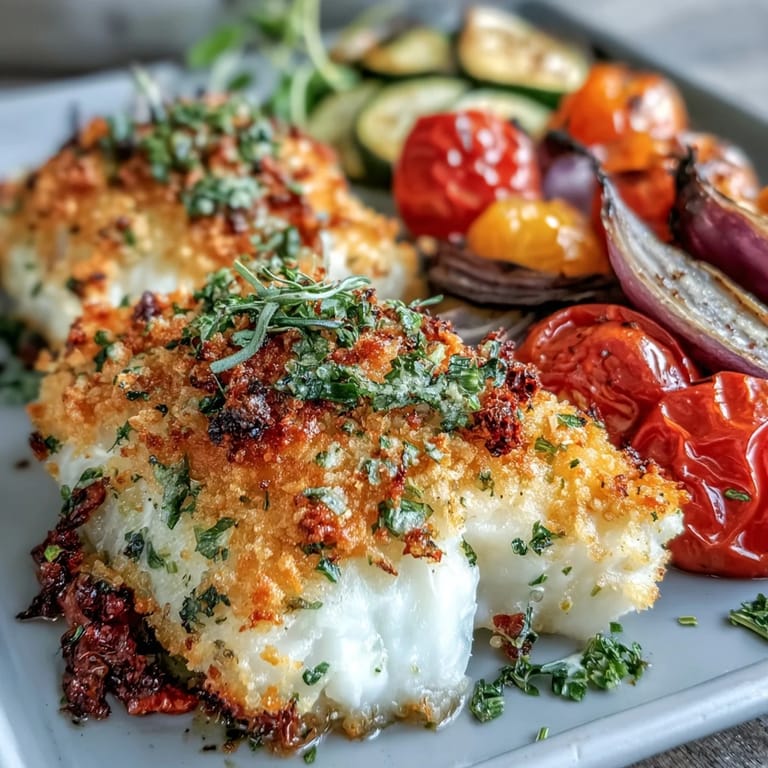
Save There's something about cooking fish on a sheet pan that feels both effortless and impressive, like you've somehow cracked a kitchen secret. I discovered this particular combination on a Wednesday evening when I had four hungry people coming over and exactly thirty minutes to prove I knew what I was doing. The crispy Parmesan crust came about because I'd just bought a wedge of Asiago on impulse and wanted to use it immediately, and the roasted vegetables were simply whatever looked bright and promising at the market that day. What surprised me most was how the whole thing came together in one pan, with the fish staying impossibly tender while the vegetables caramelized into something almost sweet.
I made this for my sister during a lazy Saturday afternoon in early spring, when the farmers market was finally exploding with color again. She watched me assemble it and kept asking if I was sure it would work, and then twenty-five minutes later she was reaching for seconds and asking for the recipe. That moment when someone tastes something you've made and their whole face changes—that's what this dish does consistently.
Ingredients
- Cod fillets (four, about 150 g each): Choose pieces that are roughly the same thickness so they cook evenly, and pat them dry before the cheese coating sticks properly to the surface.
- Panko breadcrumbs (1/2 cup): The airy texture gives you that satisfying crunch without weighing down the delicate fish.
- Parmesan cheese (1/3 cup grated): Use freshly grated if you can—pre-shredded versions have anti-caking agents that prevent the crust from binding as well.
- Asiago cheese (1/3 cup grated): This adds a slightly nutty complexity that keeps the dish from tasting one-dimensional.
- Fresh parsley (2 tablespoons chopped): It brightens everything and adds visual life to an otherwise golden-brown crust.
- Garlic powder (1/2 teaspoon): A little goes a long way here; it whispers rather than shouts.
- Paprika (1/2 teaspoon): Choose sweet paprika for gentle warmth and color.
- Black pepper and salt: Season as you build the crust, then adjust again with the vegetables.
- Olive oil (3 tablespoons total): Two tablespoons go into the cheese mixture to create texture, and one goes into the vegetables for even roasting.
- Bell peppers (one red, one yellow, sliced): They add sweetness and don't fall apart during roasting like some vegetables do.
- Zucchini (1 medium, sliced into half-moons): Cut them thick enough that they stay firm but thin enough to cook through completely.
- Red onion (1 small, cut into wedges): The natural sugars caramelize beautifully, and the color looks stunning on the plate.
- Cherry tomatoes (200 g, halved): Wait until the last minute to cut these so they don't weep juice all over everything.
- Dried oregano (1/2 teaspoon): It ties the Mediterranean flavors together without requiring fresh herbs you might not have.
Tired of Takeout? 🥡
Get 10 meals you can make faster than delivery arrives. Seriously.
One email. No spam. Unsubscribe anytime.
Instructions
- Get your oven ready:
- Preheat to 220°C (425°F) and line your largest sheet pan with parchment paper or a light drizzle of oil. The higher heat ensures the cheese crust crisps before the fish dries out.
- Build your cheese crust:
- Combine panko, both cheeses, parsley, garlic powder, paprika, pepper, and salt in a bowl, then drizzle in two tablespoons of olive oil and use your fingers to mix it until it looks like damp sand. This texture is crucial—it needs enough oil to hold together but enough air to stay crunchy.
- Position the fish:
- Pat the cod fillets completely dry with paper towels and arrange them on one side of the sheet pan with space between each piece. Brush each fillet lightly with olive oil, which helps the cheese mixture adhere and prevents sticking.
- Apply the crust:
- Press the cheese mixture firmly onto the top of each fillet, working it gently so it adheres without falling off during roasting. Don't worry about perfect coverage—rustic looks better anyway.
- Prepare the vegetables:
- Toss the peppers, zucchini, onion, and tomatoes in a large bowl with one tablespoon of olive oil, oregano, salt, and pepper until everything's evenly coated. Spread them on the empty side of the sheet pan in a single layer, giving them room to roast rather than steam.
- Roast everything together:
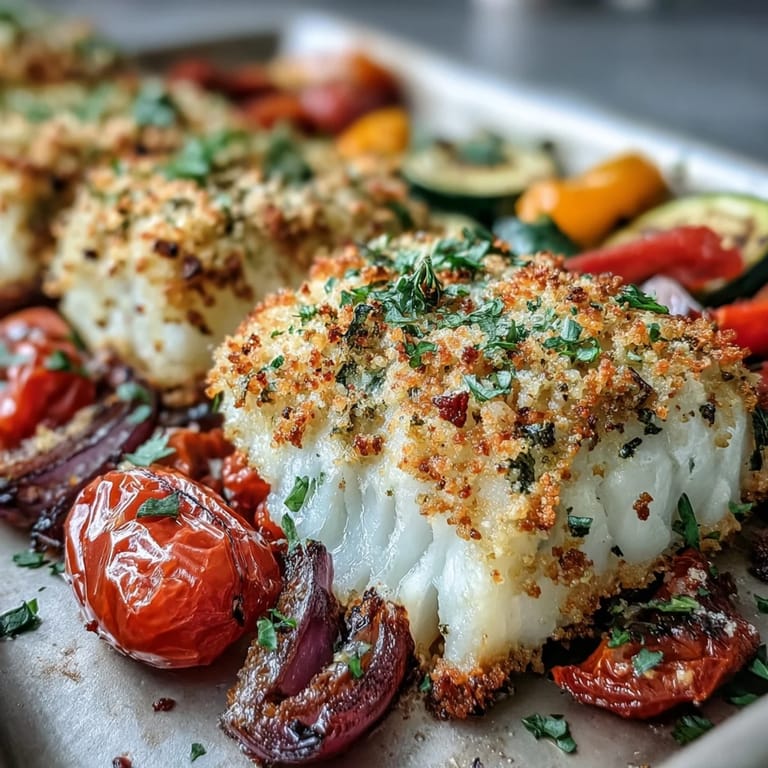
- Slide the pan into the oven and roast for twenty to twenty-five minutes, until the fish is golden and flakes apart easily with a fork and the vegetables have softened with caramelized edges. The exact time depends on your oven, so start checking at the twenty-minute mark.
- Finish and serve:
- Pull the pan out carefully—it will be hot—and taste everything before plating. A squeeze of fresh lemon is optional but transforms the whole dish.
 Save
Save I've served this to people who claim they don't really eat fish, and every single time they've been surprised by how tender and mild the cod is, especially when it's cooked this way. That's when I realized the recipe works because it doesn't pretend to be something fancy—it's just honest food that happens to look restaurant-worthy.
Why Sheet Pan Cooking Changes Everything
Sheet pan meals have this quiet magic where everything roasts together and flavors mingle without you having to orchestrate multiple burners. The fish releases subtle moisture that seasons the vegetables, and the vegetables' natural sugars caramelize in the heat, creating a foundation of flavor that makes the whole plate taste intentional. It's less about technique and more about letting ingredients do what they're designed to do when given the right temperature and space.
Choosing Your Fish and Vegetables
Cod is forgiving—it has a mild flavor that plays well with others and stays moist because of its fat content, but haddock or tilapia work just as beautifully if that's what's fresh. The vegetables should be things that finish roasting in roughly the same time frame, so avoid anything that takes forever like whole beets or chunks of carrot. Bell peppers, zucchini, and cherry tomatoes are practically designed for this method because they break down gently rather than turn to mush.
Making It Your Own
The recipe structure is flexible enough that you can swap components based on what you find at the market or what you're craving that day. I've made it with asparagus instead of zucchini, with more onion when I want something sweeter, and even with snap peas when spring arrives and they're suddenly everywhere. The constants are the fish, the cheese crust, and the roasting method—everything else is permission to improvise.
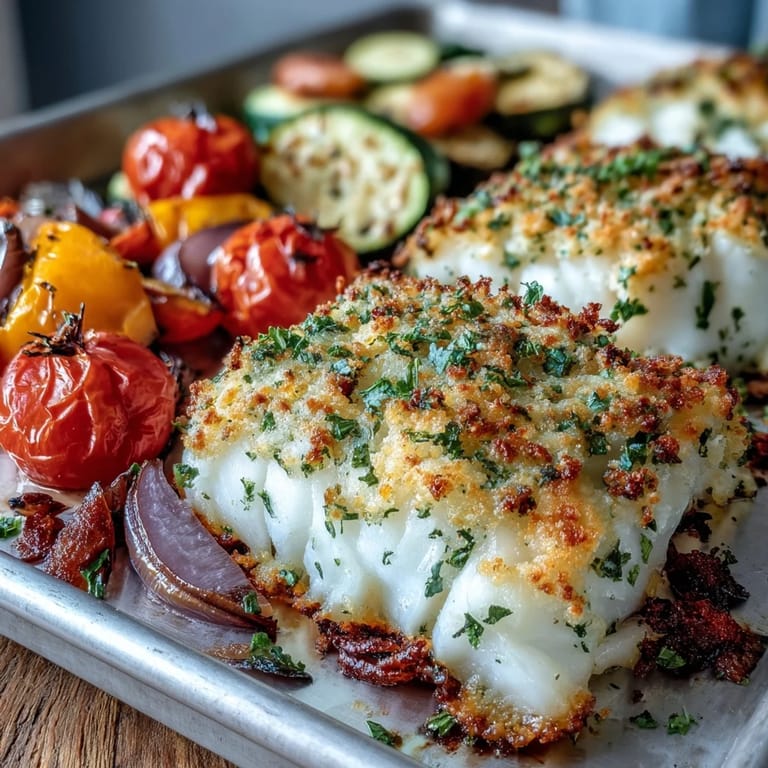
- A squeeze of lemon juice right before serving adds brightness that makes all the flavors pop.
- If you want it gluten-free, crushed cornflakes work surprisingly well instead of panko.
- Pair this with a crisp white wine like Pinot Grigio or even a light rosé if you're in that mood.
 Save
Save This is the kind of recipe that quietly becomes a regular in your rotation because it works, tastes good, and doesn't demand much from you. Make it once for yourself, then make it again when people are coming over and you want to seem like you know what you're doing.
Recipe Guide
- → What type of fish works best for this dish?
Cod fillets are ideal due to their mild flavor and firm texture that holds up well during roasting. You can substitute with haddock, tilapia, or other white fish fillets of similar thickness.
- → Can I make this gluten-free?
Yes, replace regular panko breadcrumbs with gluten-free panko or crushed cornflakes. Ensure your cheeses are certified gluten-free as some processed cheeses may contain additives.
- → How do I know when the fish is done?
The fish is ready when the coating is golden brown and the fillets flake easily when tested with a fork. The internal temperature should reach 63°C (145°F).
- → Can I prepare the vegetables ahead of time?
Yes, you can slice the vegetables up to a day in advance and store them in an airtight container in the refrigerator. Toss with oil and seasoning just before roasting.
- → What sides pair well with this meal?
The dish is complete with vegetables, but you can serve with crusty bread, over rice, or alongside a simple green salad. A crisp white wine like Pinot Grigio complements the flavors beautifully.
- → Can I add different vegetables?
Absolutely. Broccoli florets, asparagus, green beans, or baby potatoes work well. Adjust cooking time as needed—denser vegetables may require a few extra minutes.