 Save
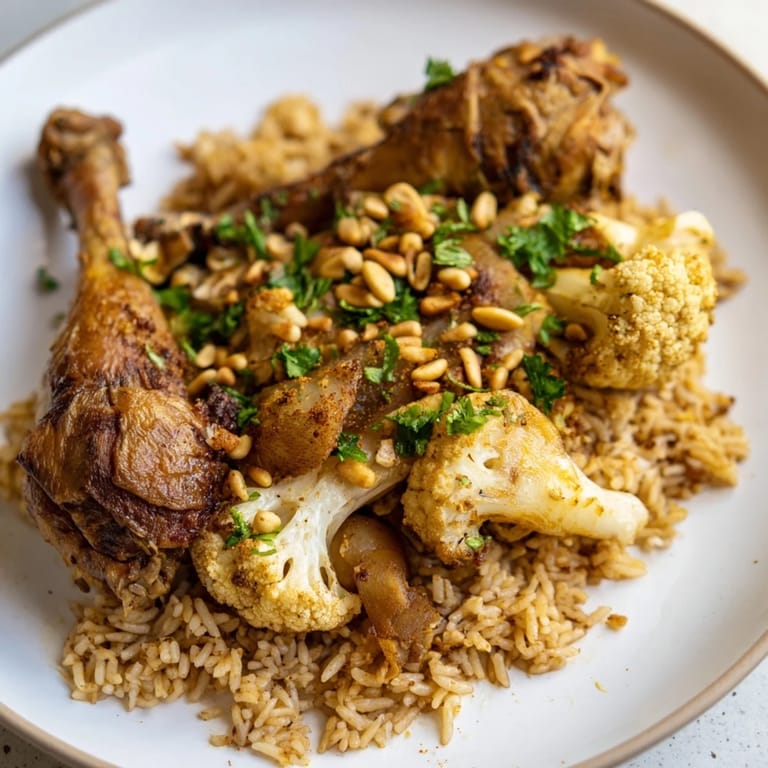
Save My first encounter with maklouba was at my aunt's kitchen table on a Friday afternoon, the air thick with the scent of warming spices and golden-fried cauliflower. She'd been making this dish since before I was born, and watching her carefully layer rice, chicken, and vegetables into that enormous pot felt like witnessing something sacred. When she inverted it onto the platter with one swift, confident motion and that perfect golden dome emerged, I understood why this dish had traveled through generations and across continents. It wasn't just food—it was a moment of controlled drama in the kitchen, and I was hooked.
The first time I made this myself, my kitchen filled with a steam cloud the moment I lifted the pot lid, and I panicked thinking something had gone wrong. My hands trembled as I placed the platter on top and flipped the whole thing upside down, half-expecting it to collapse. When I lifted the pot and saw that golden, perfectly formed dome of rice studded with caramelized potatoes and chicken, I called everyone into the kitchen like I'd just pulled off a magic trick. The relief and joy on their faces as we dug in was worth every moment of doubt.
Ingredients
- Bone-in chicken pieces (1.2 kg): The bones add richness to the broth and keep the meat tender through the long cooking. Thighs and legs are ideal because they stay juicy, unlike breast meat which can dry out.
- Basmati rice (2 cups): The long grains stay separate and don't turn mushy. Soaking removes excess starch so the rice cooks evenly and absorbs all those fragrant spices.
- Cauliflower florets and potatoes: These create the crispy golden layer that everyone fights over. Slice potatoes thin so they fry quickly and become paper-thin in spots, creating different textures throughout.
- Cumin, coriander, cinnamon, turmeric, allspice, and cardamom: This isn't a spice dump—each one plays a role. Cumin and coriander anchor the savory base, cinnamon adds unexpected warmth, and cardamom brings a subtle floral note that makes people ask what that wonderful smell is.
- Chicken stock (5 cups): Use homemade if you can; it makes a noticeable difference. The broth should taste flavorful on its own because it's doing the heavy lifting of hydrating and flavoring the rice.
Tired of Takeout? 🥡
Get 10 meals you can make faster than delivery arrives. Seriously.
One email. No spam. Unsubscribe anytime.
Instructions
- Prepare the rice with intention:
- Rinse the basmati under cold water until the water runs clear, rubbing the grains gently between your fingers. This removes the starch coating and lets each grain stay separate. Soak it in salted water for 30 minutes—this hydrates it partially so it finishes cooking in exactly the right time.
- Build a flavorful broth base:
- Brown the chicken pieces until they're golden and slightly crispy on the outside, then set aside. Sauté onions until they turn translucent and sweet, then add all your spices at once, stirring for a full minute so they bloom and release their oils into the oil. Return the chicken, add stock, and simmer just until the meat is cooked through but still tender.
- Create the golden crust:
- Fry the cauliflower and potato slices in batches so they brown properly rather than steam. You want them golden and crispy on the outside, tender inside. Drain them well on paper towels so excess oil doesn't make the rice soggy.
- Layer like you're building something:
- Potatoes on the bottom form a protective, crispy layer that won't stick. Chicken in the middle, cauliflower next, then rice on top. Press down gently—you want it snug but not compacted so hard that steam can't circulate.
- Cook covered and undisturbed:
- Pour the broth until it just covers the rice. Once it starts bubbling at the edges, lower the heat to the gentlest simmer and cover tightly. Do not peek. Do not stir. The 35 to 40 minutes of undisturbed cooking is what transforms this into something special.
- Rest and invert with confidence:
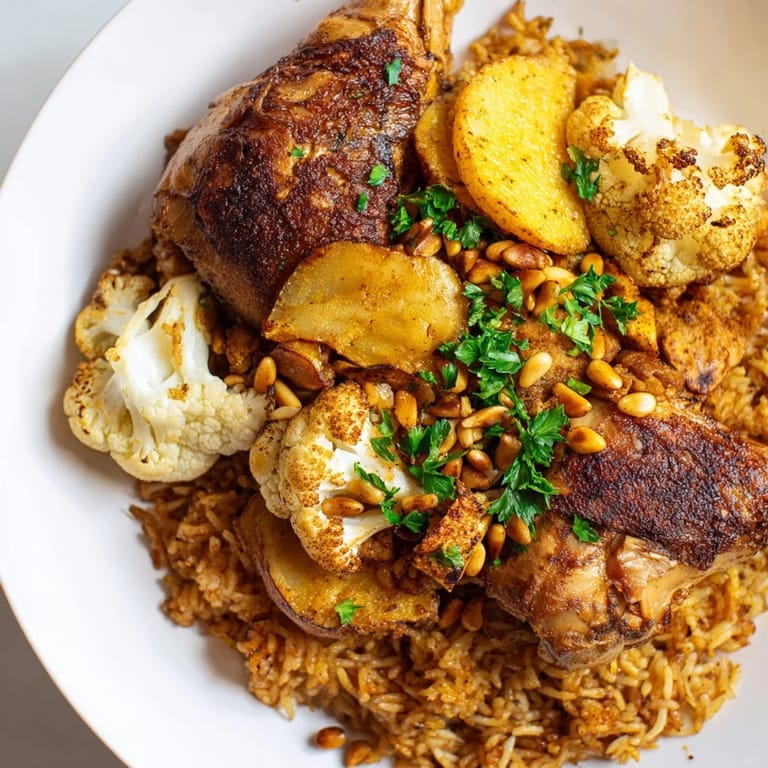
- Let it sit off the heat for 10 to 15 minutes—this lets the rice finish hydrating and firms everything up so it holds its shape. Place your serving platter directly over the pot, take a breath, and flip it quickly and decisively. Lift the pot away slowly to reveal your creation.
 Save
Save There's something profound about a dish that requires trust. You layer everything carefully, cover it, and then you simply have to believe that the heat and steam will do their job while you step away. The first time I didn't peek or fuss, I discovered that was the whole secret—maklouba rewards patience, not interference. That moment of inversion, when you flip it and lift the pot to reveal a golden dome, feels like the dish is rewarding your restraint.
The Spice Story
These spices aren't random; they're the whispered language of Palestinian kitchens. Cinnamon and turmeric together create warmth without heat, while cardamom adds a sophisticated floral note that sneaks up on you. The first time I smelled them all blooming together in the hot oil, I understood that maklouba tastes the way it does because someone, generations ago, figured out this exact balance and passed it down. Don't skip or substitute any of them—they're all essential.
Getting the Inversion Right
This is the moment that looks dramatic and tastes even better. The key is a heavy serving platter large enough to cover the pot completely and heavy enough to support the weight. When you flip, you need to commit to the movement—hesitation is when things fall apart. I've learned that placing a clean kitchen towel under the platter gives you extra grip and confidence, and some people like to loosen the edges with a thin knife before flipping, just to be safe.
Variations and Additions
Maklouba is a forgiving dish that welcomes creativity while staying true to itself. Some families add eggplant slices, which become silky and tender in the oil. Others layer in thin carrot slices or include whole tomatoes that soften into the rice. For vegetarian versions, use vegetable broth and skip the chicken, letting the vegetables and spices be the stars. A small pinch of saffron soaked in warm broth adds luxury and color, though it's never necessary—the dish is complete without it.
- Add a drizzle of pomegranate molasses for brightness and tartness after serving.
- Serve with thick yogurt on the side; the cool creaminess is a perfect counterpoint to the warm spices.
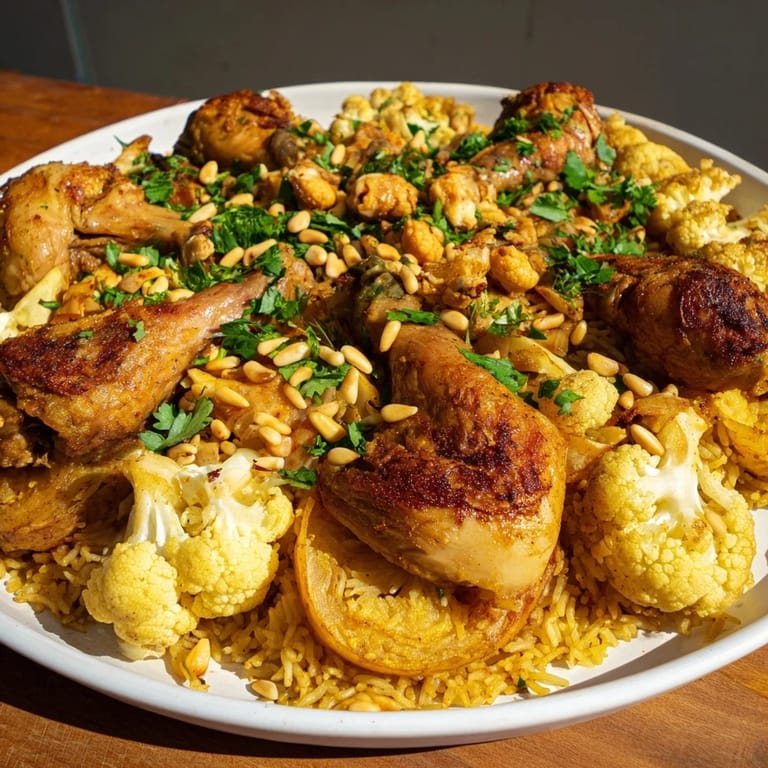
- Toast your pine nuts or almonds fresh rather than buying pre-toasted—the difference in flavor is remarkable.
 Save
Save Maklouba is the kind of dish that teaches you something every time you make it, whether it's about patience, trust, or the power of building flavors in layers. Serve it hot, watch people's faces when they taste it, and know you've just brought something meaningful to the table.
Recipe Guide
- → What is the key to perfecting the layered structure?
Ensuring each ingredient is prepared correctly and layering them gently in the pot helps maintain the shape when inverted.
- → Can I use other vegetables besides cauliflower and potatoes?
Yes, adding slices of eggplant or carrots can add variation and extra flavor to the dish.
- → How do the spices influence the flavor?
A blend of cumin, coriander, cinnamon, turmeric, allspice, and cardamom creates a warm, aromatic profile balanced by the savory broth.
- → What’s the best way to brown the chicken?
Brown chicken pieces in olive oil over medium-high heat until golden on all sides before simmering for deeper flavor.
- → How should the dish be rested before serving?
Allow the pot to rest covered off heat for 10-15 minutes to let flavors settle and make unmolding easier.