 Save
Save There's a specific afternoon I think of whenever I make tabbouleh—standing in a cramped kitchen in Beirut with my friend Layla, who moved her hands with such confidence while chopping parsley that she barely glanced down. She'd taught me that the herb-to-grain ratio was the secret, that most Westerners got it backwards by loading up on bulgur when tabbouleh should taste like you're eating a salad of pure green. That lesson stuck with me, and now every time I make this, I can almost hear her humming while the knife hits the cutting board in that steady rhythm.
I remember bringing this to a potluck on a sweltering July evening when everyone else showed up with heavy, cooked dishes, and I watched people come back to the tabbouleh bowl again and again, looking visibly relieved to have something cool and alive on their plates. One guest, who claimed to hate salads, had three servings before asking me for the recipe—that moment felt like a small victory.
Ingredients
- Fine bulgur wheat: Use fine, not coarse—coarse bulgur absorbs water differently and throws off the whole balance; soak it just until tender, not mushy.
- Boiling water: The heat cooks the bulgur gently without heat on a stove, which preserves the grain's texture.
- Flat-leaf parsley: This is non-negotiable; curly parsley is too delicate and doesn't give you that fresh, peppery bite tabbouleh demands.
- Fresh mint: It adds a cooling brightness that feels essential in warm months.
- Spring onions: The white and light green parts bring a subtle sharpness without overpowering the herbs.
- Tomatoes: Choose ripe ones at peak season; seeding them prevents the salad from becoming watery.
- Cucumber: Half a medium one keeps things fresh without drowning the herbs.
- Extra-virgin olive oil: Quality matters here since it's a raw dressing—cheap oil tastes flat and greasy.
- Fresh lemon juice: Bottled juice is a different thing entirely; squeeze it yourself right before mixing.
- Sea salt and black pepper: Taste as you go, because acid and salt levels shift once everything sits.
Tired of Takeout? 🥡
Get 10 meals you can make faster than delivery arrives. Seriously.
One email. No spam. Unsubscribe anytime.
Instructions
- Soften the bulgur:
- Pour boiling water over the bulgur in a small bowl, cover it, and walk away for 10–15 minutes. You'll see it gradually absorb the water and fluff up slightly—it should be tender but still have a tiny bit of chew, not falling apart.
- Prep your vegetables and herbs:
- While the bulgur hydrates, chop everything finely and with purpose. Take your time here; uniform pieces mean even flavor distribution and a prettier final dish.
- Combine the fresh ingredients:
- Toss the parsley, mint, spring onions, tomatoes, and cucumber together in a large bowl. You're building the flavor foundation right now, so don't rush.
- Add the cooled bulgur:
- Once the bulgur has cooled slightly, drain it if there's any excess water pooled at the bottom, fluff it with a fork, then fold it gently into the vegetables.
- Make the dressing:
- In a separate small bowl, whisk together the olive oil, fresh lemon juice, salt, and pepper. Taste it on its own—it should taste balanced and bright, not too lemony or too oily.
- Dress and taste:
- Pour the dressing over the salad and toss everything gently together so every grain and herb gets coated. Taste a spoonful and adjust the salt, lemon, or oil if it needs it—seasoning is personal, so trust your palate.
- Chill and serve:
- Refrigerate for at least an hour before serving so the flavors meld, or serve it at room temperature if you're in a hurry. The salad is best within a few hours of assembly, though it keeps well for up to two days.
 Save
Save There was a moment at a family dinner when my oldest daughter asked if she could help make the tabbouleh, and watching her slowly learn how to chop the parsley properly, listening to her ask why we did certain steps, reminded me that these simple recipes are how knowledge gets passed along. Food isn't just about feeding people—it's about showing them you care enough to do it right.
The Heart of Tabbouleh: Parsley as the Star
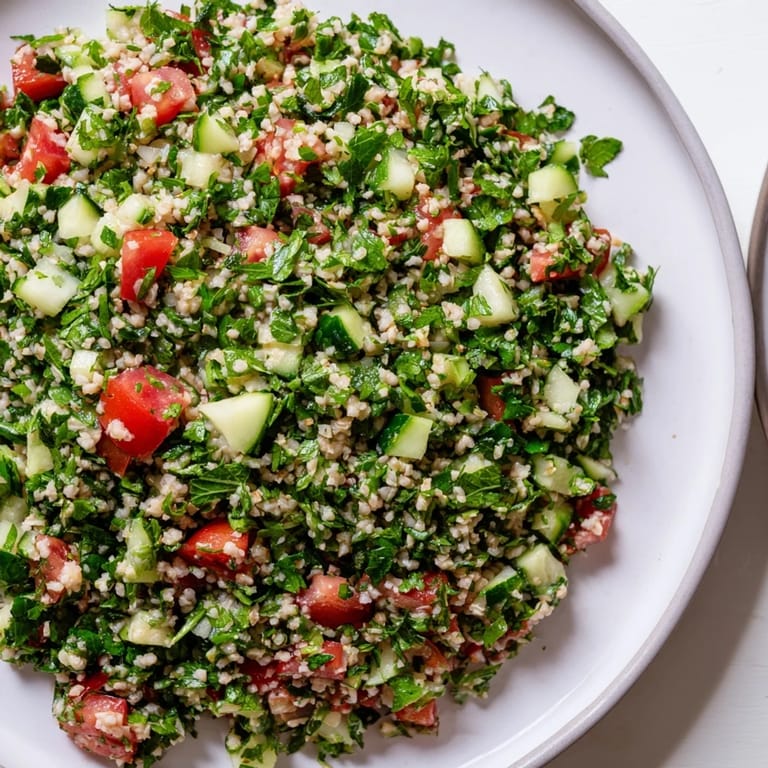
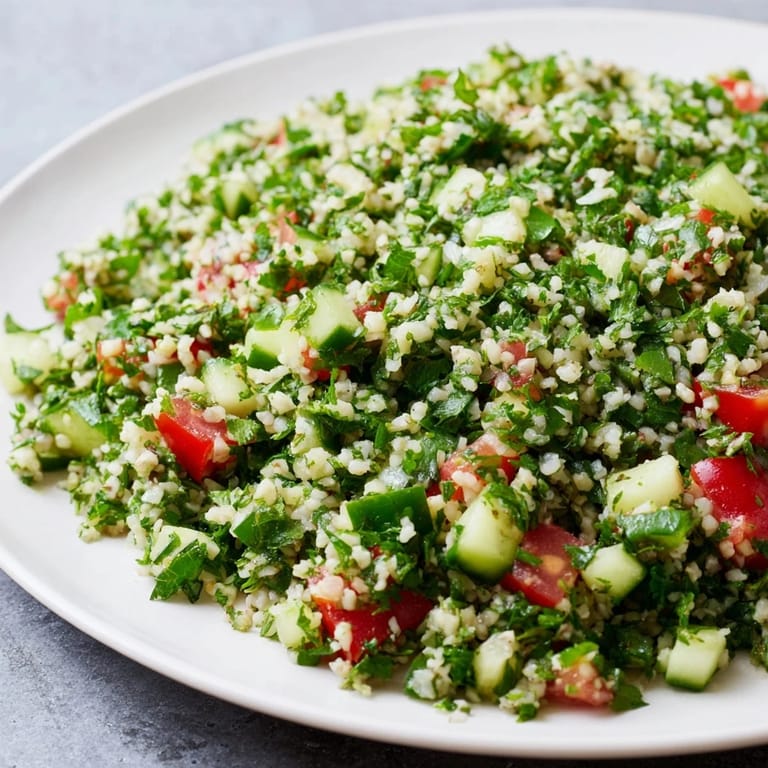
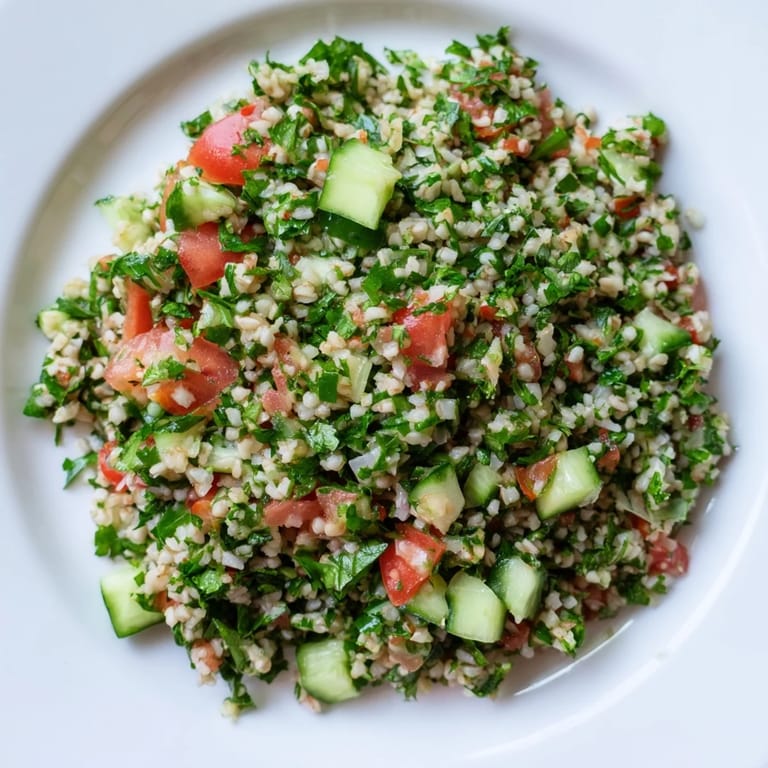
In traditional Lebanese cooking, tabbouleh isn't a salad where parsley happens to be present; it's parsley with supporting actors. The ratio is roughly one part bulgur to two parts herbs, which feels counterintuitive when you first read it, but the moment you taste it, you understand. The parsley carries a peppery, almost grassy note that makes your mouth feel fresh and alive—that's the whole experience, and it's why rushing through the chopping or using the wrong type of parsley feels like a betrayal of the dish.
Timing and Make-Ahead Strategy
The beauty of tabbouleh is that you can do most of the work hours ahead. Chop your vegetables and herbs in the morning, soak your bulgur, whisk your dressing—then all you do right before serving is toss everything together. I often pack the components separately in containers and assemble it at the table, which also lets people customize their proportions if they want extra lemon or oil. It's practical and flexible, which is how the best dishes should be.
Variations and Pairings
Once you understand the foundation, you can play with it gently. Some people add pomegranate seeds for sweetness and color, others use red onion instead of spring onion for more bite, and a few stir in chickpeas to make it a complete meal. The gluten-free swap with cooked quinoa works beautifully if you need it—just make sure the quinoa is fully cooled and fluffed so it doesn't absorb too much dressing and become heavy. This salad pairs naturally with grilled chicken or lamb, sits perfectly alongside falafel, or becomes part of a mezze platter alongside hummus, baba ganoush, and flatbread.
- Add pomegranate seeds or dried cranberries if you want a touch of sweetness and visual pop.
- A pinch of sumac sprinkled on top brings authentic flavor and a slight tartness.
- Store leftovers in an airtight container in the fridge, but eat within two days for the best texture.
 Save
Save Tabbouleh has become one of those dishes I make without thinking much about the process anymore, which is how you know something has become a true part of your cooking life. It's there when you want something quick and bright, when you need to feed people without stress, and when you're reminded that the simplest ingredients, treated with care and respect, create something genuinely beautiful.
Recipe Guide
- → What can I use instead of bulgur for a gluten-free version?
Quinoa is a great gluten-free substitute for bulgur while maintaining a similar texture and absorbing flavors well.
- → How should I prepare the bulgur before mixing?
Pour boiling water over the fine bulgur and let it sit covered for 10-15 minutes until tender, then drain and fluff with a fork.
- → Which type of parsley is best for this dish?
Flat-leaf parsley is preferred for its robust flavor and texture, making the salad vibrant and fresh.
- → Can this salad be made ahead of time?
It's best enjoyed fresh but can be stored chilled for up to two days, as the ingredients retain their freshness briefly.
- → What dishes pair well with this salad?
It complements grilled meats, falafel, or can be part of a mezze spread for diverse flavors.