 Save
Save My grandmother kept a worn wooden spoon in her kitchen drawer specifically for mjadra—it never got washed right away, just left to soak so the spice residue would season it for the next batch. She made this dish whenever someone needed feeding, whether it was a family gathering or just a Thursday evening. The way the warm spices filled her small kitchen, mixing with the smell of onions turning golden, felt like home itself. I learned from watching her that the best comfort food doesn't shout for attention; it whispers, and you find yourself coming back for more.
The first time I made this for friends without a recipe, I nearly ruined the onions by cooking them too hot—they went from golden to burnt in what felt like seconds. I had to start over, slower this time, and that's when I understood what my grandmother meant about patience. She never rushed the onions, and neither should you. That batch taught me more than any cookbook could about listening to what's happening in the pan.
Ingredients
- Brown or green lentils (1 cup): These are the backbone; they stay intact and chewy rather than falling apart, giving you actual texture.
- Long-grain rice like basmati (¾ cup): Basmati grains stay separate and add a gentle nuttiness that complements the spices.
- Water or vegetable broth (4 cups): Broth adds depth, but plain water lets the spices shine without competition.
- Olive oil (5 tablespoons total): Two tablespoons for sautéing the lentils, three for the slow dance of caramelizing onions—don't skimp here.
- Cumin, allspice, and cinnamon: These warm spices are what make this feel Lebanese; together they create something you can't quite name but absolutely recognize.
- Bay leaf, salt, and pepper: The bay leaf is the quiet backbone of flavor that makes everything taste more complete.
- Yellow onions (3 large ones), thinly sliced: The thinner you slice them, the more surface area caramelizes, and the more alchemy happens in that skillet.
Tired of Takeout? 🥡
Get 10 meals you can make faster than delivery arrives. Seriously.
One email. No spam. Unsubscribe anytime.
Instructions
- Toast the lentils briefly:
- Heat your oil in a large saucepan over medium heat, then add the lentils and bay leaf. Stir them around for 2 minutes—this wakes them up and helps them absorb flavor better. You'll smell something toasty and alive.
- Build the base:
- Pour in your water or broth and bring everything to a boil. Once it's bubbling, turn the heat down and let it simmer uncovered for 15 minutes. The lentils will soften but shouldn't be falling apart yet.
- Start the onions (while the lentils cook):
- In another skillet, heat your oil over medium-low heat and add those thinly sliced onions with a pinch of salt. The low heat is crucial—this isn't a race. Stir often, every few minutes, watching as they gradually turn from raw to pale to golden to deep amber. This takes 25–30 minutes and is honestly the most important part.
- Add rice and spices:
- Once the lentils have had their 15 minutes, add the rice, cumin, allspice, cinnamon, salt, and pepper. Stir everything together so the spices coat the grains evenly and you can smell them fully.
- Finish cooking:
- Cover the saucepan and lower the heat to a gentle simmer. Let it sit untouched for 20–25 minutes until the rice is tender and the liquid is absorbed. If it looks dry before the rice is done, add a splash of water—better safe than crunchy grains at the bottom.
- Fluff and serve:
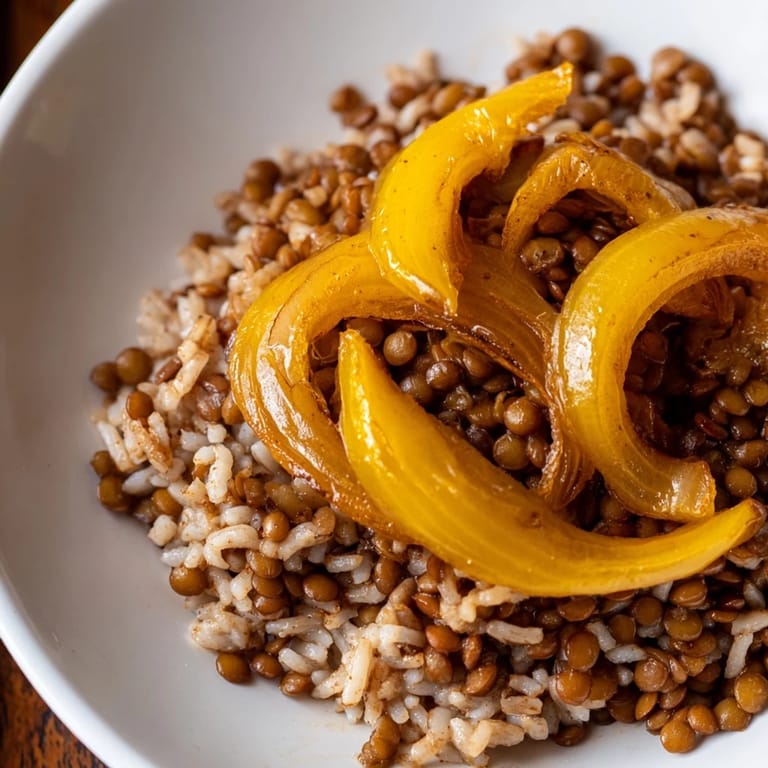
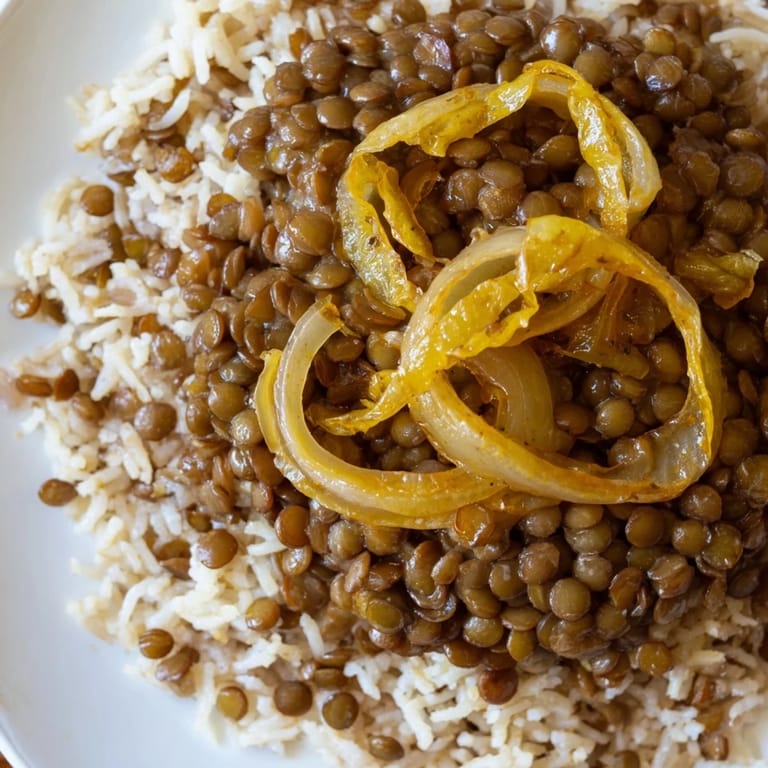
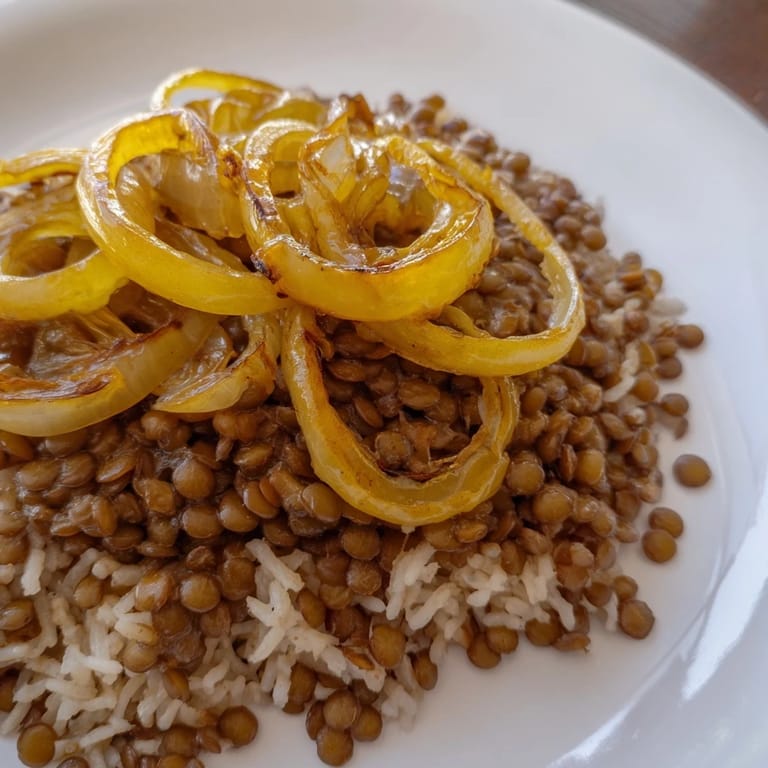
- Remove the bay leaf, use a fork to gently fluff everything, taste, and adjust your salt and pepper. The texture should be fluffy, not mushy, with each grain distinct. Top generously with those caramelized onions and serve warm or at room temperature.
 Save
Save I served this to my neighbor last winter when she was recovering from an illness, and she told me later that she'd eaten it three nights in a row because it was the first thing that felt nourishing instead of just filling. That's when I realized this isn't peasant food that became fancy—it was always meant to be this: simple enough to make anytime, profound enough to matter.
Why This Dish Works
Mjadra is built on a principle that most modern cooking ignores: that a few quality ingredients treated with patience will always beat a long list of things thrown together quickly. The warm spices don't compete; they layer into each other, and the caramelized onions don't just sit on top—they change how you taste everything underneath. There's no cream, no meat, no complexity for its own sake, and somehow that makes it complete.
Serving and Pairing
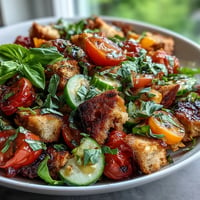
Serve it warm right from the stove when everything is steaming and the spices are most alive, or let it cool to room temperature for a different kind of satisfaction—the flavors somehow deepen as it sits. A simple salad of tomatoes, cucumbers, and olive oil becomes essential alongside this, cutting through the richness of the onions and adding brightness. Plain yogurt stirred through (if you're not making the vegan version) mellows everything slightly and adds a tang that makes you eat more.
Storage and Leftovers
This dish was practically designed for leftovers—it actually tastes better the next day after the flavors have had time to settle and know each other. Refrigerate it in an airtight container for up to 4 days, or freeze it for a few weeks if you want to have comfort food on standby. Reheat gently on the stovetop with a splash of water if it seems dry, and always add fresh caramelized onions on top before serving, or make a fresh batch of them for contrast.
- Red lentils cook faster and create a softer, almost creamy texture if you prefer that over the chewiness of brown lentils.
- A sprinkle of fresh parsley and a squeeze of lemon juice right before eating brighten everything without changing what makes this dish special.
- This scales beautifully—double it for a crowd, and the timing stays roughly the same because you're just cooking larger quantities of the same things.
 Save
Save This is the kind of recipe that reminds you why people cook in the first place—not to impress, but to nourish, and to have something warm and real to share. Make it once and it becomes yours.
Recipe Guide
- → What type of lentils work best?
Brown or green lentils hold their shape well during simmering, providing a tender yet firm texture ideal for this dish.
- → How do I caramelize onions properly?
Cook thinly sliced onions slowly over medium-low heat with olive oil, stirring frequently, until they turn deep golden and develop sweetness, about 25–30 minutes.
- → Can I use broth instead of water?
Yes, low-sodium vegetable broth adds extra depth and richness without overpowering the warm spices.
- → How to adjust spices for a milder flavor?
Reduce the amounts of cumin, allspice, and cinnamon slightly or omit the cinnamon for a gentler, less warm profile.
- → What sides complement this dish?
Fresh tomato and cucumber salad, pickles, or a dollop of plain yogurt add refreshing contrast to the hearty flavors.