 Save
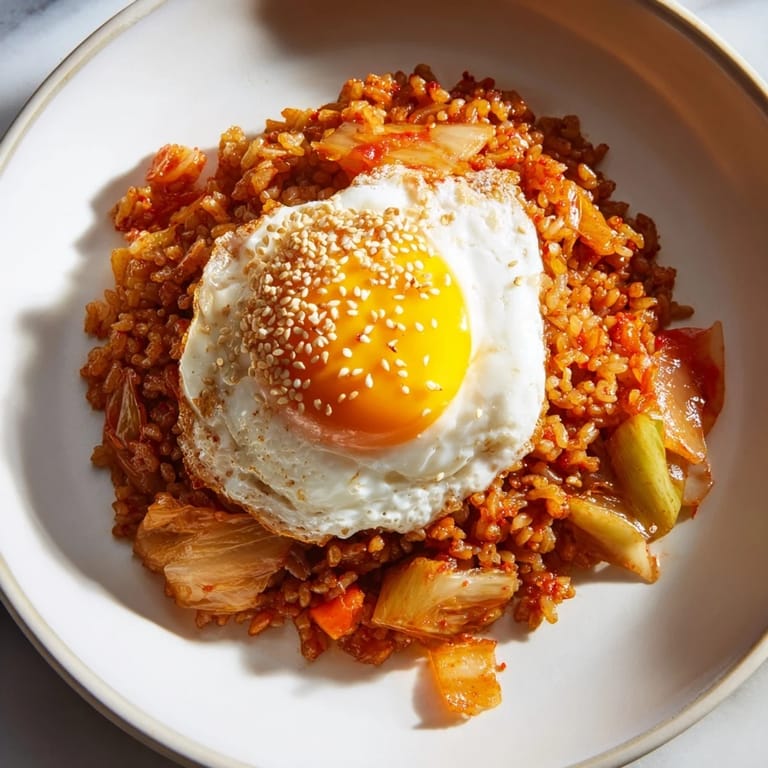
Save There's something about the smell of kimchi hitting hot oil that stops me mid-thought every time. I discovered this fried rice on a rainy Tuesday when my fridge held little more than leftover rice, a jar of kimchi my friend insisted I needed, and the kind of hunger that demands something bold and fast. Twenty minutes later, I was scooping spicy, umami-packed bites into a bowl, amazed at how a handful of pantry staples could taste like a tiny victory.
The first time I made this for someone else, I worried the spice would be too much, but watching them go back for seconds told me everything. That's when I realized this dish has a way of making people feel cared for without any fuss—it's the kind of meal that bridges the gap between simple and special.
Ingredients
- Cooked short-grain rice (2 cups, preferably day-old): Day-old rice separates beautifully when it hits the heat and doesn't turn mushy like fresh rice can—this is the secret that makes the texture sing.
- Napa cabbage kimchi (1 cup, chopped, plus 2 tbsp juice): The tangy, funky base of everything; use the juice too, it's liquid gold for flavor.
- Yellow onion (½ cup, finely chopped): It sweetens slightly as it softens and becomes the bridge between the rice and the bold spices.
- Carrot (½ cup, diced): Adds a gentle sweetness and bright color that keeps the dish from looking too fiery.
- Green onions (2, white and green parts separated): The white parts cook down into soft sweetness, while the green parts stay fresh and sharp as a finishing touch.
- Gochujang (1 tbsp): This fermented chili paste is where all the depth comes from—spicy, salty, and slightly sweet.
- Soy sauce (1 tbsp): It adds savory weight and helps everything taste cohesive rather than scattered.
- Toasted sesame oil (1 tsp): A small amount goes a long way; it adds a nutty richness that completes the flavor profile.
- Sugar (½ tsp): Just enough to balance the heat and funk, making it approachable rather than challenging.
- Freshly ground black pepper (⅛ tsp): Always fresh—it keeps its bite and adds a subtle complexity.
- Vegetable oil (2 tbsp): High heat oil for sautéing and the optional eggs; don't skip the heat here.
- Toasted sesame seeds (1 tsp): The final garnish that feels intentional and makes people think you're more skilled than you are.
- Fried eggs (2, optional): A runny yolk turns this into something luxurious—the warm oil from the egg yolk is its own sauce.
Tired of Takeout? 🥡
Get 10 meals you can make faster than delivery arrives. Seriously.
One email. No spam. Unsubscribe anytime.
Instructions
- Heat and soften the aromatics:
- Get your skillet hot with 1 tablespoon of oil until it shimmers, then add the onion, carrot, and white parts of the green onion. Watch them soften and turn slightly translucent—this takes about 2 to 3 minutes and sets the whole flavor foundation.
- Bloom the kimchi:
- Add your chopped kimchi and let it sit undisturbed for a moment before stirring, letting the edges caramelize and the smell become almost intoxicating. This adds depth and mellows the raw edge slightly, taking about 2 to 3 minutes.
- Build the sauce:
- Stir in the gochujang, soy sauce, kimchi juice, sugar, and pepper all at once, coating everything evenly. One minute of stirring here ensures no pasty pockets of gochujang—everything should look cohesive and glossy.
- Add and fry the rice:
- Break up the rice into individual grains as you add it, tossing constantly for 3 to 4 minutes until every grain is coated and heated through. The rice should sound crispy as you stir, not clumpy or mushy.
- Finish with oil and greens:
- Drizzle the sesame oil over everything and scatter the green parts of the green onion across the top, stirring gently to distribute the aroma without breaking the rice apart.
- Fry the eggs (optional):
- Heat the remaining tablespoon of oil in a separate pan and crack in your eggs, cooking until the whites are set but the yolk stays runny and glossy. Slide one onto each bowl just before serving.
 Save
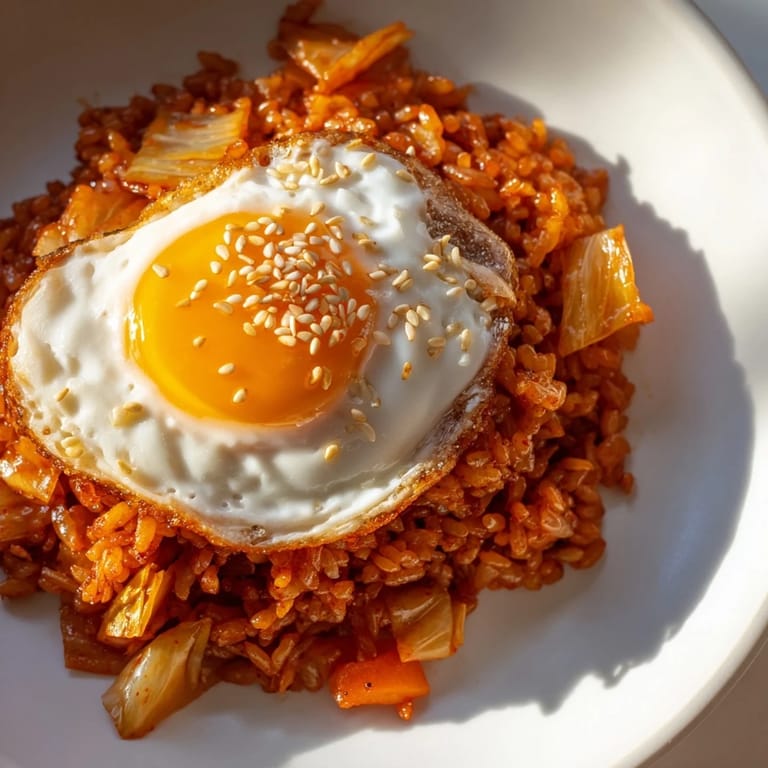
Save I made this for myself on a rough morning once, and something about that hit of spice and the satisfying wok-toss motion shifted everything. It reminded me that sometimes the most comforting meals aren't the ones that took hours—they're the ones that demand your full attention for 20 minutes.
The Gochujang Factor
Gochujang is one of those ingredients that feels intimidating until you realize it's just fermented chili paste with depth. I used to think more meant hotter, but I learned that a tablespoon bloomed properly spreads evenly and builds flavor without making your eyes water. The fermentation means it's already complex—spicy, a little sweet, a little salty—so you're really just awakening what's already there.
Building Layers of Flavor
The magic of this dish is in how each ingredient has a moment. The vegetables soften and release sweetness, the kimchi mellows and caramelizes, the gochujang blooms into the oil, and the rice absorbs it all without getting heavy. Rushing any step means missing something important. This is one of those meals where watching the pan is as much a part of cooking as the actual cooking.
Variations and Personal Touches
I've made this with tofu cubed and fried until crispy, with shrimp tossed in at the rice stage, and once with leftover rotisserie chicken shredded and warmed through at the end. Each version felt different but equally right. Some nights I skip the egg and add more sesame seeds; other times I crack two eggs if I'm hungry or cooking for someone else who might appreciate the richness.
- Brown rice works beautifully if you prefer it, though the texture shifts slightly and needs a touch more moisture to cook through evenly.
- A splash of kimchi juice mixed into the optional eggs before frying them gives the whole dish an extra thread of cohesion.
- Serve alongside something cool and crisp—barley tea, a light lager, or even cucumber slices—to balance the heat.
 Save
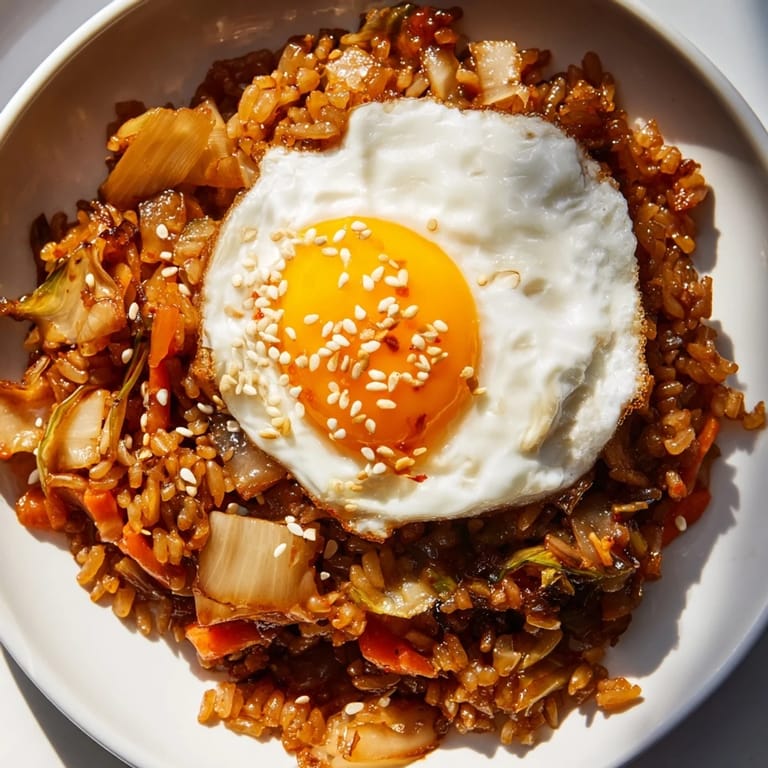
Save This is the meal I reach for when I want something bold and nourishing that doesn't demand hours of my time. It's proof that simple can still feel special.
Recipe Guide
- → What type of rice is best for this dish?
Day-old short-grain rice works best as it prevents clumping and absorbs flavors well during stir-frying.
- → Can I make this dish vegan?
Yes, simply omit the fried egg or substitute with a plant-based alternative to keep it vegan-friendly.
- → How can I adjust the spice level?
Modify the amount of gochujang and kimchi juice depending on your preferred spice tolerance.
- → What proteins complement this dish?
Diced tofu, cooked chicken, or shrimp can be added for extra protein and variety.
- → Is there a recommended pairing drink?
This dish pairs well with a crisp lager or cold barley tea, which balance its bold flavors nicely.
- → Are there any allergens to watch for?
Contains soy from soy sauce and gochujang, plus egg if added. Some ingredients may include wheat or fish products—check labels carefully.