 Save
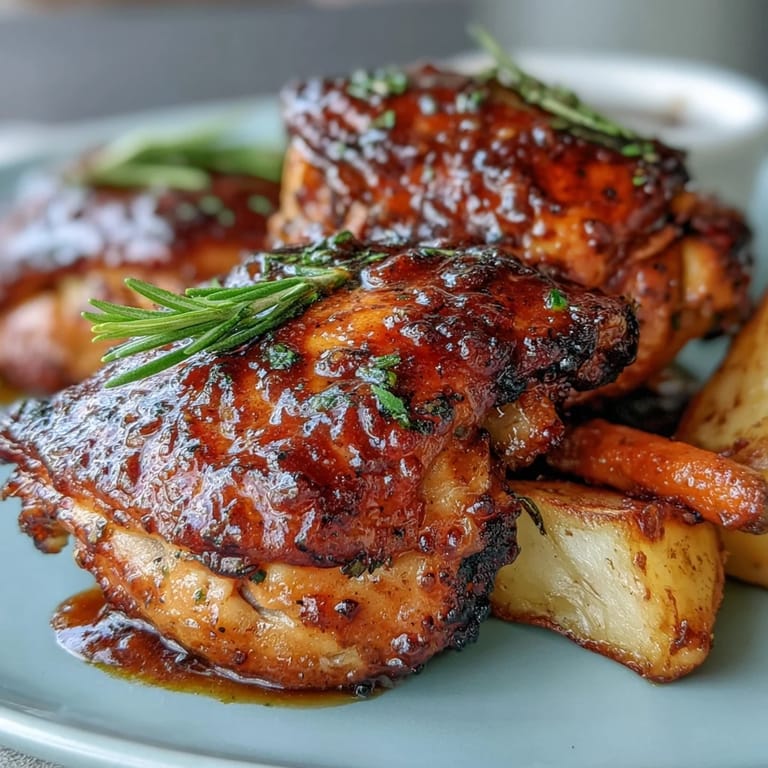
Save My weeknight revelation happened on a Tuesday when I had exactly forty minutes before hungry faces arrived at my table. I pulled out bone-in chicken thighs, some carrots I'd almost forgotten about, and started mixing mustard and honey without overthinking it. The smell that filled my kitchen as everything roasted together felt like I'd discovered something I somehow already knew. It became the dinner I now make when I want something that tastes intentional but requires almost no fussing.
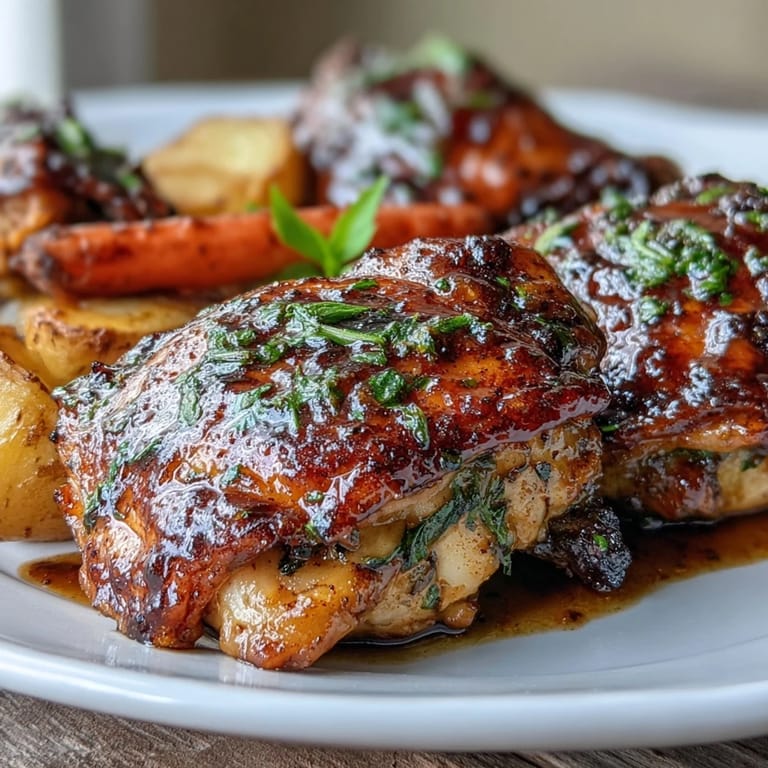
I remember cooking this for my partner's coworkers who were skeptical about home cooking, and watching them go quiet when they tasted it said everything. What sold me was how the glaze pooled at the bottom of the pan and the vegetables soaked it up, creating this glossy, restaurant-quality finish that felt impossible but wasn't. That night taught me that impressive food doesn't need complexity, just the right combination of things that belong together.
Ingredients
- Bone-in, skin-on chicken thighs: They're forgiving and stay tender even if you're not perfect with timing, plus the skin crisps up beautifully under the glaze.
- Dijon and whole grain mustard: The combination gives you sharpness and texture at once, creating more depth than using just one type.
- Honey: This isn't just sweetness—it's what makes the glaze cling and caramelize into something sticky and glossy.
- Apple cider vinegar: It cuts through the richness and keeps the glaze from feeling cloying, a lesson I learned after one too many overly sweet attempts.
- Garlic and thyme: Fresh or dried thyme works, but if you have it fresh, tear it by hand instead of chopping—the oils release differently and taste brighter.
- Baby potatoes and carrots: These cook at almost the same rate, which is why this dinner comes together so cleanly, and their natural sugars caramelize beautifully alongside the glaze.
- Red onion: It softens into something almost sweet, and its sharpness balances everything without needing extra seasoning.
Tired of Takeout? 🥡
Get 10 meals you can make faster than delivery arrives. Seriously.
One email. No spam. Unsubscribe anytime.
Instructions
- Set your oven and pan:
- Preheat to 220°C (425°F) and line your sheet pan with parchment paper—this is the single move that makes cleanup feel worth celebrating, and it also prevents sticking.
- Build your glaze:
- Whisk the mustards, honey, vinegar, garlic, and thyme together in a small bowl until everything is smooth and combined. Taste it if you're unsure—it should taste balanced between tangy and sweet, with the garlic just barely noticeable.
- Prepare the chicken:
- Pat your thighs completely dry with paper towels—this is non-negotiable if you want crispy skin. Rub them with olive oil, salt, and pepper, and don't be shy with seasoning since the glaze adds its own flavors.
- Arrange everything:
- Lay out chicken, carrots, potatoes, and red onion in a single layer with a bit of space between pieces. Crowding the pan is the enemy of even roasting.
- Glaze and roast:
- Brush about half the glaze over the chicken pieces, then drizzle the rest over vegetables and toss them with your hands until coated. This way the chicken gets a concentrated layer while the vegetables get distributed flavor.
- The halfway moment:
- After about 17 minutes, give the vegetables a quick stir so they brown evenly, but leave the chicken alone—moving it constantly prevents browning. Keep roasting until the chicken hits 74°C (165°F) internally and everything is golden.
- Rest and finish:
- Let it sit for five minutes after coming out of the oven—this keeps the chicken from drying out when you cut into it. Scatter fresh parsley over top if you have it, though it's honestly perfect without.
 Save
Save The first time my nephew asked for seconds without being prompted felt like a small victory, and I realized it wasn't the complexity he appreciated—it was that every element tasted like itself while still belonging to the same conversation. That's when sheet pan dinners stopped feeling like a lazy compromise and started feeling like genuine cooking.
Why Sheet Pan Dinners Changed My Weeknight Life
There's something about roasting proteins and vegetables together that creates flavor you can't get from cooking them separately. The chicken's fat drips onto the carrots, the glaze mingles with vegetable juices, and everything tastes connected instead of like components on a plate. I used to think this kind of simplicity meant sacrificing something, but it turns out it's just efficiency without compromise.
Adapting This for What You Have
Chicken breasts work if that's what's in your freezer, though you'll need to subtract about five to seven minutes since they're leaner and cook faster. I've swapped the carrots for parsnips, added sweet potato, even thrown in Brussels sprouts halved lengthwise. The formula stays the same—anything that takes 35-40 minutes to roast will work, and the glaze complements almost anything.
The Simple Magic of Honey Mustard
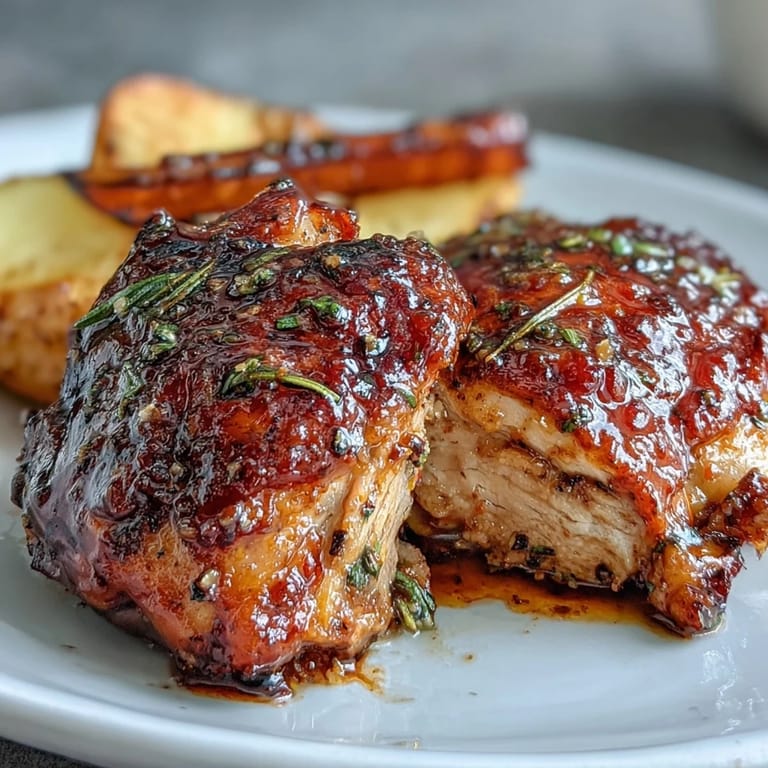
What makes this glaze special is that it's not trying to be complicated—it's just the right balance of tangy, sweet, and savory in one bite. The honey caramelizes slightly at high heat, creating little sticky bits that cling to the chicken skin, while the vinegar keeps everything from tasting cloying. I've made variations with balsamic or different mustards, but I always come back to this combination because it feels timeless.
- If your glaze seems too thick, loosen it with a splash of water or mustard, but remember it will thin slightly as vegetables release moisture.
- Don't skip the garlic—it mellows as it roasts and becomes one of the most delicious parts if you snag a piece with the glaze.
- Fresh thyme is lovely if you have it, but dried thyme works equally well and sometimes tastes more concentrated.
 Save
Save This dinner exists in that sweet spot where it looks like you tried but tastes like you didn't stress, and honestly that's the best compliment any dish can get. Once you've made it once, you'll make it again and again because it works.
Recipe Guide
- → What type of chicken works best for this dish?
Bone-in, skin-on chicken thighs are ideal for juiciness and flavor, but chicken breasts can be used with slightly adjusted cooking time.
- → Can I substitute the carrots with other vegetables?
Yes, parsnips or sweet potatoes make great alternatives while maintaining a natural sweetness that complements the glaze.
- → How do I achieve a crispy skin on the chicken thighs?
Patting the chicken dry and roasting at a high temperature helps crisp the skin while keeping meat tender.
- → What is the best way to apply the honey mustard glaze?
Brush half the glaze on chicken before roasting and toss the vegetables with the remaining glaze for even coating.
- → Is it necessary to rest the chicken after roasting?
Resting for about 5 minutes allows the juices to redistribute, resulting in moister, more flavorful chicken.