 Save
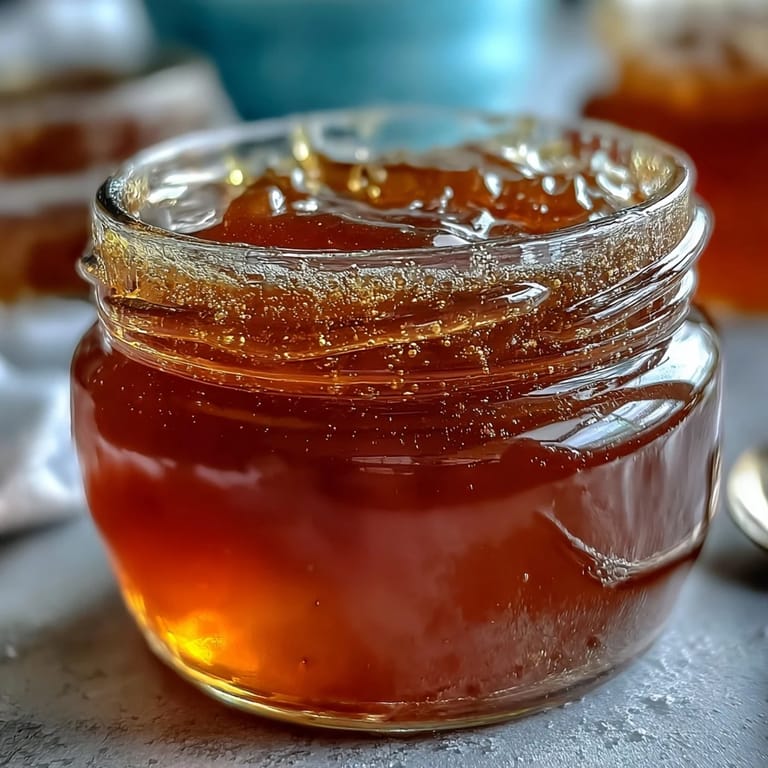
Save There's something magical about transforming humble dandelions—those cheerful yellow blooms often dismissed as weeds—into a delicate, honey-hued jelly that tastes like bottled sunshine. Dandelion jelly captures the fleeting essence of spring in every spoonful, offering a subtly floral, lightly sweet spread that feels both nostalgic and novel. This foraged preserve connects you to the land, the season, and the simple joy of making something beautiful from what grows wild and free.
Save Foraging dandelion petals is a mindful, meditative practice—one that slows you down and attunes you to the rhythms of nature. The key is to harvest from clean, pesticide-free areas, plucking only the bright yellow petals and leaving the bitter green parts behind. Once steeped, those petals release a gentle, honeyed infusion that forms the base of this golden jelly. Combined with lemon juice, pectin, and sugar, the result is a preserve that spreads beautifully on toast, elevates scones, and pairs surprisingly well with sharp cheeses.
Ingredients
Tired of Takeout? 🥡
Get 10 meals you can make faster than delivery arrives. Seriously.
One email. No spam. Unsubscribe anytime.
- 2 cups dandelion petals (yellow parts only, tightly packed, pesticide-free)
- 4 cups water
- 2 tablespoons lemon juice (freshly squeezed)
- 1 package (1.75 oz / 49 g) powdered fruit pectin
- 4 cups granulated sugar
Instructions
- Step 1
- Prepare the dandelion petals by removing all green parts (sepals and stems), as they can be bitter.
- Step 2
- Rinse petals gently to remove insects or debris.
- Step 3
- In a saucepan, combine petals and water. Bring to a boil, then simmer for 5 minutes.
- Step 4
- Remove from heat, cover, and let steep for 4 hours (or overnight for a stronger flavor).
- Step 5
- Strain the liquid through a fine mesh sieve or cheesecloth, pressing gently to extract as much as possible. Discard petals. You should have about 3½–4 cups of dandelion infusion.
- Step 6
- Pour the dandelion infusion into a large pot. Add lemon juice and pectin. Stir well and bring to a rolling boil over high heat.
- Step 7
- Add sugar all at once, stirring constantly. Return to a rolling boil and boil hard for 1–2 minutes, or until the jelly reaches setting point (220°F / 104°C).
- Step 8
- Remove from heat. Skim off any foam.
- Step 9
- Ladle hot jelly into sterilized jars, leaving ¼-inch headspace. Wipe rims, seal with lids, and process in a boiling water bath for 10 minutes.
- Step 10
- Let jars cool undisturbed for 12 hours. Check seals before storing.
Zusatztipps für die Zubereitung
The most important step is removing all green parts from the dandelion blossoms, as they contribute bitterness. Be patient and thorough—it's a bit time-consuming, but worth it for a clean, floral flavor. Steeping time also matters: a longer steep (overnight) yields a deeper, more honeyed infusion, while a shorter steep keeps the flavor lighter and more delicate. Use a candy thermometer to test for the jelly set point at 220°F (104°C), or test by placing a small spoonful on a cold plate—it should wrinkle when pushed if properly set.
Varianten und Anpassungen
For a citrusy twist, add orange zest along with the lemon juice for a bright, aromatic note. If you prefer a less sweet jelly, reduce the sugar slightly and use low-sugar pectin, adjusting the cooking time as needed. You can also infuse the dandelion tea with a sprig of fresh mint or a few chamomile flowers for added complexity. For a firmer set, increase the pectin slightly, or for a softer, more spreadable texture, reduce it by a quarter package.
Serviervorschläge
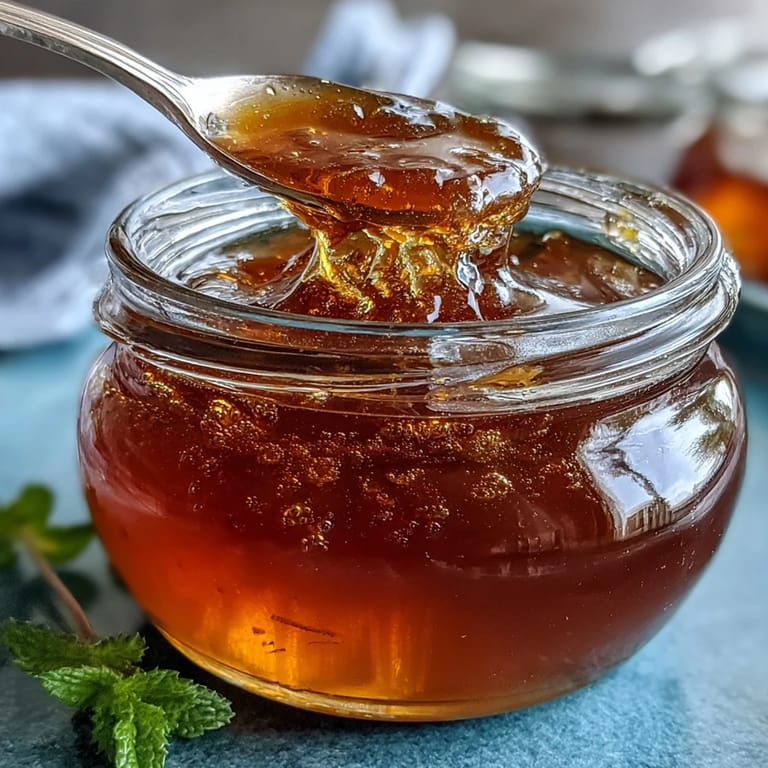
Dandelion jelly shines on warm buttered toast or freshly baked scones, where its floral sweetness can take center stage. It's also excellent drizzled over pancakes, waffles, or yogurt, or used as a glaze for cakes and pastries. For a savory pairing, serve it alongside a cheese board with aged cheddar, creamy brie, or tangy goat cheese—the contrast between floral jelly and sharp cheese is unexpectedly delightful. It also makes a lovely addition to tea sandwiches or as a filling for thumbprint cookies.
 Save
Save Making dandelion jelly is more than a recipe—it's an invitation to slow down, step outside, and reconnect with the natural world. Each jar you seal holds not just sweetness, but the memory of sunny spring days, the quiet satisfaction of foraging, and the joy of creating something uniquely your own. Whether you spread it on morning toast or gift it to loved ones, this golden preserve carries a story worth savoring.
Recipe Guide
- → How do I prepare dandelion petals for this jelly?
Remove all green parts such as sepals and stems to avoid bitterness. Rinse petals gently to clean any debris or insects before use.
- → What is the purpose of steeping the dandelion petals?
Steeping allows the floral essence and subtle flavors to infuse fully into the water, creating a fragrant base for the jelly.
- → Can I add flavor variations to this jelly?
Yes, adding orange zest with lemon juice gives a citrusy twist that complements the floral notes beautifully.
- → What tools are necessary to make this jelly?
You will need a large saucepan, fine mesh sieve or cheesecloth, canning jars with lids, a ladle, a boiling water bath canner, and a jar lifter.
- → Is this jelly suitable for special diets?
Yes, it is vegan, gluten-free, and contains no common allergens, but always check ingredient sources for cross-contamination.