 Save
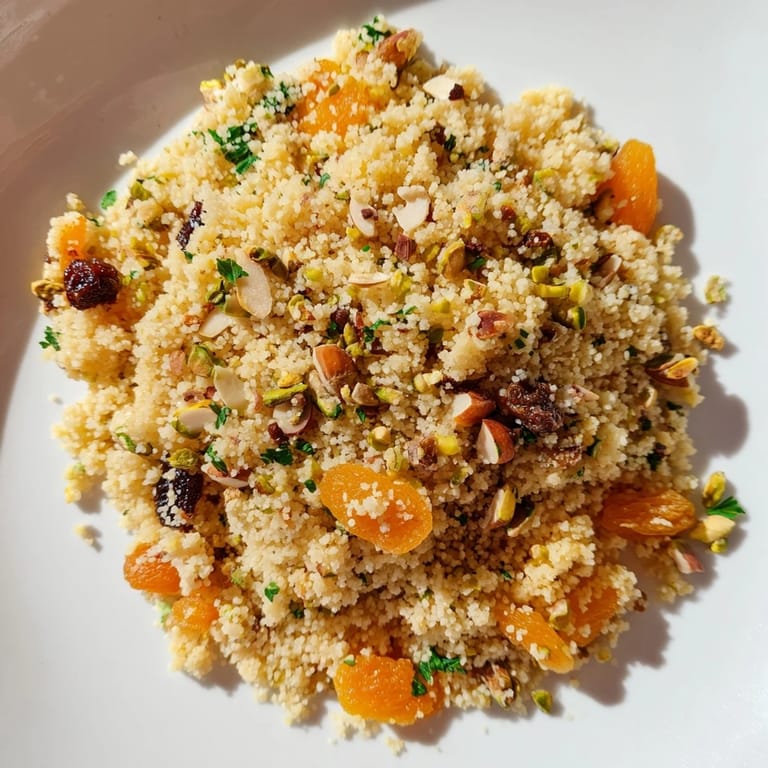
Save My friend Sara brought this couscous to a potluck on a chilly autumn evening, and I watched people return to the table twice just for another spoonful. The aroma that filled her kitchen while it was cooking—cinnamon, cumin, something warm and mysterious—made me ask for the recipe that same night. What I loved most wasn't just how quickly it came together, but how it tasted like someone had spent hours on it.
I made this the first time for my own dinner party, nervous about whether it would actually work. When I lifted the lid after those five minutes of steaming, the couscous had magically fluffed up, each grain separate and shimmering with spiced broth. My partner took one bite and said, "You have to make this again," and I've been making it ever since for anyone who needs something special that doesn't require stress.
Ingredients
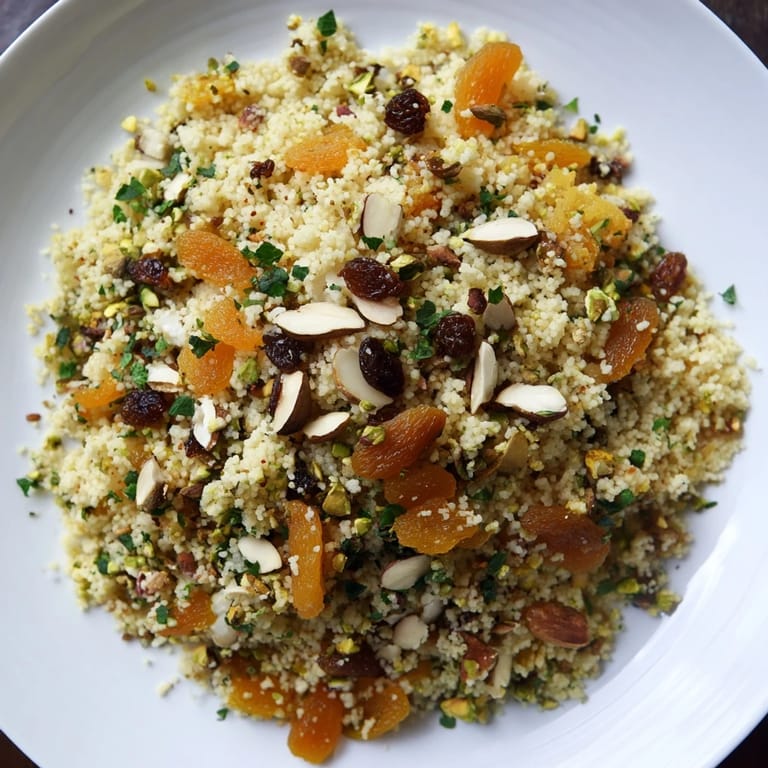
- Couscous: The foundation that soaks up all those spices and broth like a sponge; use the regular size, not pearl couscous, so it cooks perfectly in the 5-minute rest.
- Vegetable or chicken broth: This is where the flavor lives, so use something with real taste, not the thin stuff from a bouillon cube.
- Dried apricots and golden raisins: They plump up slightly and bring bursts of natural sweetness that balance the spices beautifully.
- Almonds and pistachios: Toasting them yourself makes all the difference; the crunch and nutty flavor are what make people remember this dish.
- Cumin, cinnamon, coriander, and turmeric: This quartet of warm spices is the heart of the dish—don't skip the coriander, it adds a brightness you wouldn't expect.
- Fresh parsley and mint: Added at the end, they brighten everything and remind you this is a living, breathing dish, not something heavy.
Tired of Takeout? 🥡
Get 10 meals you can make faster than delivery arrives. Seriously.
One email. No spam. Unsubscribe anytime.
Instructions
- Bloom those aromatics:
- Heat your oil and let the onion soften gently until it's almost translucent. Add garlic and you'll know it's right when you can actually smell it—that sharp, alive quality means it's exactly where it needs to be.
- Wake up the spices:
- This 30-second moment is crucial; you're toasting the spices in the hot oil so they release their essential oils and flavor the dish deeply. You'll feel the shift when the kitchen suddenly smells warm and complex.
- Build flavor with fruit:
- Toss the dried fruit in with the spices so they get coated and start absorbing that warmth. It's a small step that makes a big difference in every bite.
- Bring the broth to life:
- Pour it in and let it come to a boil; this moment is when everything melds together into something fragrant and inviting.
- The five-minute magic:
- Remove from heat, stir in the couscous, cover it, and walk away. Those five minutes are where all the liquid gets absorbed and each grain becomes separate and fluffy without any fussing.
- Fluff and fold gently:
- Use a fork, not a spoon, to break up any clumps and gently mix in the nuts and fresh herbs so everything stays light and airy.
 Save
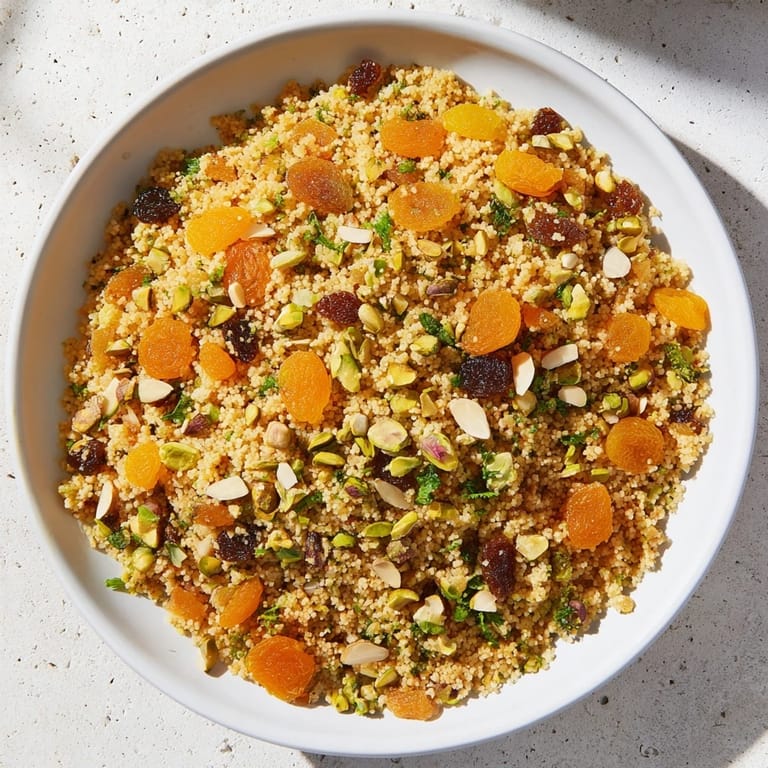
Save The first time I served this at a dinner party, my grandmother took a small bowl home with her, and a few days later she called to tell me she'd eaten it cold for lunch and loved it just as much. That's when I realized this recipe had become something I could trust with important moments.
The Spice Combination That Changes Everything
The warmth in this dish comes from layering spices rather than using just one or two. Cumin brings earthiness, cinnamon adds sweetness and comfort, coriander lifts everything with a subtle citrus note, and turmeric gives it all a gentle golden hue and a whisper of bitterness that keeps it balanced. When they bloom together in the hot oil, they create something more complex than any single spice could manage alone.
Why This Works as Both Side and Main
Couscous pilaf sits in this interesting middle ground where it's hearty enough to be satisfying on its own but light enough to complement almost anything. Serve it alongside grilled chicken or lamb for a traditional pairing, or with roasted vegetables for something vegetarian. I've even made it the main event at summer lunches, serving it cold with cucumber and yogurt on the side.
Variations and Swaps That Work
The beauty of this recipe is how easily it adapts to what you have on hand or what you're in the mood for. Dried cranberries or cherries bring a sharper tang than raisins, while dates add a deeper richness. I once added roasted chickpeas for protein and texture, and it transformed the dish into something completely satisfying as a main course. Even switching between vegetable and chicken broth changes the mood slightly—vegetable makes it lighter and brighter, while chicken broth deepens and enriches.
- Try adding pomegranate seeds or pomegranate molasses for brightness and tartness.
- Swap pistachios for walnuts or pine nuts depending on what you have or prefer.
- Fresh cilantro works beautifully instead of parsley if that's your flavor preference.
 Save
Save This couscous has become my answer when someone asks what to bring to a gathering or when I need something that tastes thoughtful but doesn't require hours in the kitchen. It's the kind of dish that reminds you why people love cooking in the first place.
Recipe Guide
- → What type of broth works best in this dish?
Vegetable broth imparts a light, savory base while chicken broth can add richness. Both complement the spices and dried fruits well.
- → Can I substitute the dried fruits used here?
Yes, dried cranberries, cherries, or dates are excellent alternatives that maintain sweetness and texture.
- → How should the nuts be prepared?
Toasting almonds and pistachios lightly enhances their flavor and crunch, providing a satisfying contrast in the pilaf.
- → Is it necessary to fluff the couscous before serving?
Fluffing with a fork prevents clumping and helps evenly distribute nuts, herbs, and spices throughout the dish.
- → What herbs complement the flavors in this dish?
Fresh parsley offers brightness, while optional mint adds a cool, fresh note that balances the warm spices.