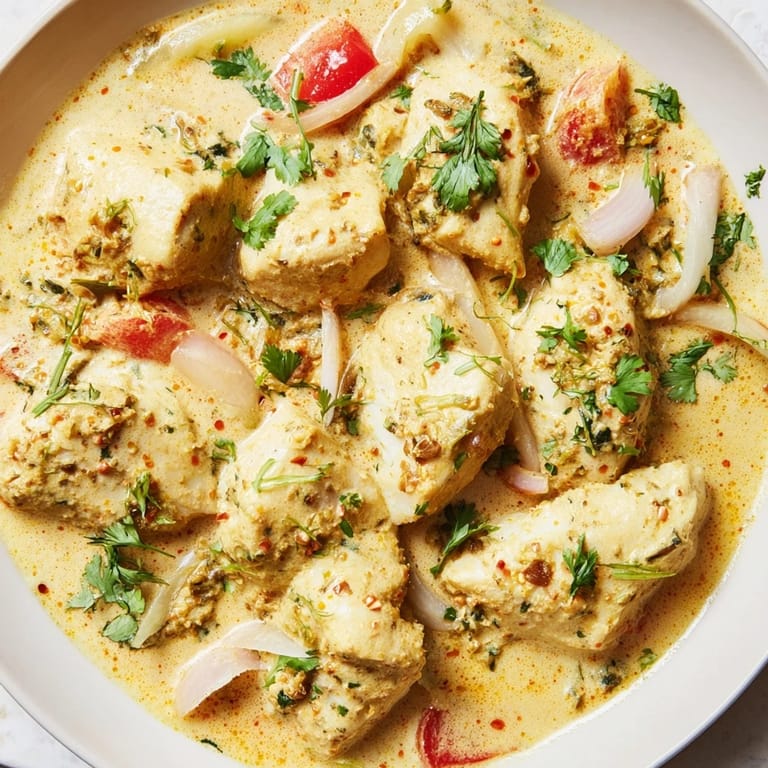
 Save
Save The first time I tasted Bahraini fish curry was on a sweltering afternoon, watching my neighbor stir a pot while sharing stories about her grandmother's kitchen in Manama. The aroma that drifted over the fence—warm spices, coconut, and something almost floral from the cardamom—made me forget the heat entirely. She handed me a steaming bowl with a knowing smile, and one spoonful told me everything about why this dish matters to Gulf families. The tender fish melting into that golden sauce felt like being welcomed into something sacred. I've been chasing that same magic ever since.
I made this for friends on a rainy evening when conversation had died down and we all needed something to lean into. Within two minutes of the ginger hitting the oil, the entire kitchen shifted—suddenly everyone was standing, drawn to the stove like it had called them. By the time we sat down, we weren't just eating dinner; we were having the meal we didn't know we needed. That's when I understood why Bahraini cooks take their time with this curry—it's built to bring people back to the table.
Ingredients
- Firm white fish fillets (600 g): Cod, snapper, or hammour work beautifully because they hold their shape instead of falling apart into mush, though any sturdy white fish will do the job.
- Salt and turmeric: This simple seasoning isn't just flavor—turmeric's earthiness preps the fish to absorb the curry sauce without becoming bland.
- Vegetable oil (2 tbsp): Use a neutral oil that won't compete with the spices, since each spice here deserves its moment.
- Onion, garlic, ginger, and green chilies: These four build the aromatic foundation, and finely chopping them means they disappear into the sauce rather than announcing themselves in every bite.
- Tomatoes (2): They break down into the sauce and add a subtle sweetness that balances the heat from the chilies and sharpness of the spices.
- Ground coriander, cumin, cinnamon, black pepper, paprika, and cardamom: Each spice plays a specific role—coriander and cumin warm you from inside, cinnamon adds intrigue, and cardamom brings something almost floral that makes people ask what that beautiful flavor is.
- Coconut milk (400 ml) and water: The coconut milk creates richness while the water keeps the sauce from becoming heavy, striking a balance that lets the spices sing.
- Lemon juice: A squeeze at the end lifts everything, cutting through the richness just enough to make you want another spoonful.
- Fresh coriander (cilantro): The garnish brings brightness and a fresh herbal note that feels alive after the warm spice work.
Tired of Takeout? 🥡
Get 10 meals you can make faster than delivery arrives. Seriously.
One email. No spam. Unsubscribe anytime.
Instructions
- Prepare the fish:
- Pat your fish pieces dry and toss them with salt and turmeric, then let them sit for 10 minutes while you gather everything else. This waiting period isn't wasted time—it's the fish getting ready to absorb flavor.
- Build the aromatic base:
- Heat oil in a large pan over medium heat and add your chopped onion, watching it turn golden and sweet over 5–7 minutes. Once it's caramelized, you've already created half the depth of flavor this dish will have.
- Add the fragrant trio:
- Stir in garlic, ginger, and sliced green chilies, cooking just until the kitchen smells irresistible—about 1 minute. This is the moment the dish announces itself.
- Soften the tomatoes:
- Add your chopped tomatoes and let them cook down for 3–4 minutes, breaking apart into the oil and creating a slightly jammy base. They're doing the work of thickening everything slightly while adding natural sweetness.
- Bloom the spices:
- Sprinkle in all your ground spices and stir constantly for 1–2 minutes, letting each one release its oils into the hot pan. You'll know you're there when the aroma becomes almost overwhelming in the best possible way.
- Build the sauce:
- Pour in the coconut milk and water, stirring gently to combine, then bring everything to a gentle simmer. The sauce should look creamy and inviting, not broken or separated.
- Cook the fish:
- Add the marinated fish pieces to the simmering sauce, cover the pan, and let them cook gently for 12–15 minutes until they're tender and cooked through. Resist the urge to stir constantly; gentle simmering is what keeps the fish intact.
- Finish with brightness:
- Taste the curry and adjust salt and lemon juice to your preference, letting the acid cut through the richness. Fresh coriander goes on top just before serving.
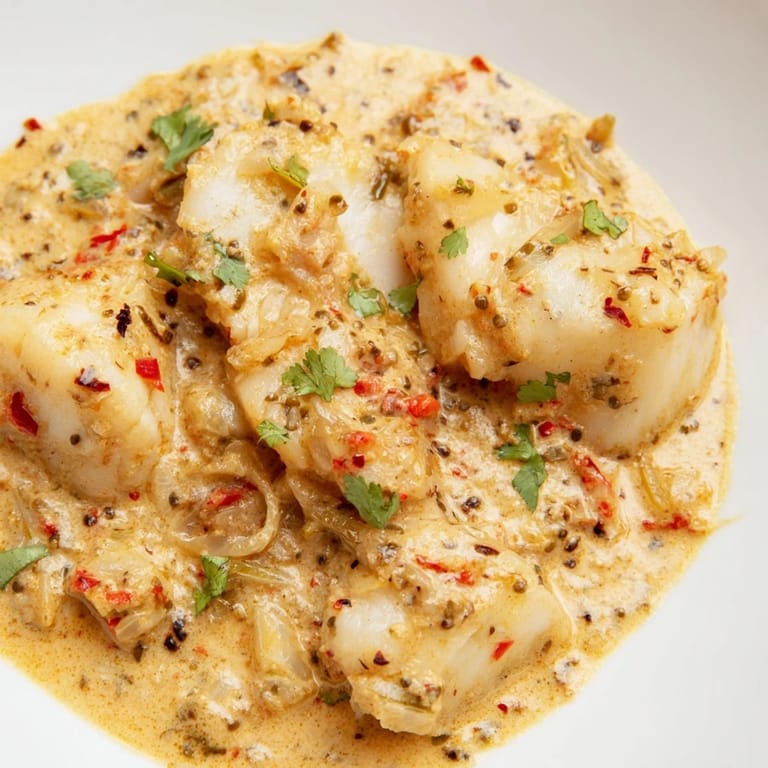 Save
Save There's a moment about halfway through the cook when you lift the lid and the steam hits your face, and you realize you've made something that tastes like care. That's the moment this dish becomes more than ingredients in a pot—it becomes a small gesture of love toward whoever's about to eat it.
Why This Curry Matters
Bahraini fish curry sits at the crossroads of trade routes and family tables, capturing generations of flavor knowledge in a single pot. The spice blend feels both unexpected and inevitable—warm cinnamon and floral cardamom softened by coconut, brightened by fresh herbs and citrus. This isn't just food; it's a conversation about how a small island nation learned to honor its waters and create something that feels both comforting and sophisticated.
The Art of Gentle Simmering
Most home cooks either cook too fast or too slow, but this curry teaches you to listen instead. Watch for small bubbles breaking the surface—not a rolling boil, just a quiet, steady simmer that whispers rather than shouts. The fish will tell you when it's done, becoming opaque and flaking slightly when you nudge it with a spoon. This gentle approach means your fish emerges tender instead of tough, and the sauce has time to develop layers of flavor instead of tasting one-dimensional and rushed.
Serving and Pairing
Serve this curry with steamed basmati rice or warm flatbread to soak up every drop of sauce—this is not a meal where you leave anything behind. The subtle sweetness of basmati rice balances the warmth of the spices, while flatbread becomes an edible spoon. For a lighter meal, serve it over cauliflower rice or with a simple green salad on the side to cut through the richness with fresh acidity.
- Save any extra coconut milk to thin the sauce if it becomes too thick while sitting.
- If the curry sits overnight, the spice flavors actually deepen and meld together, making leftovers taste even better.
- A small pinch of saffron stirred in at the end adds a luxurious floral note that transforms the dish into something special.
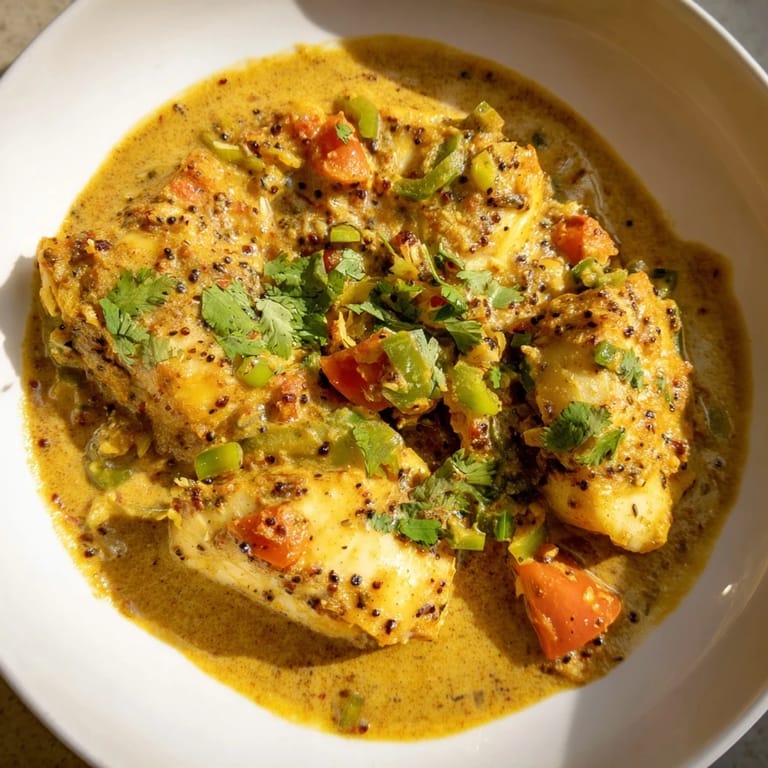 Save
Save Make this curry when you want to slow down and remember why cooking matters—it's not about speed or perfection, it's about the warmth that fills a kitchen and the people drawn to it. Every element here works in quiet harmony, and you'll find yourself making it again and again.
Recipe Guide
- → What type of fish works best in this dish?
Firm white fish such as cod, snapper, or hammour hold their shape well when simmered and absorb the spices beautifully.
- → Can I adjust the spiciness level?
Yes, the amount of green chilies can be increased or reduced to suit your desired heat level.
- → Is coconut milk essential for this curry?
Coconut milk provides a rich, creamy base balancing the spices; using canned coconut milk ensures the right consistency.
- → What sides complement this dish?
Steamed basmati rice, Bahraini ghoozi rice, or flatbreads like khubz pair well to soak up the flavorful sauce.
- → Can I substitute ingredients for dietary needs?
Yes, shrimp or firm tofu can replace fish for pescatarian or vegetarian preferences, maintaining texture and flavor.