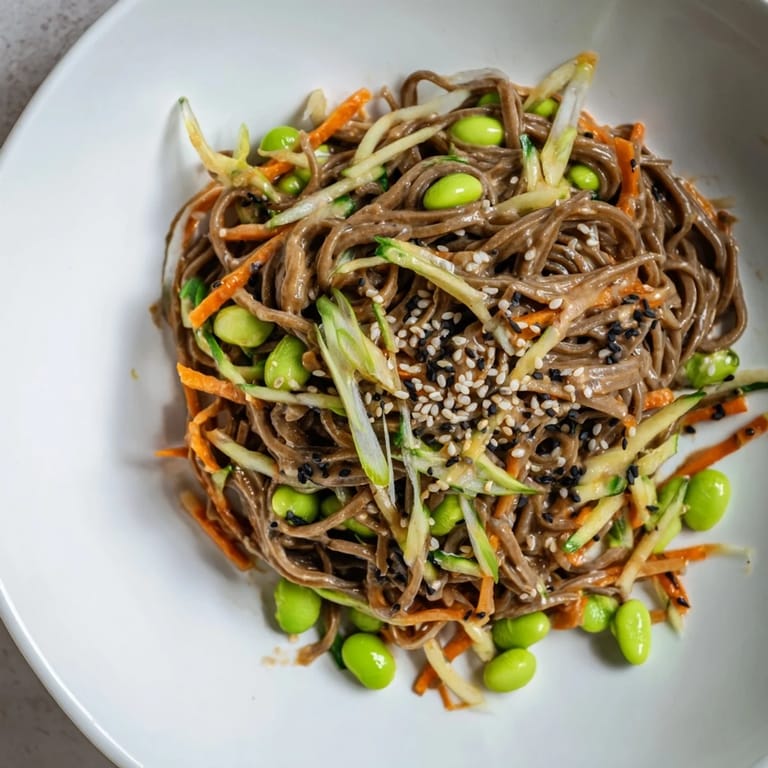
 Save
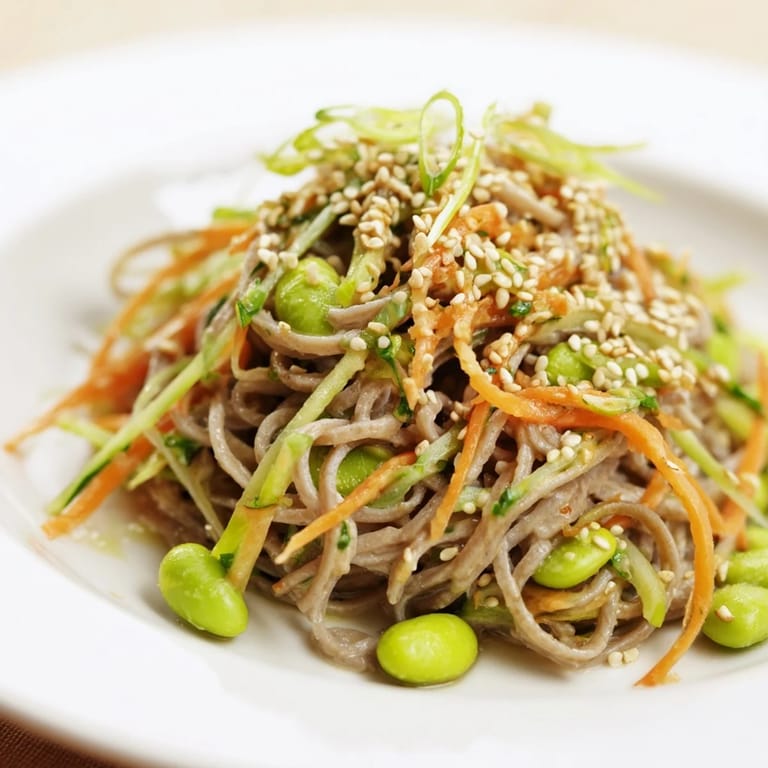
Save There's something about a bowl of cold noodles on a warm afternoon that just hits differently. I discovered this sesame noodle salad during a particularly chaotic summer when my kitchen felt too hot to turn on the oven, and I needed something that felt both satisfying and refreshing. The first time I tossed those silky noodles with the creamy sesame dressing, I realized I'd stumbled onto something special—something that could show up to a potluck or sit quietly in my fridge as my lunch for three days straight without getting boring.
I remember making this for my neighbor who had just moved in, and she ate an entire bowl standing at my kitchen counter, completely mesmerized by how the ginger and sesame kept surprising her with every bite. That moment taught me that food doesn't need to be complicated to make someone feel cared for—sometimes it just needs to be honest and fresh and made with a little thought.
Ingredients
- Soba noodles or thin spaghetti (250 g): Soba brings an earthy nuttiness, but honestly, any thin noodle works—I've used rice noodles when I needed gluten-free and the salad sang just as loudly.
- Cucumber (1 medium, julienned): The cucumber is your freshness anchor—don't skip the julienning, as thin matchsticks let it absorb the dressing without getting soggy.
- Carrots (2 medium, julienned): Raw carrots add a gentle sweetness and that satisfying crunch that keeps the salad interesting bite after bite.
- Edamame (1 cup, cooked and cooled): These little green beans bring protein and a buttery texture that makes this feel more like a main dish than a side.
- Spring onions (2, thinly sliced): The sharpness cuts through the richness of the sesame dressing like a little wake-up call for your palate.
- Toasted sesame seeds (2 tbsp): Toast them yourself if you can—the difference between toasted and untoasted is the difference between a good salad and one you'll crave.
- Tahini or toasted sesame paste (3 tbsp): This is the dressing's backbone, creamy and earthy—use toasted sesame paste if you find regular tahini too mild.
- Soy sauce (2 tbsp, tamari for gluten-free): The salt that ties everything together—taste as you go because soy sauces vary wildly in intensity.
- Rice vinegar (1 tbsp): The brightness that keeps the dressing from feeling heavy; don't substitute with white vinegar or it'll taste too sharp.
- Toasted sesame oil (1 tbsp): A little goes a long way—this is liquid gold that brings the whole thing into focus.
- Honey or maple syrup (1 tbsp): Just enough sweetness to round out the savory notes without making it dessert.
- Fresh ginger (1 tsp, grated): Grate it fresh right into the bowl—bottled ginger feels tired by comparison.
- Garlic (1 clove, minced): One clove is all you need; more and it becomes the main character instead of the supporting actor.
- Water (2–3 tbsp): The unsung hero that transforms thick paste into pourable dressing—add it slowly and taste.
Tired of Takeout? 🥡
Get 10 meals you can make faster than delivery arrives. Seriously.
One email. No spam. Unsubscribe anytime.
Instructions
- Cook your noodles until just tender:
- Follow the package timing, but taste a minute before—you want them cooked through but still with a tiny bit of resistance. Drain them well, then rinse under cold water while tossing gently until they're completely cooled and no longer clumpy.
- Build the dressing in a large bowl:
- Whisk tahini with soy sauce, rice vinegar, sesame oil, honey, ginger, and garlic until you have a thick paste. Start with 2 tablespoons of water and whisk constantly, adding more water a splash at a time until the dressing flows like heavy cream—this is the moment where patience pays off.
- Toss everything together gently:
- Add your cooled noodles, cucumber, carrots, and edamame to the dressing and turn it all over itself with tongs or two forks, being careful not to crush the vegetables. The goal is every strand coated, every piece dressed, but nothing bruised or broken down.
- Finish and rest the salad:
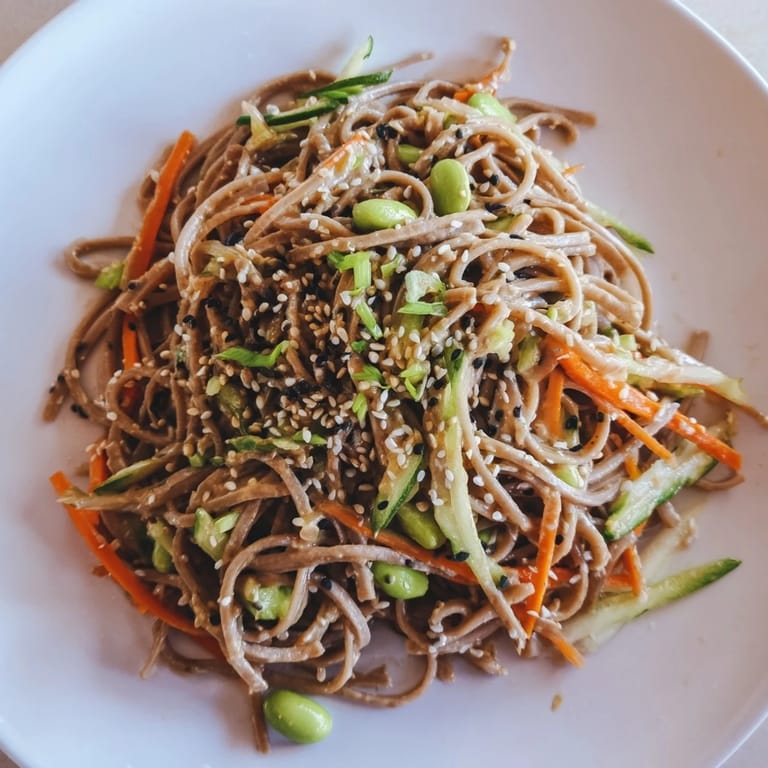
- Scatter the spring onions and toasted sesame seeds over the top along with any garnishes that call to you. Slide it into the fridge for at least 10 minutes—this resting time lets the flavors find each other and deepens the entire experience.
 Save
Save There was an evening when I added some shredded rotisserie chicken to this salad and suddenly it became the meal my family fought over instead of the quiet side dish I expected. That's when I understood that sometimes the simplest recipes have the most room to grow and adapt to whoever's eating.
Making It Your Own
This salad is incredibly forgiving once you understand its bones—the cool noodles, the creamy sesame dressing, the crisp vegetables. I've added shredded chicken, sliced tofu, grilled shrimp, and even scrambled eggs, and every version felt natural and right. Think of the recipe as a canvas rather than a set of rules, and you'll find yourself making it again and again, slightly different each time.
Dressing 101
The dressing is where this salad lives or dies, and getting it right is less about precision and more about tasting and adjusting. If it's too thick, water fixes it; if it's too salty, a splash of vinegar balances it; if it needs depth, a touch more sesame oil or a pinch more ginger will wake it up. I've learned to make the dressing first and taste it by itself—that way you're not caught off guard when it coats the whole salad.
Serving and Storage
This salad is at its best served cold, ideally within a day of making it, though it holds up beautifully for three days in an airtight container. The noodles soften slightly over time, which some people love and others find less appealing—trust your own preference and eat it when it calls to you. I always pack a small container of extra dressing to bring along, because nothing disappoints like a dry salad halfway through lunch, and having that backup means the leftover version can be just as delicious as the fresh one.
- Store in an airtight container in the fridge and toss gently with a fork before serving the next day.
- If the salad seems dry when you're ready to eat it, whisk together a quick tablespoon of sesame oil and water and drizzle it over before tossing.
- The cucumber and carrots will soften over time, so if you're making this more than a day ahead, chop and add them fresh rather than storing everything mixed together.
 Save
Save This salad has become my go-to when I want to feed people something that feels thoughtful without stressing myself out. It's the kind of dish that reminds me why I love cooking in the first place.
Recipe Guide
- → Can I substitute the noodles in this dish?
Yes, rice noodles or thin spaghetti work well as alternatives. For gluten-free options, rice noodles paired with tamari instead of soy sauce are recommended.
- → How can I make the dressing creamier?
Add more tahini or a touch of water to reach a smooth, pourable consistency. Whisk thoroughly until well combined.
- → Is it possible to add extra protein?
Absolutely, shredded cooked chicken or tofu can be added to boost the protein content while complementing the nutty and fresh flavors.
- → What garnishes enhance the flavors best?
Fresh cilantro or mint leaves and crushed peanuts or cashews add aromatic freshness and crunch. Lime wedges provide a bright citrus touch.
- → Can this dish be prepared ahead of time?
Yes, it tastes best after chilling for at least 10 minutes to allow flavors to meld, making it ideal for preparing in advance.