 Save
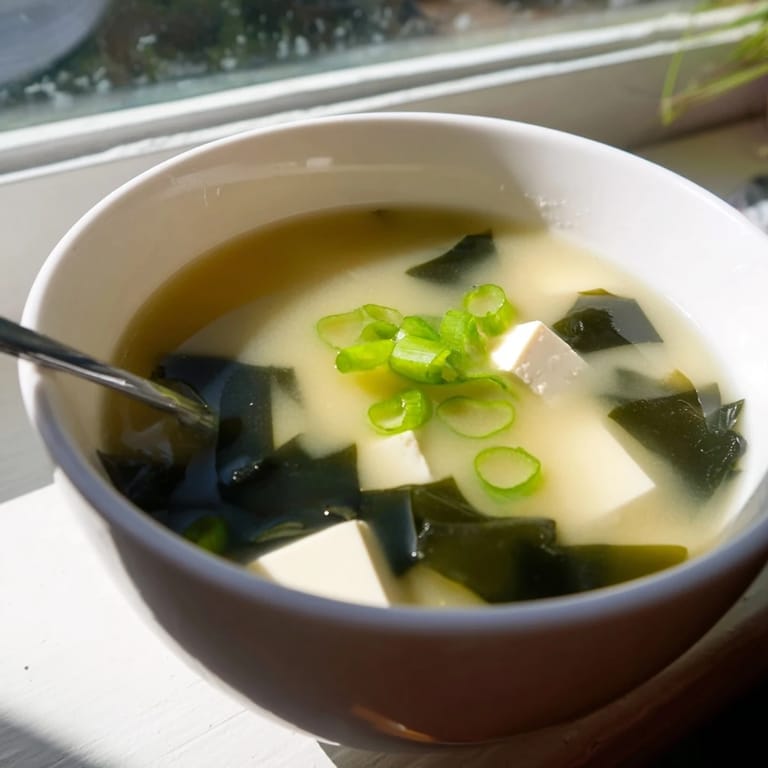
Save The first time I made miso soup, I stood over the pot second-guessing every measurement. A Japanese friend had watched me fuss and finally stepped in, gently pushing my hand away from the stove. Never boil the miso, she said, you are killing the soul of the soup. That tiny correction changed everything about how I approach this simple bowl of comfort.
Last winter, when my sister was recovering from surgery and craved something gentle on her stomach, I brought her a thermos of this miso soup. She messaged me later that night, saying it was the first thing in days that made her feel genuinely comforted and cared for. That is the quiet magic of this recipe.
Ingredients
- 4 cups dashi stock: Use vegetarian dashi made from kombu seaweed to keep this plant-based, or traditional bonito-based dashi for deeper umami flavor
- 3 tablespoons miso paste: White miso is milder and sweeter, yellow miso adds a bit more depth, and mixing both creates a beautifully balanced flavor profile
- 200 g silken tofu: Handle this gently as it breaks easily, cutting it into small even cubes so every spoonful contains a tender piece
- 2 tablespoons dried wakame seaweed: This expands dramatically when soaked, so a little goes a long way and adds essential minerals and ocean flavor
- 2 scallions: Finely sliced on a diagonal for a fresh, mild onion bite that cuts through the rich miso broth
Tired of Takeout? 🥡
Get 10 meals you can make faster than delivery arrives. Seriously.
One email. No spam. Unsubscribe anytime.
Instructions
- Prepare the broth base:
- Heat your dashi stock in a medium saucepan until it reaches a gentle simmer, watching for tiny bubbles around the edges
- Soak the seaweed:
- While the broth warms, place dried wakame in cold water for 5 minutes until it softens and expands, then drain well
- Dissolve the miso properly:
- Ladle some hot dashi into a small bowl with the miso paste, whisking until completely smooth and no lumps remain
- Add the tofu and seaweed:
- Gently slip the tofu cubes and soaked wakame into the simmering broth, letting them warm through for 2 to 3 minutes
- Finish with the miso:
- Remove the pot from heat entirely, stir in the dissolved miso mixture, and ladle into bowls topped with fresh scallions
 Save
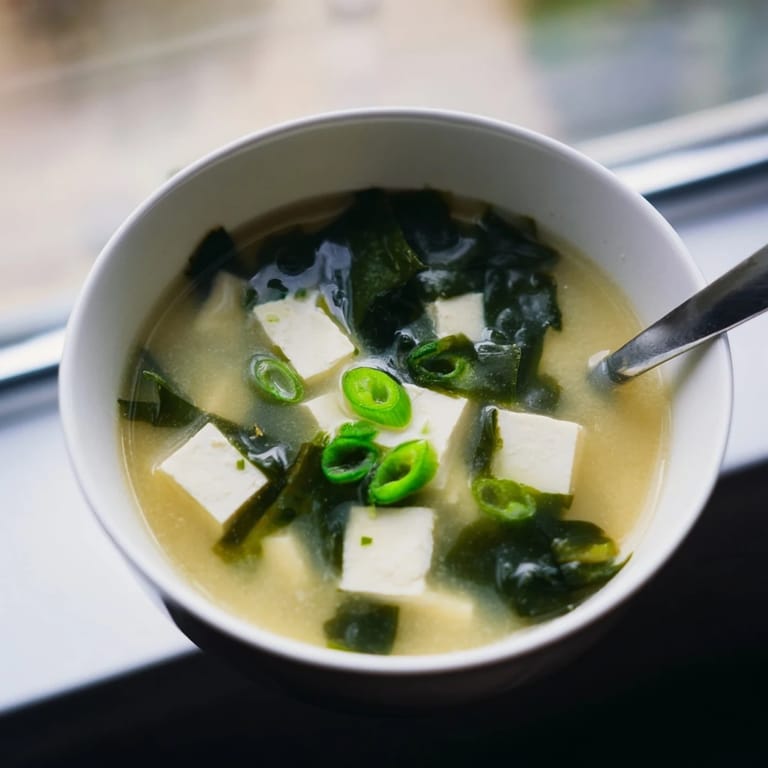
Save There is something deeply soothing about the ritual of making this soup, the way the miso swirls into the dashi cloudlike and transforming. My daughter now asks for it whenever she is feeling under the weather, calling it her magic soup.
Building Better Broth
I keep a jar of homemade dashi concentrate in my refrigerator for those moments when miso soup cravings strike. You can make it by simmering kombu seaweed for hours, then reducing the liquid until it is intensely flavorful. A spoonful of this concentrate in hot water creates instant broth that puts store-bought versions to shame.
The Tofu Technique
Silken tofu can feel intimidating because it is so delicate, but that fragility is exactly what makes it perfect for miso soup. I have found that cutting the tofu block in half horizontally first makes it easier to create uniform cubes without crushing them. Dropping the cubes into the soup with a slotted spoon instead of pouring them helps them land gently instead of breaking apart.
Easy Customizations
This recipe is wonderfully adaptable to what you have on hand. Once you master the basic technique, you will find yourself adding whatever sounds good that day.
- Drop in thinly sliced shiitake mushrooms with the tofu for earthy depth and meaty texture
- Add a handful of baby spinach during the last minute of cooking for vibrant color and extra nutrition
- Stir in a teaspoon of grated fresh ginger right before serving if you are fighting a cold
 Save
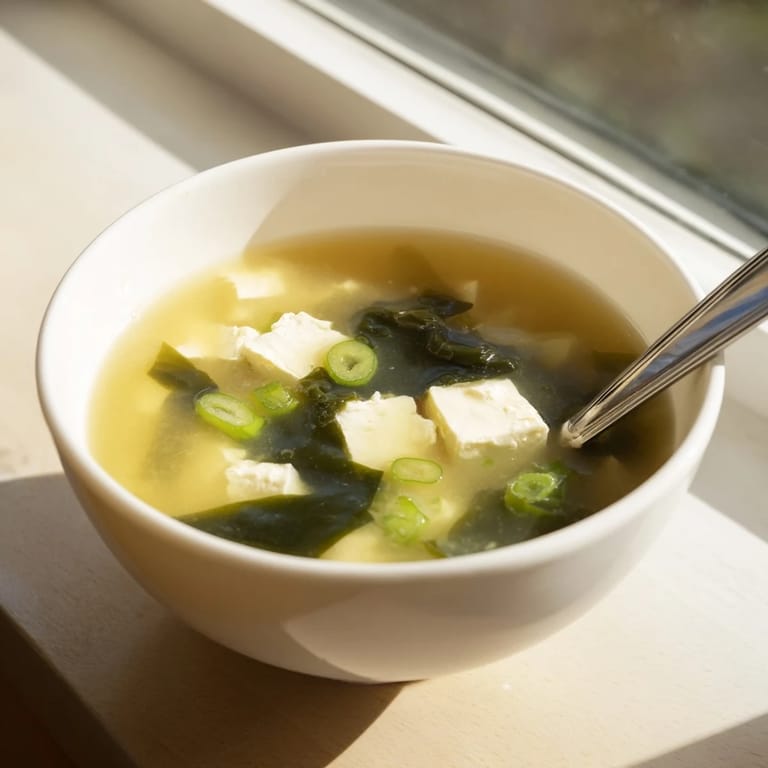
Save A steaming bowl of this soup, perhaps with some steamed rice on the side, is one of life is simplest pleasures. I hope it brings as much quiet comfort to your kitchen as it has to mine.
Recipe Guide
- → What type of miso works best?
White or yellow miso paste provides a mellow, slightly sweet flavor ideal for this soup. Red miso offers a deeper, more intense taste if you prefer stronger umami notes. You can also blend white and red varieties for balanced complexity.
- → Can I make this vegan?
Absolutely. Use vegetarian dashi made from kombu seaweed and dried shiitake mushrooms instead of traditional bonito-based stock. Most miso pastes are naturally plant-based, though always verify the label to ensure no fish-derived ingredients are included.
- → Why shouldn't miso be boiled?
Boiling miso destroys beneficial probiotics and enzymes while creating an overly salty, harsh flavor. Always remove the broth from heat before stirring in dissolved miso paste. This preserves its delicate fermented qualities and maintains the soup's smooth, balanced taste.
- → What can I add for more substance?
Thinly sliced shiitake mushrooms, fresh spinach, or cubed sweet potatoes make excellent additions while keeping the soul-warming character intact. For extra protein, consider adding cooked edamame or small shrimp if your diet allows.
- → How long does the soup keep?
Store in an airtight container for up to 3 days, though the tofu may soften over time. Reheat gently without boiling—the miso flavor actually develops and becomes more harmonious overnight. Avoid freezing, as tofu texture changes dramatically when thawed.
- → Is silken tofu required?
Silken tofu's delicate, custard-like texture is traditional, but firm tofu works too if you prefer more substantial cubes. Just adjust the cooking time slightly since firm varieties hold their shape better during simmering.