 Save
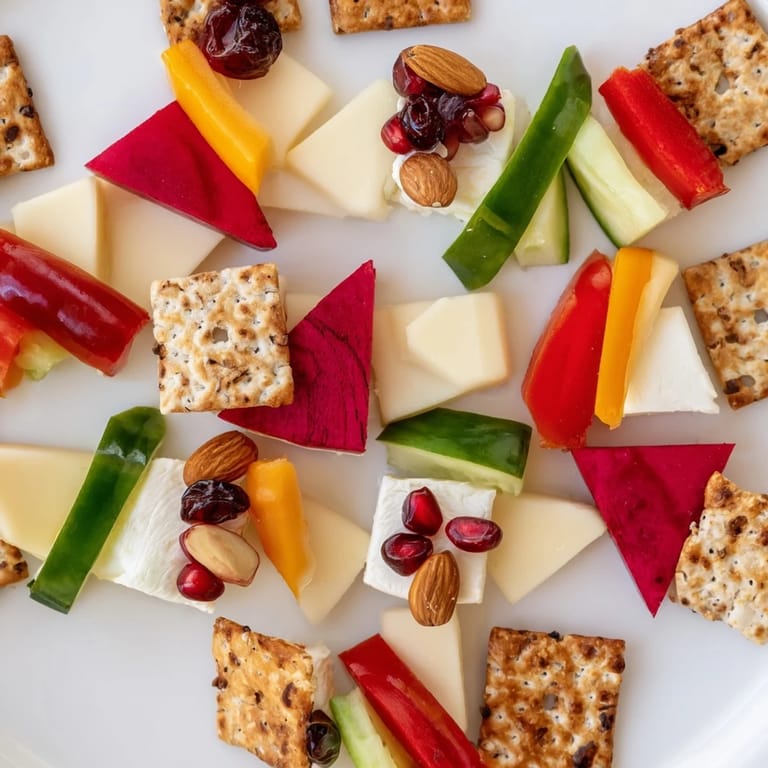
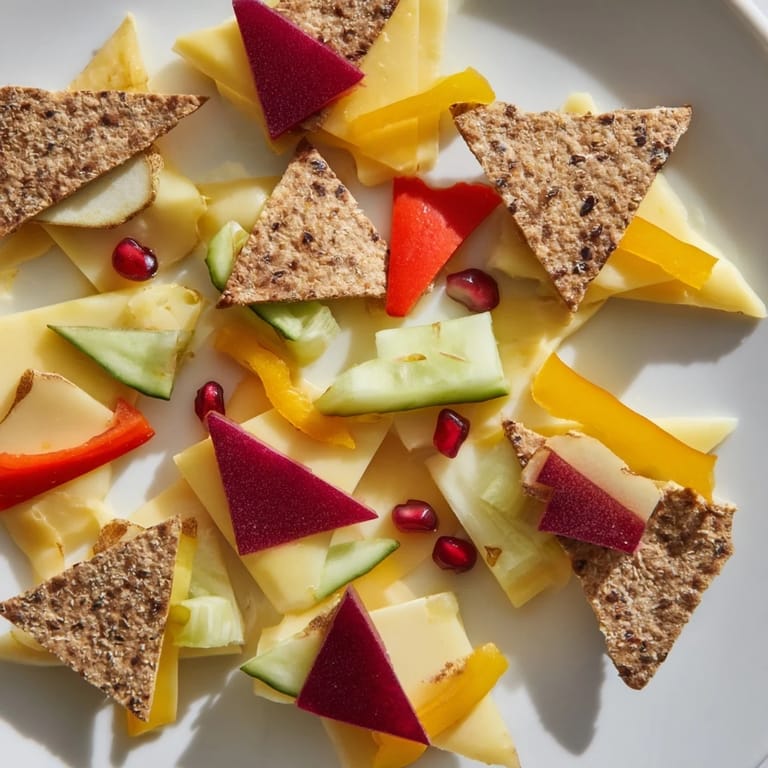
Save I'll never forget the first time I saw a tessellation board at my friend Marina's dinner party. The way she'd arranged every single ingredient into perfect interlocking triangles took my breath away—it was so geometric, so intentional, yet somehow warm and inviting. I spent half the evening just admiring it before diving in, and that's when it clicked: this wasn't just an appetizer, it was edible art that tasted as good as it looked. Now whenever I want to impress people, I create this modern masterpiece on my own board.
I made this for my sister's engagement dinner last spring, and watching everyone lean in to admire it before eating brought this quiet joy I hadn't expected. One guest told me later it was so beautiful she almost felt guilty breaking into the pattern. That's when I realized this board does something special—it turns simple ingredients into a moment people remember.
Ingredients
- Aged cheddar (100g, sliced into triangles): The sharpness cuts through the sweetness of the fruits and becomes the anchor flavor of your board. Don't skip the aged version—the complexity matters here.
- Manchego (100g, sliced into triangles): This Spanish beauty has a subtle nuttiness that pairs beautifully with the pear and almonds. It's the ingredient that makes people say 'what is this cheese?' in the best way.
- Goat cheese (100g, chilled and cut into triangles): The creamy contrast is essential—keep it cold so it holds its shape and creates those satisfying creamy bites.
- Cucumber (1 medium, peeled and sliced into thin triangles): Beyond the crunch, cucumber brings freshness that prevents the board from feeling heavy. The watery crispness is your palate cleanser between rich cheese bites.
- Red bell pepper (1 large, seeded and cut into triangles): This is your color hero and your sweetness note. I learned the hard way that removing every seed and white membrane ensures uniform triangles that fit together properly.
- Beet (1 small, cooked and sliced into very thin triangles): Earthy and jewel-toned, beets are the visual anchor that makes the whole pattern pop. Cook and chill before slicing so they're firm enough for the mandoline.
- Pear (1 large, cored and sliced into thin triangles): The slight sweetness and delicate texture create elegant triangles that soften the appearance of harder cheeses. Choose a ripe but firm pear—overripe fruit won't hold its shape.
- Watermelon (1/2 cup, cut into small triangles): A surprising but brilliant addition that brings unexpected sweetness and moisture. The bright pink color creates visual rhythm in your pattern.
- Whole grain crackers (100g, cut if needed into triangles): These provide structure and texture contrast. If your crackers aren't already triangular, cutting them is therapeutic preparation work.
- Roasted almonds (1/4 cup): These fill tiny gaps and add a crucial textural moment—the crunch after creamy cheese is exactly what makes this board work.
- Pomegranate seeds (1/4 cup): Garnish and gap-filler in one. Their bright red jewel tone catches light and pulls the eye through your pattern.
- Honey (2 tbsp, optional): A light drizzle over goat cheese creates moments of concentrated sweetness that surprise and delight—use it sparingly.
- Fresh herbs (thyme or mint): The final flourish that says 'I care about every detail.' Thyme feels Mediterranean; mint feels fresh. Choose what your pattern needs.
Tired of Takeout? 🥡
Get 10 meals you can make faster than delivery arrives. Seriously.
One email. No spam. Unsubscribe anytime.
Instructions
- Gather Your Canvas:
- Pull out your largest wooden board or beautiful platter. This becomes the stage for your edible geometry, so choose something you love looking at. A wooden surface gives you the best grip for arranging—food slides around on ceramic, trust me.
- Master the Triangle:
- This is where patience pays off. Use a sharp chef's knife or mandoline to cut every single ingredient into triangles of similar size. The uniformity is what makes tessellation possible—ragged cuts create awkward gaps. I slice cheeses on a mandoline now, holding them with a kitchen towel to keep my fingers safe. Vegetables benefit from a mandoline too, especially cucumbers and beets, which need to be paper-thin and consistent.
- Start Your Pattern:
- Begin in one corner and work methodically. I usually start with a solid color—like red pepper triangles—to establish the foundation. Arrange your first row along one edge, fitting each triangle as snugly as possible against its neighbors. This is meditative work. There's something deeply satisfying about sliding each piece into place and watching the pattern emerge.
- Build the Tessellation:
- Move across the board in rows or spirals, alternating your materials strategically. Pair warm cheeses next to cool vegetables, soft fruits next to crispy crackers. Think like you're painting—you're using color, texture, and flavor as your brushstrokes. The goal is no visible board showing through, with triangles fitting together like a puzzle.
- Fill the Negative Space:
- As you work, you'll notice tiny gaps appearing. Don't panic. This is where roasted almonds and pomegranate seeds become heroes. Nestle them into the spaces between triangles, creating visual interest and preventing that 'incomplete' feeling. These small garnishes actually tie the whole composition together.
- Add the Final Touches:
- Step back and evaluate your board. If it needs more brightness, add pomegranate seeds. If certain sections feel flat, drizzle a tiny bit of honey over goat cheese. Scatter fresh herbs across the surface—they should look like they've gently landed, not been meticulously placed. The slight randomness of the garnish balances the precision of the triangles.
- Serve with Presence:
- Bring the board directly to the table immediately. This is important because triangles can shift if the board sits, and you want maximum impact when guests first see it. Watch their faces as they discover the geometry you've created. That moment is worth every precise cut.
 Save
Save There's a moment I always experience when a tessellation board is complete—that instant when you step back and realize you've created something that bridges the gap between food and art. It happened at my engagement party, and it happens every time someone enters my kitchen while I'm finishing one. People don't just eat this board; they slow down and appreciate it. That's the real magic here.
The Geometry of Flavor
What makes this board work isn't just the visual pattern—it's how the flavors and textures complement each other in every bite. The sharpness of aged cheddar next to the sweetness of watermelon creates a conversation. Creamy goat cheese followed by crispy cucumber refreshes your palate. The earthiness of the beet grounds everything. This isn't random arrangement; it's flavor architecture built into geometry.
Preparation Strategy
I've learned that the prep work is where this recipe lives or dies. You need a clean, organized workspace with all ingredients prepped and arranged before you touch the board. I lay out small bowls of each ingredient, organized by color, so I can grab what I need without second-guessing myself. The actual arrangement usually takes 20-25 minutes if you're methodical, but those 10 minutes of prep work? That's where the real thought happens.
Variations and Adaptations
This tessellation concept is endlessly adaptable, which means you can make it work for any occasion or dietary requirement. Vegetarian? This version celebrates vegetables as stars. Vegan? Substitute plant-based cheeses and you won't lose anything in translation. Want drama? Add thin slices of cured meats like prosciutto in their own triangles. You could build a version around Mediterranean flavors using olives and feta, or lean toward autumnal ingredients with apple and sharp cheddar. The principle remains the same—uniformity, contrast, and intentionality. Once you understand the geometry, you can tessellate anything beautiful.
- For a Mediterranean twist, incorporate kalamata olives (pitted and halved), crumbled feta, and fresh oregano
- Create a fall version with apple slices, sharp white cheddar, and candied walnuts arranged in warm tones
- Add prosciutto triangles for a non-vegetarian version that introduces salty, umami notes
 Save
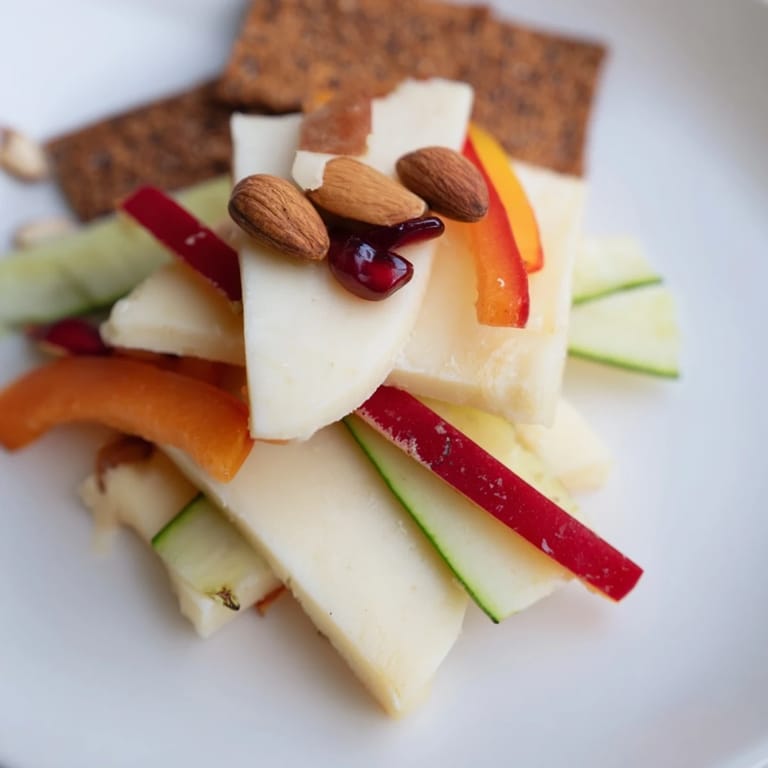
Save This tessellation triangle board transforms an appetizer into an experience. Serve it with a crisp Sauvignon Blanc or sparkling water with citrus, and watch it become the centerpiece of your gathering—not because of how fancy it is, but because you've created something your guests will remember long after the last triangle is gone.
Recipe Guide
- → What cheeses work best for the tessellated board?
Aged cheddar, Manchego, and goat cheese are ideal due to their firmness and flavor. They hold their shape well when cut into triangles.
- → How can I achieve uniform triangular shapes?
Use a sharp chef's knife or mandoline slicer to ensure consistent, even slices for a precise tessellated pattern.
- → Can this board be prepared in advance?
Cut the ingredients ahead but arrange just before serving to maintain freshness and texture.
- → What garnishes enhance the board’s appearance?
Roasted almonds, pomegranate seeds, and fresh herbs like thyme or mint add color, texture, and aroma to the board.
- → Is there a suggested beverage pairing?
A crisp Sauvignon Blanc or sparkling citrus water complements the flavors and freshness of this board perfectly.
- → How to adapt the board for vegan guests?
Substitute the cheeses with plant-based alternatives cut into similar triangles to maintain the overall look and texture.