 Save
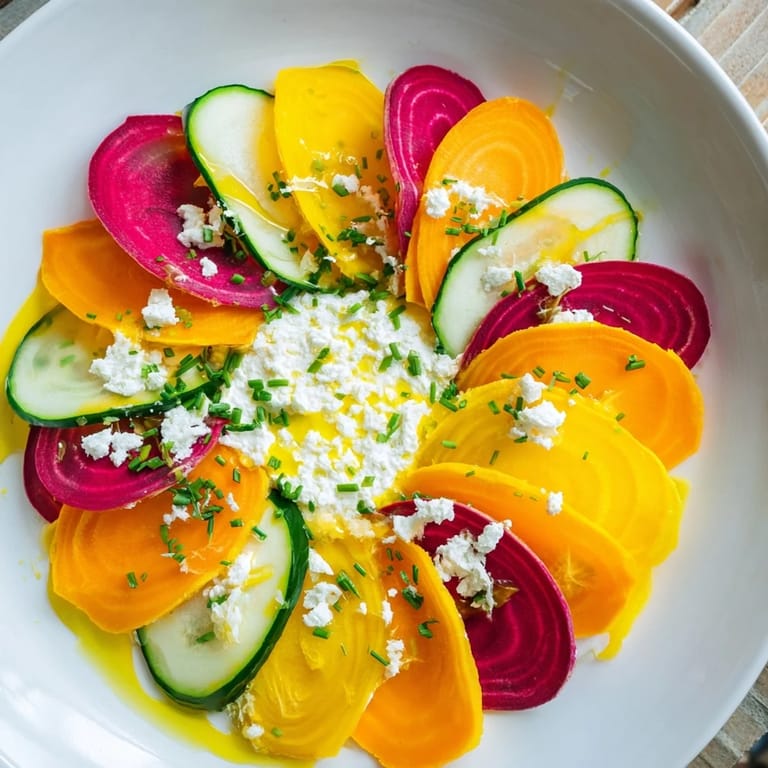
Save I remember the first time I arranged vegetables in a spiral on my grandmother's old ceramic platter, and she walked into the kitchen, stopped mid-step, and said nothing for a moment. Then she smiled. That simple gesture taught me that food is as much about beauty as flavor, and years later, when I discovered this radial sunburst technique, I was transported back to that kitchen. It felt like I'd finally mastered what she was trying to show me that day—that arranged with intention and care, even the simplest vegetables become art worth sharing.
I made this for my partner's birthday dinner one autumn evening, and what started as wanting to impress turned into something we both got lost in—standing there, arranging slices like we were painting, listening to music, occasionally tasting a beet or offering the other person the next slice to position. By the time we'd finished, we'd created something so beautiful that we almost didn't want to eat it. Almost.
Ingredients
- Golden beet: One medium, peeled and thinly sliced—this is your warm, earthy foundation. The golden variety is sweeter and less intensely colored than its red cousin, so it won't bleed onto everything
- Red beet: One medium, peeled and sliced just as thin—this provides that jewel-tone drama. A mandoline is your best friend here; it ensures even slices that catch the light beautifully
- Zucchini: One small one, sliced thin—pale green and delicate, it adds subtle flavor and important textural contrast without overpowering
- Yellow squash: One small one, sliced thin—mirrors the zucchini in structure but adds warmth; together they frame your more colorful vegetables
- Watermelon radish: One medium, sliced thin—this is the showstopper. When you slice it, the pink and white rings inside create an instant spiral pattern. If you can't find one, a regular radish works, but the watermelon variety is worth seeking out
- Carrot: One large, peeled and sliced thin—the orange adds brightness and a subtle natural sweetness that complements the beets and honey in the dressing
- Goat cheese: 100 grams, crumbled—tangy, creamy, and it takes on a subtle tang against the vegetables. Let it sit out for a few minutes before crumbling so it breaks apart naturally rather than clumping
- Crème fraîche: 2 tablespoons—this softens the goat cheese and makes it spreadable, creating a luxurious center that anchors the whole composition
- Extra-virgin olive oil: 2 tablespoons—use one you actually like tasting, because you will taste it. The quality here matters
- Fresh lemon juice: 1 tablespoon, squeezed just before you need it—bottled will work in a pinch, but fresh makes all the difference in brightness
- Honey: 1 teaspoon—just enough to round out the acidity of the lemon without making anything sweet
- Salt and pepper: To taste—season as you build, tasting as you go
- Fresh chives: 2 tablespoons, finely chopped—add these at the very last second before serving so they stay bright and alive
- Toasted sesame seeds: 1 tablespoon—toast them yourself if you can; they'll have a deeper, warmer flavor than pre-toasted versions
- Edible flowers: Optional, but highly recommended—pansies, nasturtiums, or violas add whimsy and prove you care about every detail
Tired of Takeout? 🥡
Get 10 meals you can make faster than delivery arrives. Seriously.
One email. No spam. Unsubscribe anytime.
Instructions
- Slice everything uniformly thin:
- This is where patience pays off. Grab a sharp knife or, better yet, a mandoline if you have one. The thinner the slices, the more delicate and elegant the final sunburst looks. Peel your beets carefully—they stain, but that's part of their charm. As you slice, you'll notice how each vegetable has its own personality; honor that by keeping the cuts consistent within each type
- Create your center point:
- Place a small bowl or ramekin in the center of your large round platter—this is your artist's guideline. Step back and look at the platter as your canvas. The circular shape is important; it helps you see the radial symmetry you're about to create
- Begin arranging from the center outward:
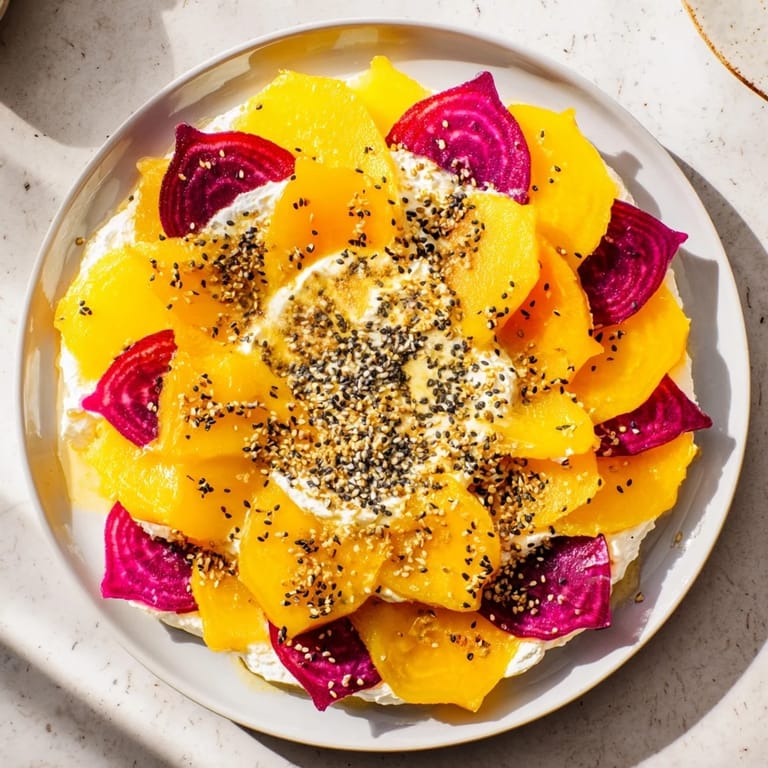
- Remove the guide bowl and start with your innermost circle. Pick a starting color—I like to begin with the watermelon radish because its natural spiral gives you visual permission to spiral outward. Fan each slice slightly so it overlaps its neighbor, creating a single ray of the sunburst. Take your time here; this is meditative work, almost like weaving
- Layer in alternating colors and shapes:
- As you move outward, alternate between the golden beet, red beet, zucchini, yellow squash, and carrot. The variation in color and shape is what makes this stunning. If you've chosen vegetables with similar thicknesses, they'll lay flat and create clean lines. If they're uneven, work with the organic shape—some wonkiness can actually add charm
- Fill the center with creamed cheese:
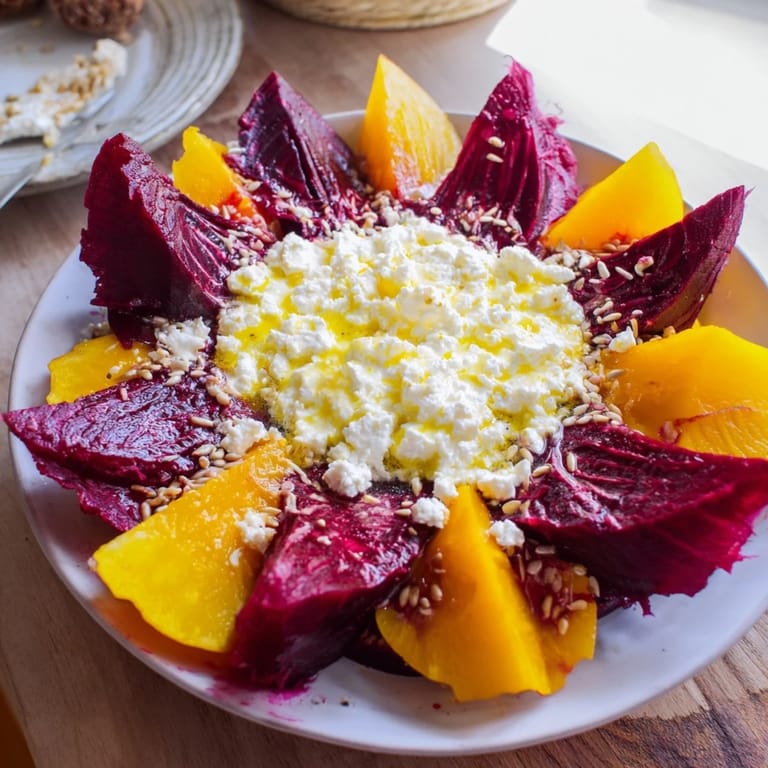
- Once your sunburst is complete and you've worked your way to the outer edge of the platter, mix the goat cheese and crème fraîche together gently. This doesn't need to be a smooth mixture; the crumbly, creamy contrast is part of the appeal. Spoon it into the center where your guide bowl was, creating a soft anchor for the radiating vegetables
- Dress the vegetables:
- In a small bowl, whisk together the olive oil, fresh lemon juice, honey, and a generous pinch of salt and pepper. Taste it first—you want it to sing. The honey should barely register, just rounding the acidity. Drizzle this evenly over the vegetables, being thoughtful about coverage. Some sources recommend dressing vegetables just before serving to keep them crisp, and they're right
- Garnish with intention:
- Scatter the fresh chives over the top, sprinkle the toasted sesame seeds strategically, and if you've got edible flowers, place them like you're making the final brushstrokes on a painting. This is your moment to step back and admire what you've created
- Serve immediately:
- Transfer the platter to the table while the vegetables are still crisp and the colors are vibrant. Let your guests see it before anyone cuts into it—the presentation is half the gift
 Save
Save Someone once told me that the most elegant dishes are often the simplest ones, and this sunburst proved that to me. It was when my friend took a photograph of it before eating and sent it to five other people that I realized it had transcended being just food—it had become something worth preserving, something that said, without words, that she was worth beauty and effort.
The Art of Symmetry
Perfect symmetry is a myth, and that's actually the secret. When you're arranging this sunburst, don't obsess over exact measurements or perfect mirroring. What matters is the intention—that you're thoughtfully alternating colors, that your spirals flow outward, that there's a visual rhythm even if it's not mathematically perfect. Some of my favorite versions have slight irregularities that catch the eye in unexpected ways. The imperfection is what makes it feel handmade and human.
Choosing and Preparing Vegetables
The vegetables in this dish are stars, so choose ones that are at their peak. Farmers market finds are ideal—smaller, firmer vegetables slice more cleanly and have better flavor. When you peel your beets, do it over the sink or on a surface you don't mind staining. Consider wearing gloves if you care about your hands. Watermelon radishes in particular can be precious and hard to find, but regular radishes work beautifully if you're patient. Some versions of this salad use cucumber instead of or alongside the other vegetables, which adds even more visual interest and a subtle refreshing coolness.
Dressing and Flavor Balance
The dressing is delicate by design. This isn't a heavily dressed salad where the vinaigrette is the main event—here, the vegetables and their fresh flavors are the stars. The lemon juice provides brightness, the honey rounds it, and the olive oil carries everything together. Taste as you whisk, because every lemon is different. Some are more acidic, some are less. This is where your intuition matters. The seasoning should make you want to taste the vegetables, not hide them.
- Make the dressing no more than 10 minutes before serving, so the flavors are still bright and lively
- If you prefer a richer dressing, add a small spoon of Dijon mustard, which will emulsify the oil and lemon juice slightly
- A tiny pinch of shallot, minced impossibly fine, adds a whisper of depth if you want it
 Save
Save This dish reminds me that food is a language, and sometimes the most eloquent thing you can say is made of color, balance, and care. When you arrange these vegetables with thoughtfulness, you're telling everyone at your table that they matter.
Recipe Guide
- → How do I achieve the perfect symmetry when arranging the vegetables?
Use a small bowl or ramekin as a guide in the center, arranging thinly sliced vegetables in alternating colors and shapes, fanning outward evenly in concentric circles for a balanced sunburst effect.
- → What is the best way to slice the vegetables thinly?
A sharp knife or mandoline slicer provides uniform thin slices, essential for creating the delicate layering and visual appeal of the sunburst arrangement.
- → Can I substitute the goat cheese and crème fraîche filling?
Yes, ricotta or feta cheese can be used as alternatives for a similar creamy texture and flavor profile while maintaining the dish's freshness.
- → What dressing complements the vibrant vegetables best?
A light dressing made from extra-virgin olive oil, freshly squeezed lemon juice, honey, salt, and pepper brings brightness and subtle sweetness that enhances the vegetable flavors.
- → Are there allergy considerations to keep in mind?
This dish contains dairy and sesame seeds; sesame seeds can be omitted if sensitive. Always check ingredient labels for hidden allergens.
- → Can the dish be prepared ahead of time?
While the vegetables can be sliced in advance, it's best to assemble and dress the dish shortly before serving to retain crispness and vibrant appearance.