 Save
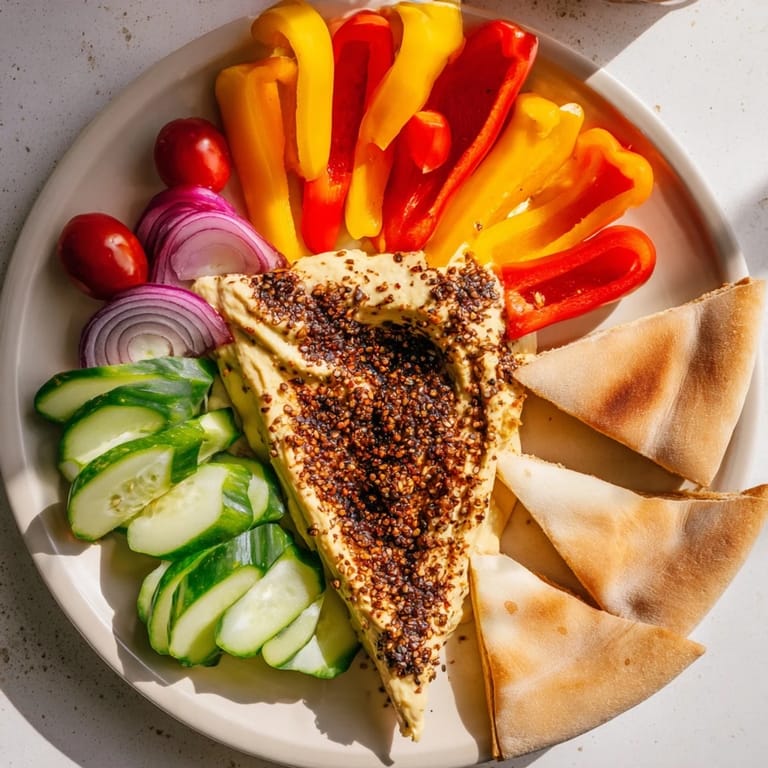
Save The first time I arranged vegetables on a platter like this, I was nervous about looking foolish, but then something clicked when I started thinking of it as building a tiny edible landscape. My friend Amina had described Moroccan hospitality to me over tea one afternoon, and months later, standing in my kitchen with a heap of colorful peppers and cucumbers, her words came back. That tent shape began as a joke—what if we made it architectural?—but when the first guests saw it, their faces told me we'd stumbled onto something genuinely special.
I made this for my neighbor's book club gathering, and someone asked if I'd taken a cooking class. The honest answer was no—I'd just raided my crisper drawer and decided to make the chaos look intentional. What surprised me most was how the warm bread balanced all those cool, crisp vegetables, and how the cumin-dusted hummus smelled like an entirely different evening than the one I'd been having.
Ingredients
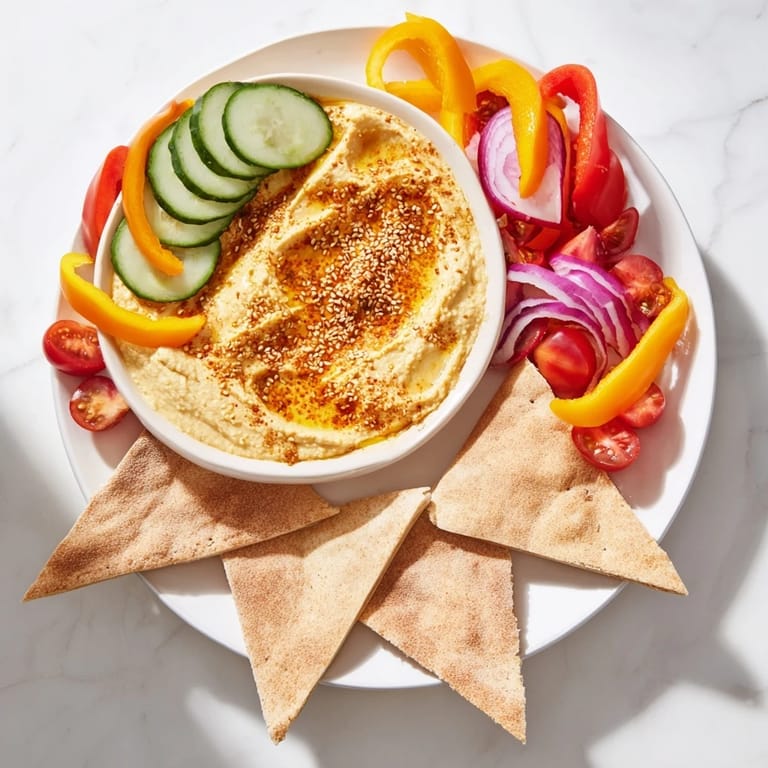
- Cucumber: Slice it lengthwise to create long, elegant pieces that lean gracefully against other vegetables and catch the light beautifully.
- Red and yellow bell peppers: Cut into strips rather than rings so they're easier to dip and stack, and the color contrast is what makes this whole thing work visually.
- Carrots: Peeled sticks are friendlier to eat than coins, and they add that natural sweetness that balances the spiced dips perfectly.
- Cherry tomatoes: Halved so they nestle between vegetables without rolling around, and their jewel-like color is half the appeal here.
- Red onion: Thin slices add a sharp bite that wakes up your palate between dip tastes, and they're prettier than you'd expect.
- Radishes: Their peppery crunch became my favorite discovery—they cut through the richness of the dips in a way nothing else does.
- Pita or msemen: Warming them brings out the nutty flavor and makes them flexible enough to actually scoop dips instead of crumbling apart in your hands.
- Hummus: The creamy anchor that lets everything else shine, and homemade is worth the five extra minutes if you have it.
- Muhammara: That roasted red pepper dip has a sweetness that feels almost luxurious, and it's what makes people ask for the recipe.
- Baba ganoush: Smoky and subtle, it's the quiet dip that regular cooks forget exists but that actually teaches your mouth something new.
- Olives, cilantro, sesame seeds: The finishing touches that say you knew what you were doing all along, even if you didn't.
Tired of Takeout? 🥡
Get 10 meals you can make faster than delivery arrives. Seriously.
One email. No spam. Unsubscribe anytime.
Instructions
- Prep with intention:
- Wash and cut all your vegetables first, arranging them on paper towels to dry slightly so they stay crisp and don't weep moisture onto the platter. This is the meditative part—no rush.
- Build the canopy:
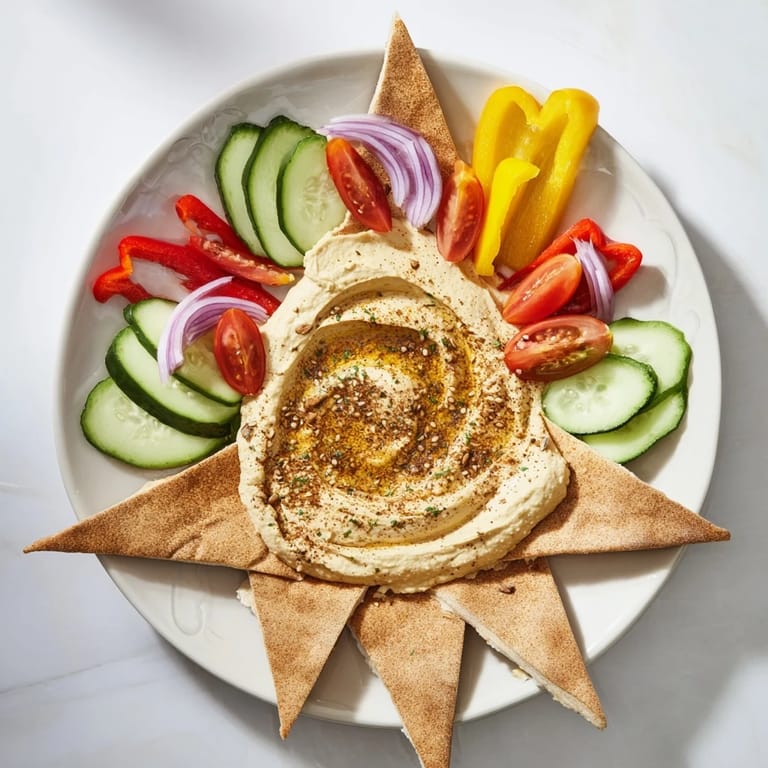
- On your largest platter, start laying vegetables in triangular groupings from the center outward, as if you're creating the frame of a tent, alternating colors so no two of the same shade sit side by side. Stand back occasionally to see it like your guests will.
- Warm the bread:
- In a dry skillet over medium heat, warm pita or msemen for about ninety seconds per side—just enough that you smell the toasted flour notes but nothing browns. Cut them into triangles while still slightly warm, then fan them out at the base like you're framing a painting.
- Compose the dips:
- Spoon each dip into its own small bowl, then dust with cumin, paprika, and sesame seeds before you place them at the center base of your tent arrangement. The aroma of those warming spices is part of the welcome.
- Final flourish:
- Scatter olives and chopped cilantro across the vegetable canopy like confetti, a moment of playfulness that makes the whole thing feel celebratory. Serve immediately, while everything is at its crispest and coldest.
 Save
Save What I love most is that someone always says this looks too beautiful to eat, and then they eat it anyway, and then they help themselves to more. That moment when intention and restraint meet appetite is what cooking is really about, I think.
The Architecture of Appetizers
Moroccan food taught me that presentation and flavor are not opposing forces—they work together, each one making the other better. When you spend those few extra minutes arranging things with care, it changes the whole mood of the meal, signals to your guests that their arrival mattered enough for you to think about joy, not just sustenance. The tent shape itself is practical too; it creates natural boundaries that keep the whole platter from looking chaotic, even when six people are reaching in different directions.
Dips as the Real Story
The vegetables are the backdrop, but the dips are where the actual flavor lives, and it's worth taking the dips seriously. Hummus should be silky enough to hold a little well of olive oil on top, muhammara should have that burnt-sweet depth that only roasted red peppers can give you, and baba ganoush should taste like smoke and eggplant had a conversation. If you're buying them pre-made, that's not cheating—that's knowing your limits and cooking smart. If you're making them from scratch, the effort shows in a way that matters, and people taste that care.
Why This Works for Any Gathering
This platter lives in that rare space where it feels fancy enough for people to be impressed but practical enough that you're not stressed during the party, standing in the kitchen regretting everything. It's vegetarian without announcing it loudly, accommodating without asking a hundred questions about dietary needs, and it gives everyone something to do with their hands when conversation pauses for a breath.
- Make the whole thing up to an hour ahead, then pull it from the fridge right before people arrive so nothing gets wilted or warm.
- If someone is gluten-free, wrap a few rice paper wraps or lettuce leaves separately so they have their own scoops for the dips.
- Leftover dips keep for three days, and cold vegetables become tomorrow's salad ingredients if anything survives the night.
 Save
Save This platter is proof that the simplest ideas sometimes create the most memorable moments, and that looking after people through food is its own kind of architecture. Serve it with mint tea or cold wine, and watch what happens.
Recipe Guide
- → What types of flatbreads work best with this platter?
Pita breads or Moroccan msemen are ideal as they hold dips well and complement the vegetable arrangement with their warm, soft texture.
- → Can I substitute the dips for other options?
Yes, you can swap in other Mediterranean dips such as baba ganoush, labneh, or tahini for variety while maintaining complementary flavors.
- → How do I achieve the pointed tent-like presentation?
Arrange sliced vegetables in triangular groupings, alternating colors to mimic a tent-shaped canopy, with flatbreads fanned at the base.
- → Are there any suggested garnishes to enhance flavor?
Olives, fresh cilantro or parsley, toasted sesame seeds, ground cumin, and smoked paprika add depth and festivity to the platter.
- → How can this dish suit different dietary needs?
Using dairy-free dips and pita or vegan flatbreads makes this suitable for vegan diets without compromising taste or presentation.
- → What beverages pair well with this appetizer?
Moroccan mint tea or a crisp white wine complement the spiced flavors and fresh vegetable notes of the platter beautifully.