 Save
Save I'll never forget the moment I first attempted to build something edible that looked like a piece of art. It was at a friend's gallery opening, and I'd volunteered to bring appetizers without really thinking through the logistics. Standing in my kitchen with crackers, cheese, and cold cuts scattered everywhere, I had this wild idea: what if I stacked them vertically, like the buildings we'd been admiring in the photographs at the gallery? That night, watching guests carefully deconstruct my edible cityscape, picking off pieces of crispy cracker, creamy cheese, and silky meat, I realized that sometimes the most memorable dishes aren't about complicated techniques—they're about creating a moment of wonder before the first bite.
I made this for my sister's engagement party, and it became the unexpected star of the evening. People kept coming back, not just because it tasted good, but because they couldn't resist the visual storytelling of it. Someone called it 'edible architecture,' and that's exactly what it felt like we'd created together in the kitchen—a skyline you could actually eat.
Ingredients
- Rectangular whole grain crackers (18): These are your foundation, literally and figuratively. The rectangular shape matters because it echoes the geometry of actual buildings. Whole grain adds a subtle nuttiness and keeps things from feeling too light or processed.
- Sharp cheddar (150 g, cut into 2 cm cubes): The sharpness cuts through the richness beautifully and provides a bright yellow that reads as 'cityscape' immediately. Don't skip the sharpness—mild cheddar will feel bland by comparison.
- Gouda (150 g, cut into 2 cm cubes): Its slightly sweeter, more buttery profile creates a color contrast with the cheddar while keeping the cheese world cohesive. The deep golden tone looks architectural.
- Salami slices (100 g): The paprika-forward spice and peppery notes give depth. Buy good quality here because you're eating it raw, and thin slices will fold more gracefully than thick-cut varieties.
- Prosciutto slices (100 g): Its delicate, almost translucent quality allows you to fold it into those elegant ribbons and rosettes that catch the light. It's the silk between the concrete and stone of everything else.
- Fresh chives (12, cut to various lengths): These are your skyline's personality. Different heights create movement and suggest antennae, spires, and architectural flourishes. Always use fresh—dried chives disappear visually and in flavor.
- Pomegranate seeds (2 tbsp, optional): If you use them, they become like city lights after dark. They add a burst of tartness and jewel-like color that transforms the whole composition from day to night.
Tired of Takeout? 🥡
Get 10 meals you can make faster than delivery arrives. Seriously.
One email. No spam. Unsubscribe anytime.
Instructions
- Build your foundation:
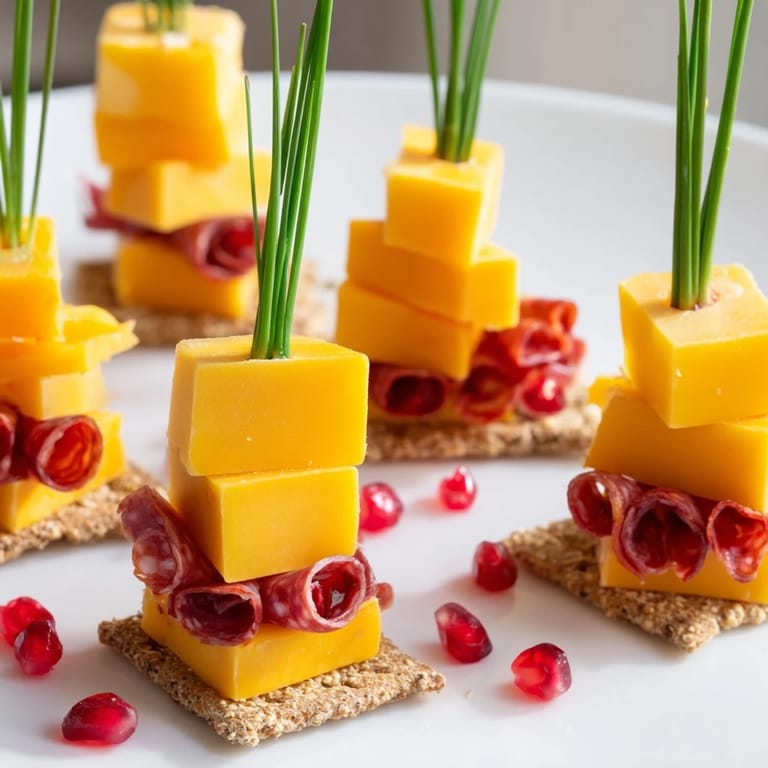
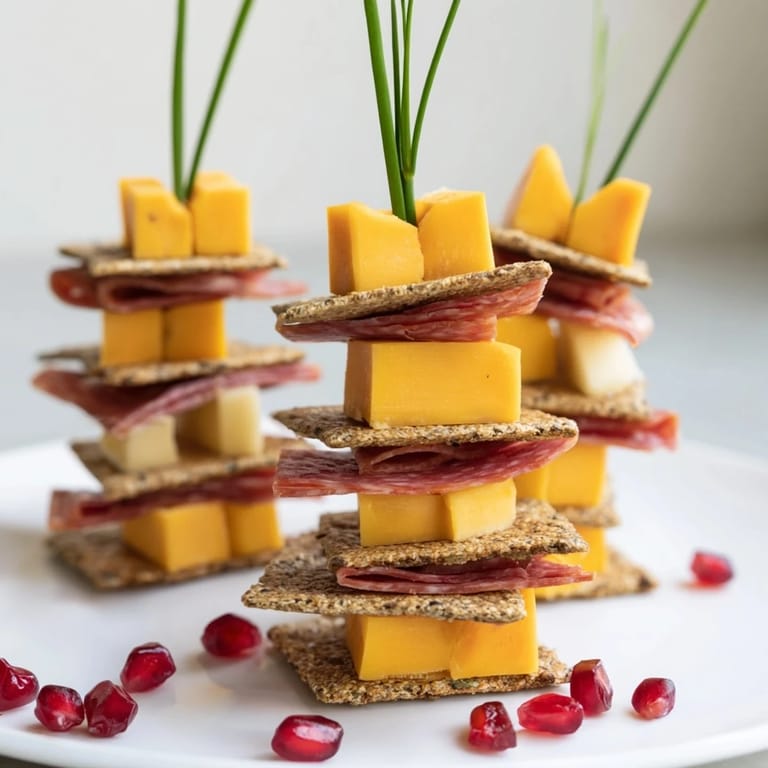
- Arrange your crackers vertically on a large, flat platter, standing them up like actual buildings. Here's the thing nobody tells you: don't space them evenly. Real cities are chaotic and beautiful because the buildings vary. Some of mine lean slightly against each other, others stand alone. This took me three tries to understand, but uneven spacing is what makes it look intentional and alive rather than like a grid.
- Create height variation with cheese:
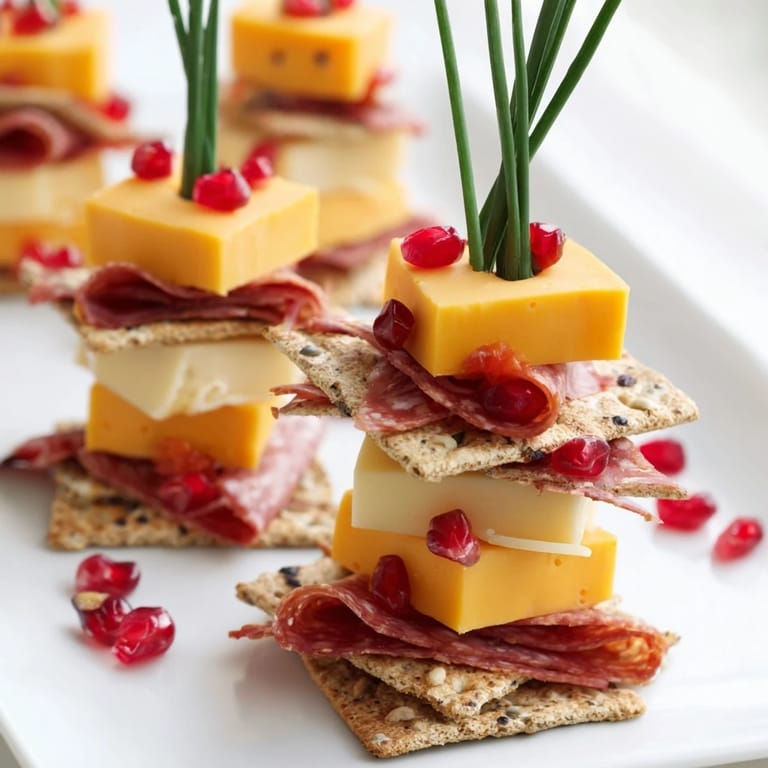
- Start stacking cheese cubes atop the crackers, but here's where you need to think like you're building a real skyline. Some stacks get two cubes high, others get four. Alternate between the golden gouda and sharp yellow cheddar as you go—this creates visual rhythm. Stand back every few stacks and look at your work. You're aiming for a silhouette that suggests skyscrapers at different heights.
- Introduce curves with the meats:
- Now fold your salami and prosciutto into loose, organic shapes. Don't overthink this—fold salami into quarters or loose triangles, and let the prosciutto fall into natural ruffles and rosettes. Tuck these between the cheese stacks and drape them over the tops. This is where the composition goes from geometric to sensual. The meats soften the rigid cracker and cheese lines.
- Add personality with chives:
- Insert the chives upright among your stacks, varying their heights to suggest antennae, radio towers, and architectural spires reaching into the sky. This is the moment when it stops looking like a cheese and cracker board and starts looking like something you imagined. I always step back here and smile.
- Optional: bring in the night sky:
- If you're using pomegranate seeds, scatter them across the composition like city lights. They catch the light differently depending on your serving area's lighting, which adds even more depth and drama.
- Serve and watch the magic:
- Bring this to your guests immediately. The anticipation of people realizing it's not just beautiful but actually theirs to eat is part of the pleasure. Encourage them to pull apart sections at different heights. This isn't finger food that disappears in two bites—it's something people return to, enjoying the experience of deconstructing it.
 Save
Save What I remember most vividly isn't the compliments on how stunning it looked, but the moment my nephew—he was maybe seven at the time—pulled apart his own section and shouted, 'Look, I'm eating New York!' The joy in his voice made me realize that this dish bridges something important: it's grown-up enough for a gallery opening, but it speaks to something playful in everyone who sees it.
Variations and Substitutions
The beauty of this recipe is that it's a framework for whatever you have on hand and whatever your guests eat. I've made vegetarian versions by replacing the cured meats with roasted red pepper strips and marinated artichoke hearts, and honestly, they were just as striking. The architectural principle stays the same: varying heights, color contrast, and movement. I've also swapped in smoked gouda instead of regular gouda for deeper flavor, or added manchego for a slightly nutty Spanish flair. The point is never the specific ingredients—it's the stacking, the intentionality, the conversation piece. If you're avoiding certain cheeses or proteins, substitute freely. The skyline will still stand.
Pairing and Presentation
Think of this as a prelude to a meal, not the meal itself. A crisp white wine like a Sauvignon Blanc or a dry Riesling cuts through the richness of the cheese and meats perfectly, and the acidity clears your palate between bites. Sparkling wine is equally brilliant—the bubbles add levity and celebration. I've also served this with a light Pinot Grigio and chilled mineral water for guests who wanted something non-alcoholic, and it all worked because you're building a visual and textural experience, not just feeding people flavors.
- Serve on a large, neutral-colored platter so the colors of your skyline really pop—white, gray, or dark wood all work beautifully
- Make sure your serving surface is absolutely clean and stable so your buildings don't tip mid-party
- Consider assembling this on your prettiest platter because it's not something you hide in the kitchen until the last moment—this one lives on your table, part of the scenery
Why This Recipe Became a Favorite
Every recipe becomes a favorite for different reasons, and this one earns its place because it solved a problem I didn't know I had: how to make something that tastes like I care deeply while proving that presentation doesn't require culinary school or all-day cooking marathons. It's taught me that sometimes the most impressive dishes are the ones that invite play, that let people touch them, deconstruct them, make them their own. This skyline reminds me that food is about connection, and sometimes the most connected moments come from something as simple as crackers, cheese, and meat, arranged with intention and a little bit of imagination.
 Save
Save This dish has taught me that sometimes the most memorable food moments aren't about mastering complex techniques—they're about seeing something ordinary differently and having the courage to build it anyway. Make this, and you'll understand.