 Save
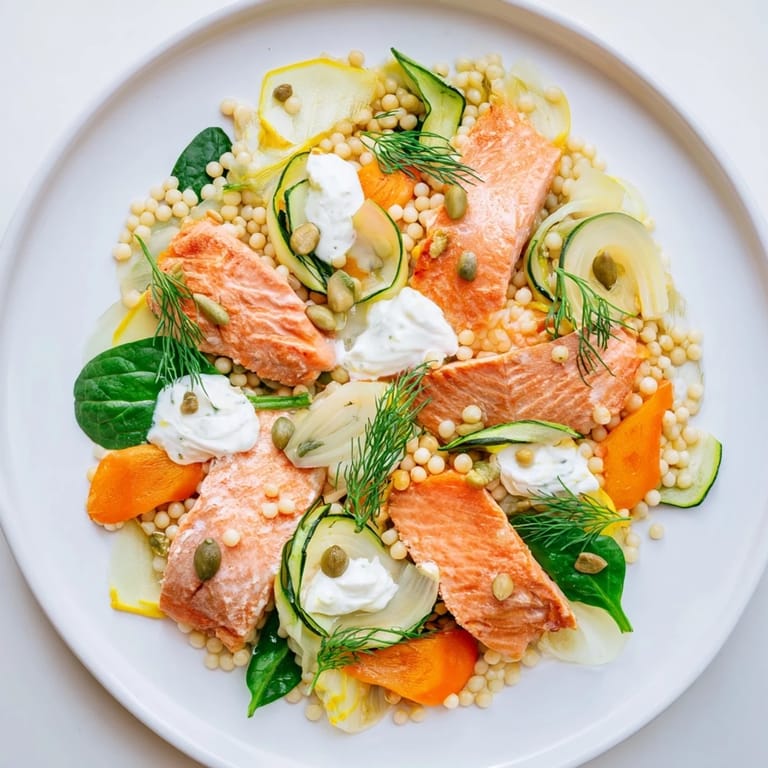
Save I'll never forget the first time I arranged food on a plate just for the joy of it, not because I had to feed hungry people on a schedule. It was a quiet Saturday afternoon when a dear friend mentioned they were tired of eating the same things week after week. That's when I started experimenting with how ingredients could tell a story through their arrangement. The Infinity Loop Flow came to me one evening while sketching on the back of a grocery list, imagining how a continuous figure-eight pattern could guide you through different flavors and textures, making each bite feel like a small discovery. Fresh salmon, tender vegetables, and pearl couscous finally came together in a way that felt both playful and sophisticated.
I remember the first dinner party where I served this dish to a table of skeptical friends who were convinced fancy food meant complicated. The moment their eyes landed on the platter, there was this collective pause, that beautiful silence before anyone picked up their fork. One guest later told me she'd taken a photo because it felt too pretty to eat. That's the magic of this recipe—it transforms an ordinary evening into something memorable.
Ingredients
- Fresh salmon fillets: Look for wild-caught if you can, as the deeper color and richer flavor make the visual presentation even more stunning. Skinless fillets are easier to flake into neat pieces that nestle beautifully into your couscous curves.
- Pearl couscous: This is the foundation of your figure-eight, and its tiny pearls catch light in the most beautiful way. It's heartier than regular couscous and holds its shape perfectly for arranging.
- Zucchini, carrot, and fennel: Slice these thin and uniform for visual continuity. The fennel adds a subtle anise note that surprised me the first time I tried it, completely transforming the flavor profile.
- Baby spinach: Its tender leaves add both color and a whisper of earthiness without overpowering the delicate fish.
- Greek yogurt dressing: This creamy element bridges all the components together. The tanginess cuts through the richness of the salmon beautifully.
- Lemon zest and fresh dill: Never underestimate these two—they're the quiet architects that make everything taste fresher and more alive.
- Capers and toasted pine nuts: These are your textural surprises, adding little bursts of brine and crunch that keep your palate engaged.
- Olive oil: Just enough to coat the salmon and help it cook gently without drying out.
Tired of Takeout? 🥡
Get 10 meals you can make faster than delivery arrives. Seriously.
One email. No spam. Unsubscribe anytime.
Instructions
- Get your oven ready:
- Preheat to 180°C (350°F). This moderate temperature ensures your salmon cooks through gently without the edges becoming dry or flaky in the wrong way.
- Start your couscous:
- Bring vegetable broth to a rolling boil, then add pearl couscous. The moment it hits the hot liquid, you'll hear a subtle sizzle. Cover, reduce heat, and let it simmer for about 10 minutes. You're looking for each pearl to be tender but still holding its shape. When you fluff it with a fork, it should feel light and separate, ready to be sculpted into that beautiful figure-eight.
- Blanch your vegetables:
- Bring a pot of salted water to boil and carefully add your zucchini, carrot, and fennel slices. You only need 1 to 2 minutes—this is a quick kiss of heat, just enough to soften them slightly while preserving their vibrant colors. Immediately transfer them to ice water. This stops the cooking and keeps them crisp and bright. Pat them completely dry before arranging; any excess water will make your final platter look dull.
- Bake your salmon:
- Rub your fillets with olive oil, season generously with salt and pepper, and place them on parchment paper on a baking tray. The oven should be ready now. Bake for 12 to 15 minutes, watching for that moment when the flesh becomes opaque all the way through but still has a slight moisture in the center. Let it cool just enough to handle, then gently break it into large, neat flakes. The size matters here—you want substantial pieces that look intentional on your plate.
- Make your dressing:
- In a small bowl, combine Greek yogurt, lemon zest, and fresh dill. Whisk until smooth and creamy. This is your secret ingredient, the element that ties everything together with a cool, tangy kiss.
- Arrange your infinity loop:
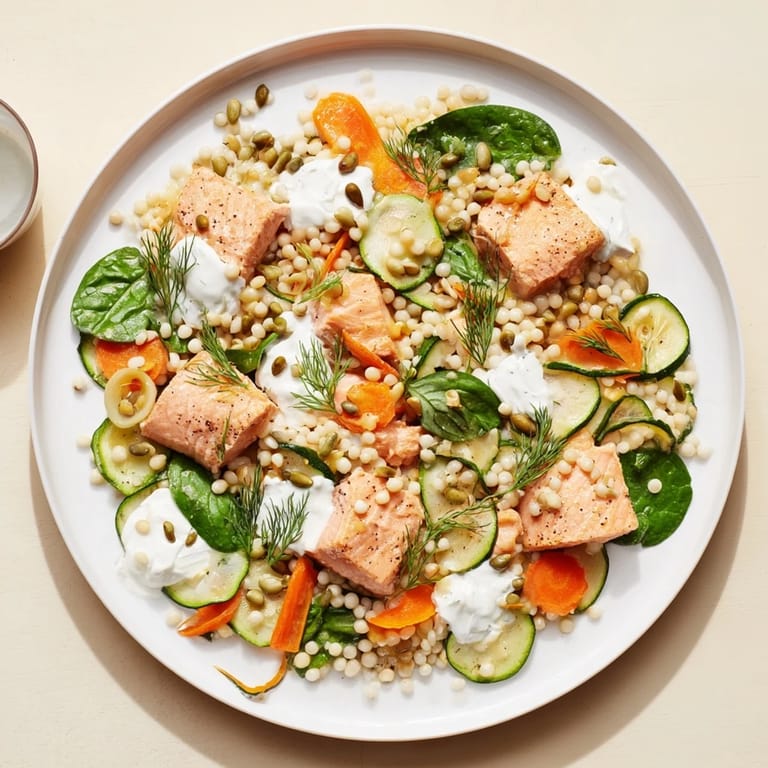
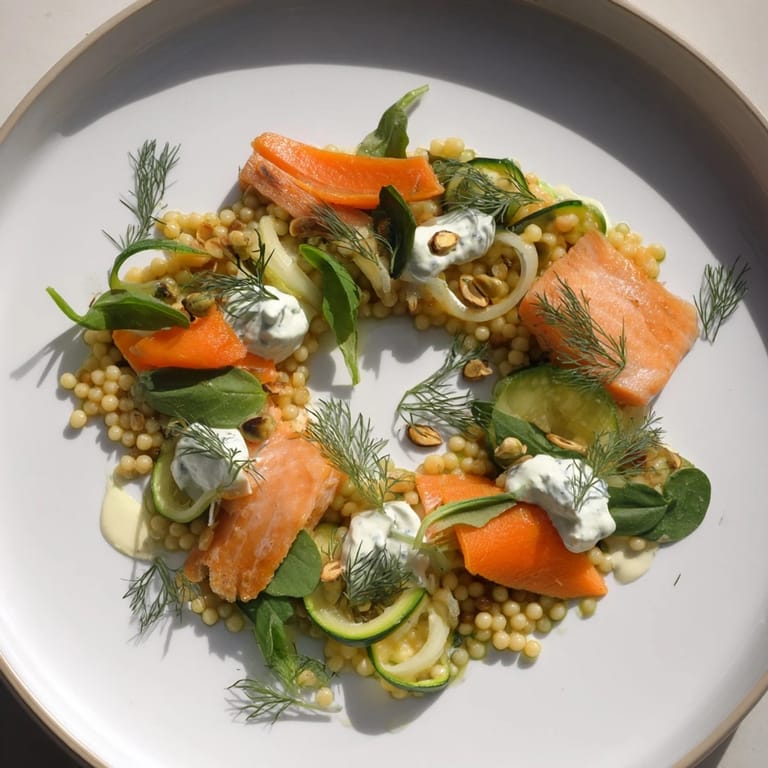
- This is where the magic happens. On a large platter, spoon your couscous in a continuous figure-eight shape, like you're drawing with your spoon. Take your time with this—the shape is part of the story. Now, start placing your blanched vegetable slices along the path of the couscous, alternating colors as you go: the orange of carrot, the pale green of zucchini, the white of fennel. Tuck baby spinach leaves into the curves. Nestle your salmon flakes into the loops, distributing them evenly. Dot the yogurt dressing artfully across the design, then scatter capers and toasted pine nuts as the final flourish. Step back and admire what you've created.
- Serve and celebrate:
- Bring the platter to the table while everything is fresh. Each person should serve themselves in a way that captures the continuous journey of flavors, taking a bit of each component with every bite.
 Save
Save What stayed with me most was watching my grandmother, who always said food should be simple and honest, taste this dish and smile in a way that made me understand she was seeing something beyond ingredients. She told me it reminded her of traveling through Provence, where she watched an old chef arrange vegetables on a plate like he was composing music. That's when I realized this recipe had become something more than just food—it was a conversation between people and a memory keeper.
The Art of Vegetable Slicing
I've learned that how you slice your vegetables changes everything about how a dish tastes and feels. When you cut them thin and uniform, they cook at the same rate, stay tender without becoming mushy, and most importantly, they catch the light differently on your plate. A mandoline became one of my favorite kitchen investments because it gave me confidence that every slice of fennel or zucchini was exactly the right thickness. If you don't have one, a very sharp knife and a patient hand work just as well—just take your time and let the blade do the work rather than forcing it through.
Understanding Your Salmon
Wild-caught salmon has a deeper, more complex flavor than farmed varieties, and the color difference is obvious the moment you look at it. But farmed salmon is perfectly fine too, and often more accessible. The real lesson I learned is that how you handle it matters more than where it comes from. Gentle heat, a light touch when flaking, and not overseasoning lets the salmon speak for itself. Some of my best salmon dishes came from the simplest preparations, just the fish, a little oil, and heat—everything else is just the frame.
Why This Arrangement Works
The infinity loop isn't just a pretty concept—it's actually a clever way to ensure balanced nutrition on every single plate. As your eye follows the figure-eight pattern, you naturally encounter each component in sequence, which means you can't accidentally take a bite of just couscous or just fish. There's a rhythm to eating this dish that makes it feel intentional and composed. I've also discovered that plating on a large, shallow platter rather than individual plates creates a more intimate, sharable moment. People feel invited to take what they need, and somehow the conversation flows better when food is presented this way.
- Always arrange your ingredients while everything is still warm but cool enough to handle comfortably.
- Taste the yogurt dressing before serving and adjust the lemon zest and dill to your preference—some people love more brightness, others prefer subtlety.
- If you're making this for guests with nut allergies, the pine nuts are easy to omit or replace with toasted breadcrumbs for a similar crunch.
 Save
Save Every time I make this dish, I'm reminded that food is at its best when it's made with attention and care. The Infinity Loop Flow is proof that a little thoughtfulness transforms cooking from a chore into an art form.
Recipe Guide
- → What is the best way to cook the salmon for this dish?
Bake the salmon fillets at 180°C (350°F) on a parchment-lined tray for 12–15 minutes until cooked through but still moist, then gently flake them.
- → How do you prepare the pearl couscous?
Simmer the pearl couscous in vegetable broth for about 10 minutes until tender, then fluff with a fork and set aside to keep it light and separate.
- → Why blanch the vegetables before assembling?
Blanching zucchini, carrot, and fennel briefly preserves their vibrant color and tender-crisp texture, enhancing both appearance and mouthfeel.
- → What flavors does the yogurt dressing add?
The Greek yogurt mixed with lemon zest and fresh dill provides a creamy, tangy, and herbaceous balance to the rich salmon and mild vegetables.
- → Can I substitute any ingredients for dietary preferences?
Yes, you can replace salmon with trout or cod. For added color, thin slices of radish or beet can be included without altering the core flavors.
- → What garnishes add texture to this dish?
Toasted pine nuts contribute a crunchy texture and nutty aroma, while capers provide briny bursts that contrast with the creamy and tender elements.