 Save
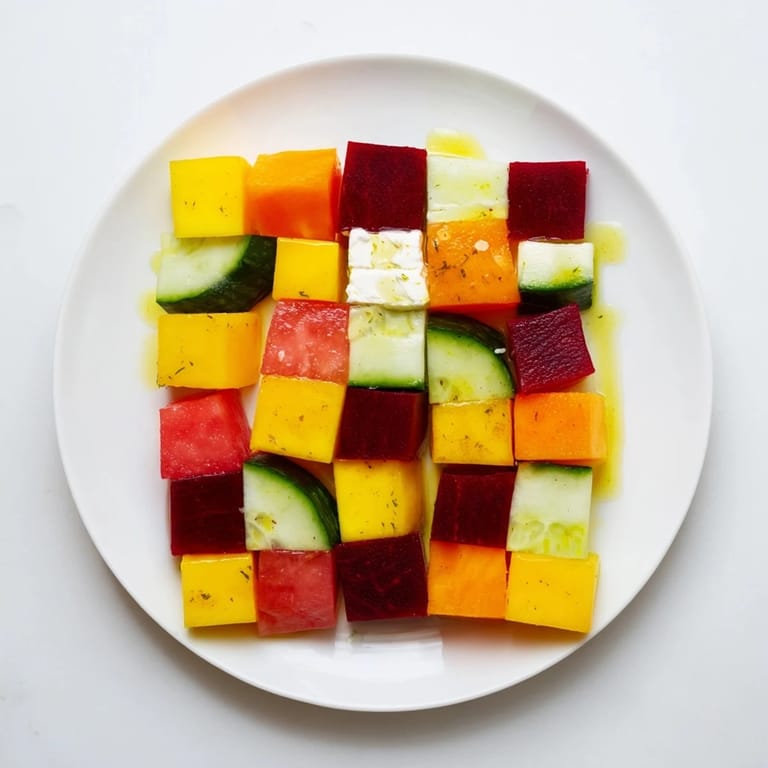
Save I still remember the afternoon I discovered this salad at a tiny gallery cafe in the city. The chef had arranged every ingredient into perfect cubes on a stark white plate, and it was almost too beautiful to eat. Almost. That first bite—the cool crispness of cucumber meeting the creamy richness of avocado, all punctuated by salty feta—felt like tasting art. From that moment, I knew I had to recreate it at home, and I've been perfecting my precision cuts ever since.
The first time I made this for friends, they actually gasped when I set it down. One guest said it looked too good to eat, which made me laugh—until she reached for a cube of mango and feta together and closed her eyes in that special way that means you've done something right. That moment, watching them experience flavors I'd carefully arranged, made me understand why presentation matters just as much as taste.
Ingredients
- Cucumber (1 small): The foundation of freshness—I always peel mine to keep the cubes visually clean and the flavor delicate without bitterness
- Ripe mango (1): This brings sweetness and a silky texture that softens the earthiness of the beets. Pick one that yields slightly to pressure but isn't mushy
- Ripe avocado (1 small): The luxurious element that makes every bite feel indulgent. I like to cut it just before serving to prevent browning
- Red beet (1 small, cooked): Cook ahead of time—roasted beets bleed slightly less than boiled ones and offer a deeper, earthier flavor that anchors the sweetness around it
- Yellow bell pepper (1 small): Bright, slightly peppery crunch that adds a savory contrast to the fruits
- Watermelon (1 small wedge): The surprise element—its delicate sweetness and high water content keep each bite from feeling heavy
- Feta cheese (120 g): The salty, tangy counterpoint that makes all the other flavors sing. I've learned to cut it last so it stays crumbly
- Extra-virgin olive oil (2 tbsp): Use one you'd actually taste on its own—this dressing is minimal, so quality matters
- Lemon juice (1 tbsp): Fresh lemon is non-negotiable here. Bottled juice doesn't have the same brightness
- Sea salt and black pepper: Season to your taste, not mine—I learned this the hard way after making it too salty once
- Honey (1/2 tsp, optional): Just a touch if you want to soften the acidity of the lemon and bring everything into balance
Tired of Takeout? 🥡
Get 10 meals you can make faster than delivery arrives. Seriously.
One email. No spam. Unsubscribe anytime.
Instructions
- Assemble Your mise en place:
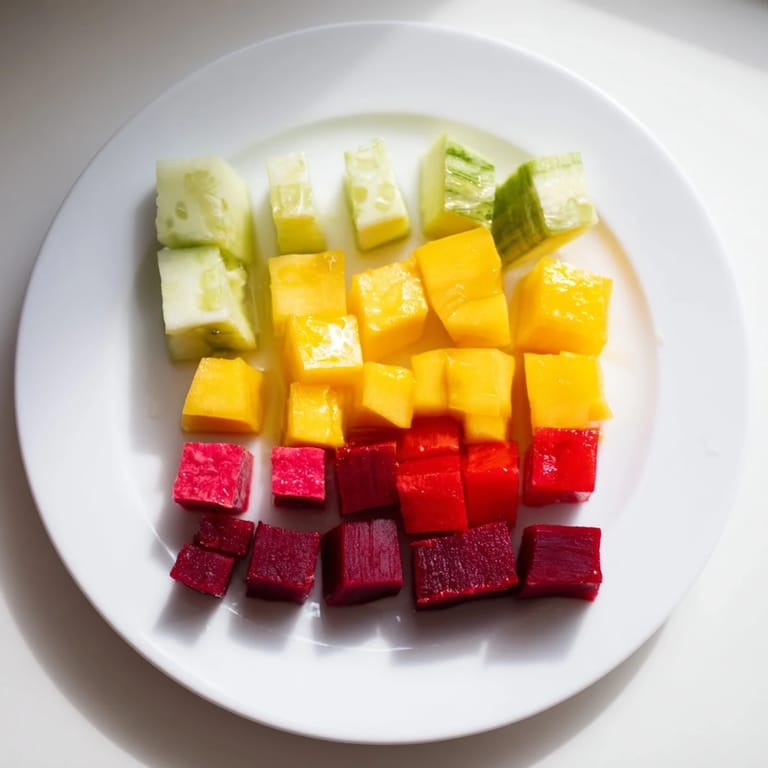
- Gather all your vegetables and fruits. I keep a ruler nearby—not because I'm obsessive, though maybe I am—but because uniform cubes actually make a difference in how the salad feels on your palate. Use your sharpest knife. A dull knife will crush rather than cut, and you'll lose all that beautiful crispness. Cut each element into 1 cm cubes, and don't rush this step. There's something meditative about the rhythm of precise cuts.
- Build the dressing:
- In a small bowl, whisk together the olive oil, lemon juice, salt, pepper, and a touch of honey if you're using it. The goal is to create something bright and balanced—you want to taste the lemon without it overwhelming, feel the salt without it shouting. Taste as you go. This takes thirty seconds but sets the tone for everything else.
- Arrange with intention:
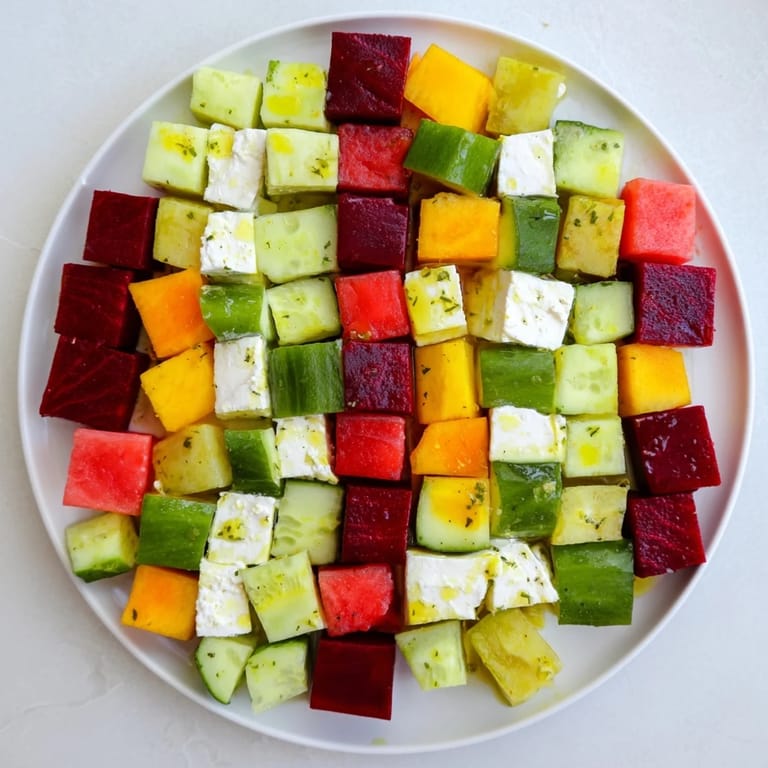
- This is where the magic happens. Find a large, flat platter or cutting board with a neutral background—white or light wood works beautifully. Begin arranging your cubes in a grid pattern, alternating colors and flavors. I usually start with a corner of cucumber, then move to mango, then avocado, then beet, then pepper, then watermelon, then feta, and repeat. Step back as you work. You're not just feeding people; you're creating something worth looking at.
- Dress with restraint:
- Just before serving, drizzle the dressing lightly over the arranged cubes. The temptation is to pour generously, but resist it—you want the vegetables to stay crisp and the geometry to stay intact. A light hand is more elegant.
- Serve immediately:
- This salad is best served within minutes of arranging. The moment you plate it is the moment it's perfect. Any longer and the cubes start to soften, the colors begin to blur slightly, and you lose that snap between your teeth.
 Save
Save There was this moment during a quiet Tuesday evening when I made this salad just for myself. No guests, no occasion, just the kitchen light and the gentle click of my knife against the cutting board. As I arranged the grid and stepped back to look at it, I realized I'd created something beautiful just because it mattered to me. That's when I understood this wasn't really about showing off—it was about respect. Respect for the ingredients, respect for the time, respect for the person eating it, even if that was just me.
The Art of Perfect Cubes
The precision required here might seem fussy, but there's a reason chefs obsess over it. A uniform cube ensures even seasoning, consistent texture in every bite, and—let's be honest—it just looks more intentional. I use a sharp chef's knife and a sturdy cutting board. A ruler isn't essential, but it helps me stay honest, especially when I'm tired or distracted. Over time, your eye trains itself to recognize a 1 cm cube. The first time might take forty minutes; after that, you'll find a rhythm.
Variations and Substitutions
Once you understand the structure of this salad, you can play with it. Trade mango for papaya or pineapple if you want something slightly more floral. In winter, when good stone fruits are scarce, I've used dried apricots (rehydrated briefly) for a concentrated sweetness. For vegan versions, pressed firm tofu cut into cubes and marinated briefly in olive oil and lemon takes the place of feta beautifully. I've also added fresh herbs—tiny cubes of fresh basil or mint scattered across the top add an unexpected brightness. The structure stays the same; the ingredients become a conversation.
Serving and Pairing Suggestions
This salad announces itself as a starter, but it's elegant enough to serve as a light lunch with crusty bread and a simple soup. I've plated it in small portions as a palate cleanser between heavier courses at dinner parties, and I've also served it family-style on a large board at casual gatherings. It pairs naturally with crisp white wines—Sauvignon Blanc is traditional, but Pinot Grigio works too. On warm days, I serve it with sparkling water and a wedge of lime, sometimes with a pinch of fresh mint. The visual beauty of this salad means the plate never needs anything else to shine.
- Serve on a large, neutral-colored platter or wooden board for maximum visual impact
- Make this no more than fifteen minutes before serving to preserve the crispness of the vegetables
- If you're serving a crowd, you can prep all the cubes ahead and keep them in separate containers, then assemble on the platter just before your guests arrive
 Save
Save This salad taught me that food doesn't have to be complicated to be special. Sometimes the most memorable dishes are the ones where you slow down, pay attention, and honor what's in front of you.
Recipe Guide
- → How do I cut the ingredients into uniform cubes?
Use a sharp chef's knife and, if desired, a ruler to ensure each piece is about 1 cm in size, creating consistent cubes for an even presentation.
- → Can I replace feta cheese for a dairy-free alternative?
Yes, firm tofu cut into similar-sized cubes works well as a vegan and dairy-free substitute, retaining similar texture and shape.
- → What dressing complements this salad best?
A simple mix of extra-virgin olive oil, lemon juice, sea salt, pepper, and a touch of honey provides a bright, balanced dressing without overpowering the fresh ingredients.
- → Are there recommended serving suggestions?
Serve immediately after dressing to maintain crispness, and consider garnishing with microgreens or edible flowers for added visual appeal.
- → What flavor swaps can I try with this salad?
Swap mango for papaya or pineapple to introduce different sweet notes, or choose other fresh fruits and vegetables to suit seasonal availability.