 Save
Save I was standing in my friend's apartment, staring at her 1920s Art Deco print above the mantle, when it hit me—why not build a cheese platter that echoes those same geometric lines and grandeur? That evening, I started slicing cheeses at odd angles, layering them like the tiered arches of a vintage skyscraper, and something magical happened. The platter transformed into this edible monument to an era of glamour, and suddenly cheese wasn't just food—it was architecture you could taste. Now whenever I arrange one of these platters, I'm transported back to that spark of inspiration, that moment where art and appetite collided.
The first time I served this at a dinner party, someone said it was too beautiful to eat, which made me laugh until they actually started rearranging pieces on their plate instead of just eating. I watched them spend five minutes photographing it before even tasting anything, and I realized the beauty was half the pleasure—maybe more than half.
Ingredients
- Aged cheddar, 150 g sliced thin: This is your foundational sharp note; the thinner you slice it, the more elegantly it fans and folds.
- Gruyère, 150 g sliced thin: It melts on the tongue and adds a nutty complexity that feels sophisticated without being pretentious.
- Manchego, 150 g sliced thin: The slight sweetness here balances the sharper cheeses and gives you visual variety with its pale golden tone.
- Creamy brie, 120 g cut into wedges: This is your soft anchor, creating contrast against the firm sliced cheeses and grounding each arch visually.
- Blue cheese, 100 g cut into small triangles: Use it sparingly—those sharp, pungent triangles at the arch peaks deliver drama and a bold flavor punch.
- Seedless green grapes, 1 small bunch: They fill gaps with color and provide a juicy, palate-cleansing contrast to the richness of the cheese.
- Red grapes, 1 small bunch: These deepen the visual impact and offer the same refreshing sweetness as their green cousins.
- Pear, 1 small thinly sliced: Slice just before serving to prevent browning, and choose a firm pear so the slices hold their shape in the arrangement.
- Apple, 1 small thinly sliced: A touch of lemon juice on the cut surfaces keeps them bright and prevents that dull, oxidized look.
- Roasted almonds, 40 g: These add crunch and earthy richness; scatter them to catch light and draw the eye.
- Dried apricots, 40 g halved: Their warm orange tone bridges the gap between the cheese yellows and the fruit reds, tying the color story together.
- Honeycomb or quality honey, 40 g: A drizzle or small honeycomb piece near the brie creates a luxury touch and a sweet counterpoint to the savory cheeses.
- Baguette, 1 sliced: Cut on a sharp bias so each slice looks intentional and architectural, never a straight perpendicular cut.
- Assorted crackers, 100 g: Mix textures and flavors—some should be delicate, others sturdy enough to hold a generous cheese portion.
Tired of Takeout? 🥡
Get 10 meals you can make faster than delivery arrives. Seriously.
One email. No spam. Unsubscribe anytime.
Instructions
- Start with your canvas:
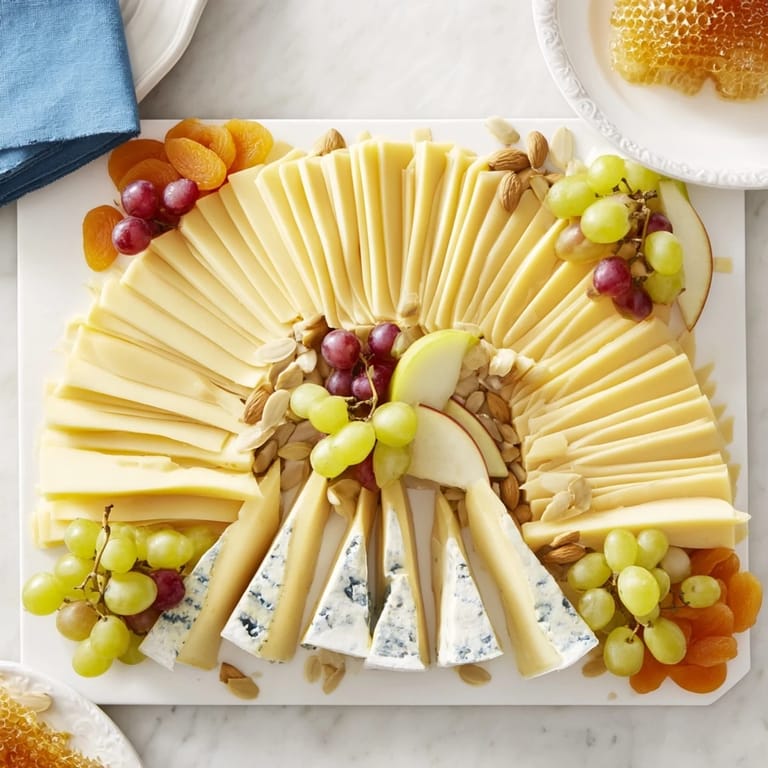
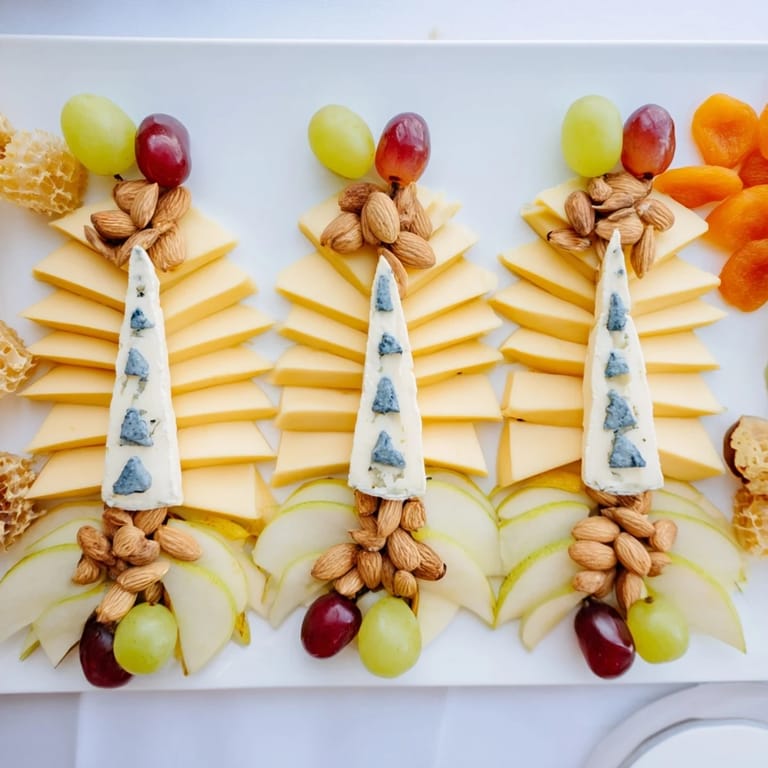
- Place your large board or platter in front of you and take a breath—this is where the magic begins. Position it horizontally so you have room to build three arches radiating outward, like the view from a skyscraper window looking down on the city blocks below.
- Create the first arch with cheddar:
- Begin with your aged cheddar slices, fanning them in a gentle arc from the center outward, overlapping each slice slightly so they catch the light and create that distinctive ridge effect. Work slowly; you'll feel the rhythm as each slice locks into place, and you'll start to see the geometry taking shape before your eyes.
- Layer Gruyère for depth:
- Repeat the fanning motion with your Gruyère slices in a second arc just beyond the cheddar, creating a concentric pattern that pulls the eye inward. The contrast between the two cheese colors and textures will deepen the three-dimensional effect.
- Add Manchego as the finishing ring:
- Complete your three arches with Manchego as the outermost ring, so you've created a graduated tonal shift from sharp orange to pale gold. Step back for a moment and let yourself enjoy what you've built so far.
- Anchor with brie wedges:
- Tuck creamy brie wedges at the base center of each arch, positioning them like the solid foundation stones of an Art Deco building. The soft, yielding texture contrasts beautifully with the firm sliced cheeses.
- Crown with blue cheese:
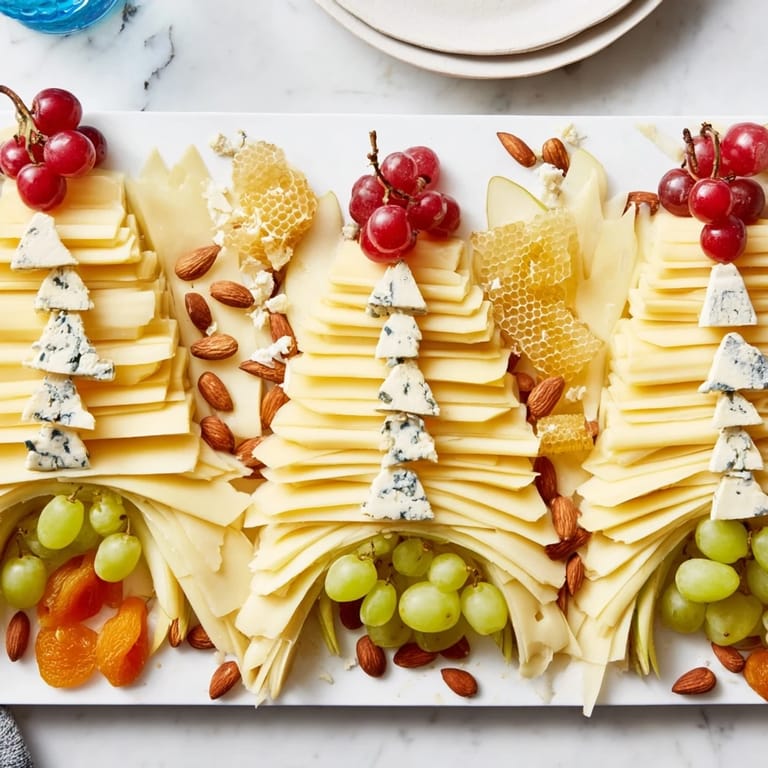
- Place your blue cheese triangles at the peak of each arch, right at the top-center point, mimicking those sharp geometric tips of 1920s skyscrapers. These bold, pungent triangles become the visual and flavor punctuation marks of your composition.
- Fill the negative space:
- Now comes the intuitive part—scatter bunches of grapes into the curved spaces between your arches, letting them nestle naturally into the gaps. Arrange your pear and apple slices in delicate fans or casual clusters, filling void spaces while respecting the symmetry you've established.
- Add scattered luxuries:
- Distribute roasted almonds and dried apricots artistically around the platter, treating them like precious accent details in an Art Deco jewelry design. Each placement should feel intentional, not haphazard.
- Drizzle the honey moment:
- Near the brie wedges, add your honeycomb pieces or a small drizzle of honey—this is your shine, your glamorous touch that catches the light and says elegance. It also serves a practical purpose, giving guests a sweet escape route from the saltiness of the cheese.
- Frame with bread and crackers:
- Arrange baguette slices and assorted crackers along the outer edges and in any remaining gaps, positioning them so they're easy to grab without disturbing the artistic arrangement. Lean some, lay others flat—vary the angles for visual interest.
- Serve with intention:
- Present immediately for maximum impact, or cover loosely with plastic wrap and chill for up to one hour before guests arrive. The cheese will firm up slightly when chilled, making the slices even more architectural and pristine.
 Save
Save I remember my cousin leaning over the platter with her date, both of them so absorbed in examining the geometry that they forgot to actually eat for the first fifteen minutes. That's when I knew this wasn't just about satisfying hunger—it was about giving people permission to pause and appreciate something beautiful, something handmade, something that took a little thought and intention. That moment taught me that the best dishes are the ones that make people slow down.
The Art of Arrangement
Building this platter is less about following strict rules and more about understanding the principles beneath them. The arches work because they guide the eye, because they echo something we already recognize as beautiful and grand. Once you understand that principle, you can adapt it to your own aesthetic—make the arches tighter or more expansive, choose different cheeses, rearrange the fruit to suit your mood. I've made this platter a dozen times, and no two are exactly alike, because each one reflects what I had on hand and how I was feeling that particular day.
Pairing and Presentation
This platter is dressed to impress, so give it the beverage company it deserves. A crisp Champagne cuts through the richness of the cheese and adds to that Art Deco glamour, while a dry Riesling brings out subtle sweetness in the Manchego and complements the fruit. I've also served this alongside sparkling water with fresh lemon for non-drinkers, and somehow the simplicity of that pairing felt just as elegant. The key is treating the platter as the star of the show—don't overwhelm it with too many competing flavors or colors elsewhere on the table.
Variations and Swaps
Once you've made this platter once, you'll start seeing infinite possibilities in your cheese counter. Comté brings earthiness and complexity, Emmental offers a gentler nutty note, and aged Gouda gives you that caramel-like sweetness. Some seasons I swap dried apricots for dried figs, or I introduce marcona almonds for a buttery richness. The architecture stays the same, but the flavors shift with my mood and the market's offerings, making this recipe feel like a living, breathing thing rather than something frozen in time.
- For a vegan version, use high-quality plant-based cheeses and skip the honey, or replace it with agave syrup or maple syrup.
- If your platter feels too crowded, embrace the negative space—sometimes less is more architectural, and a slightly sparse arrangement can feel even more striking.
- Cold cheese slices are easier to work with, so keep everything refrigerated until the moment you begin arranging.
 Save
Save This platter is really just an invitation—an invitation to slow down, to notice beauty in something as simple as arranged cheese, and to share that moment with people who matter. Make it, serve it, and watch your guests pause before eating, and you'll understand why this little gesture of artistry is so much more than just an appetizer.
Recipe Guide
- → How should the cheese slices be arranged?
Arrange thin slices of cheddar, Gruyère, and Manchego in overlapping fan shapes forming symmetrical arches. Place brie wedges at the base and blue cheese triangles at the top center for a tiered effect.
- → What accompaniments pair well with the cheese?
Seedless green and red grapes, thinly sliced pears and apples, roasted almonds, dried apricots, and honeycomb enhance flavors and add visual contrast.
- → Can I substitute the cheeses used?
Yes, cheeses like Comté, Emmental, or aged Gouda work well. For vegan options, plant-based cheeses can replace dairy varieties.
- → What tools help prepare this platter?
A cheese slicer and knife ensure clean, even slices for neat fan shapes. Serving tongs or toothpicks assist with serving.
- → How to store the platter before serving?
Cover and chill the assembled platter for up to one hour to maintain freshness, then serve promptly for best texture and flavor.