 Save
Save I'll never forget the afternoon my friend Sarah arrived at my apartment with that stunning slate board tucked under her arm. She'd just come from a market in the city and was buzzing with this wild idea about arranging a charcuterie board like an arrow, with everything pointing toward a central dip. We spent the next hour playing with angles and directions, turning what could have been a simple spread into something that made our guests actually pause and say "wow" before diving in. That's when I realized that presentation isn't just about making food look pretty—it's about creating a moment, a conversation starter, a memory on a board.
My favorite memory with this board happened during a small dinner party when my neighbor Tom walked in, stopped completely, and just studied it for a solid minute. "It's like it's telling me where to go," he said, then laughed. That's when I knew this wasn't just about feeding people—it was about creating something they'd actually remember and talk about the next day.
Ingredients
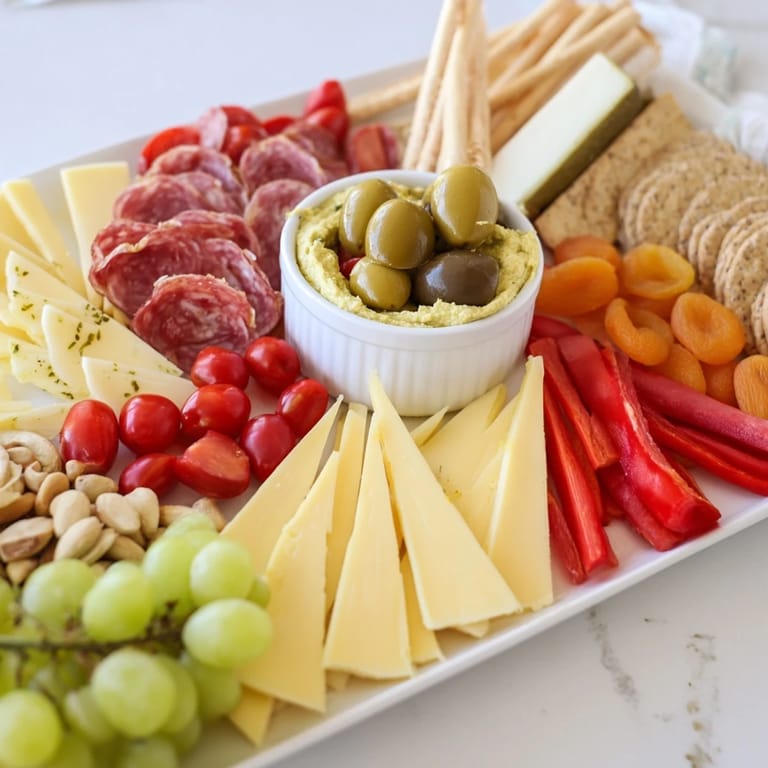
- Aged Cheddar (100g, cut into triangles): The sharpness cuts through rich dips beautifully, and triangles are naturally directional—they want to point somewhere.
- Brie (100g, sliced into wedges): Creamy and elegant, wedges follow the arrow pattern naturally, plus they soften slightly at room temperature, becoming even more luxurious.
- Gouda (100g, cut into strips): Its subtle sweetness balances the salty elements, and strips are inherently linear—perfect for our directional theme.
- Prosciutto (100g, folded): Those delicate folds become little arrows themselves; let them drape gracefully along your lines.
- Salami (100g, sliced and folded): Fold them loosely so they maintain dimension on the board—flat salami gets lost in the design.
- Seedless Grapes (1 cup, small clusters): Keep them in tiny bunches rather than individual grapes; they're easier to position and read as directional clusters.
- Cherry Tomatoes (1 cup, halved): Halving them creates visual texture and they're sturdy enough to stay exactly where you place them.
- Cucumber (1 small, sliced diagonally): Those diagonal cuts are already arrows pointing across your board—use them intentionally.
- Red Bell Pepper (1 small, sliced into strips): Strips naturally flow in one direction; the bright color adds visual punch to every angle.
- Artisan Crackers (1 cup): Mix shapes and colors if you can—some round, some square—it keeps the eye moving along the directional lines.
- Baguette (1 small, sliced on the bias): That bias cut is essential; you're creating arrow shapes with every slice.
- Marcona Almonds (½ cup): They're expensive enough to feel special but neutral enough to work with every color and texture on the board.
- Dried Apricots (¼ cup): Their golden-orange color becomes visual directional markers between larger components.
- Olives (¼ cup): Position them in small lines to reinforce the arrow effect; they're little dark punctuation marks guiding the eye.
- Herbed Hummus or Whipped Feta (100ml): This is your focal point, your arrow's target. Use the freshest, most flavorful dip you can find—it's doing the heavy lifting of the entire design.
Tired of Takeout? 🥡
Get 10 meals you can make faster than delivery arrives. Seriously.
One email. No spam. Unsubscribe anytime.
Instructions
- Establish Your Arrow's Point:
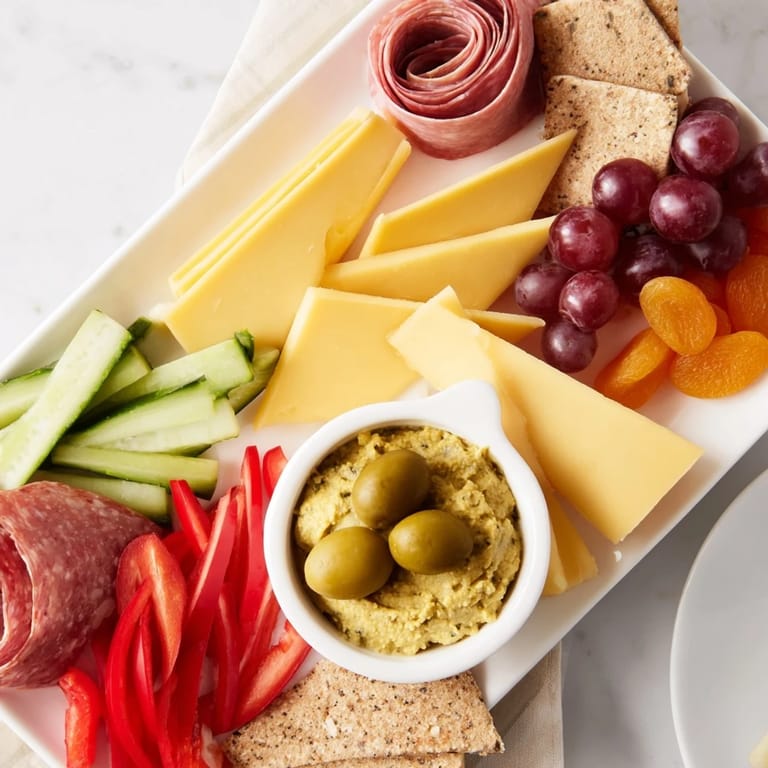
- Place your dip bowl at one corner or end of the board—this is where every element will direct toward. Stand back and mentally draw an invisible line from the opposite side to this bowl. You're essentially creating a visual journey on your board.
- Create the First Wave with Cheese:
- Start with your cheese triangles and wedges, angling each piece so the point faces the dip bowl. Work outward from the bowl in expanding fans. This is where the magic starts—you're teaching your board to flow in one direction.
- Layer in the Meats:
- Position your folded prosciutto and salami in loose lines that all point toward that central dip. Let them overlap slightly for drama and dimension. Think of these as the muscle of your arrow, holding the shape.
- Weave in Vegetables and Fruit:
- Place sliced cucumber, bell pepper strips, and tomato halves in diagonal lines. The grape clusters should sit in small groups along these lines. You're creating movement now—stand back and you should feel the board pulling your eye toward the dip.
- Position Crackers and Bread:
- Arrange crackers and bias-cut baguette slices in radiating patterns, each piece angled toward the dip. This is your board's backbone—if you get this right, everything else will follow naturally.
- Fill the Gaps with Purpose:
- Scatter marcona almonds, dried apricots, and olives along the lines between larger components. These aren't random—they reinforce the directional pattern and add texture. Every element should feel like it's leading somewhere.
- Balance and Adjust:
- Step back and study your work. Does the eye naturally flow to the dip? Are there any dead spaces that interrupt the arrow? Adjust as needed, always keeping that directional intention. The board should whisper to your guests: "eat this way."
 Save
Save There's something deeply satisfying about watching a board you've designed do its job. At a dinner party last spring, I watched people literally follow the lines to the dip without thinking about it—like the board was communicating silently with their hands. That's when I understood: good design isn't about being fancy, it's about being intuitive. This arrow board is intuitive.
The Secret of Visual Flow
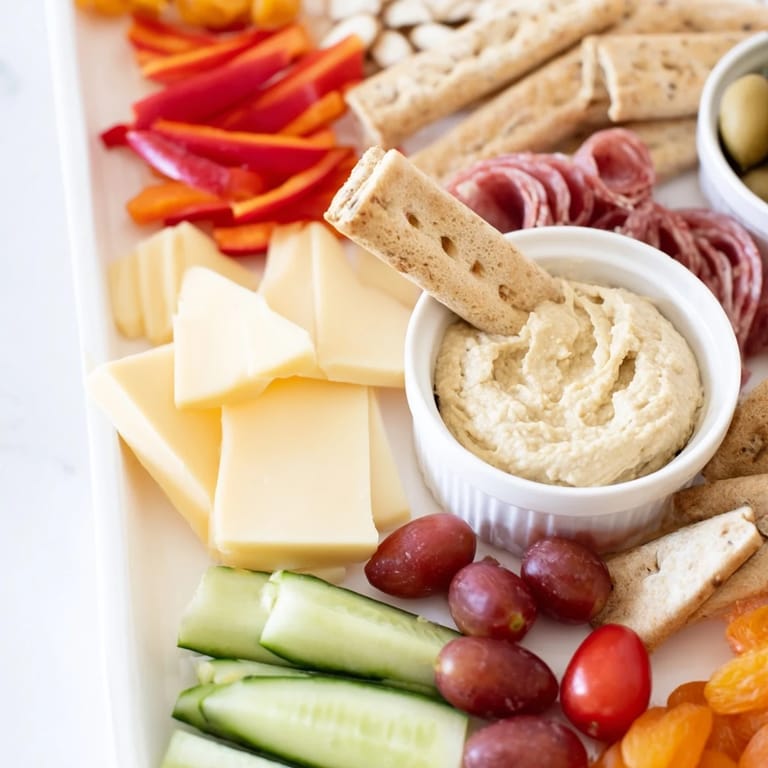
What makes this board different from a traditional arrangement is that it doesn't try to be symmetrical or balanced in the classical sense. Instead, it embraces a single direction, a single purpose. I learned this from watching people interact with boards I'd made—they moved toward the dip naturally, guided by the angles of the components. When you cut cheese into triangles and point them at something, you're not just arranging food; you're choreographing how people engage with it. The board becomes a silent host, welcoming guests along a specific path. This is why the bias-cut baguette matters so much, why the wedges need to fan outward, why nothing should cut against the grain of the arrow. Once you understand this principle, you can adapt it to any board you make.
Color and Contrast Strategy
I used to make boards that looked a bit muddy, where everything blended together in shades of brown and cream. Then a chef friend mentioned that the eye needs contrast to follow movement. Now I arrange components thinking about how they'll look against each other along those directional lines. The deep pink of prosciutto stands out against pale cheese. Golden apricots pop against dark olives. Red bell pepper catches light in a way that guides the eye forward. The board becomes easier to read, more exciting to look at, and somehow more delicious because your brain is already engaged before you taste anything.
Pairing and Serving Notes
This board is forgiving in the best way. Serve it with a crisp Sauvignon Blanc if your crowd leans white, or a light Pinot Noir if they prefer red—the board works with both. I've also had success with sparkling wine, which cuts through the richness beautifully. Vegetarian guests? Remove the meats and add an extra cheese variety or more vegetables. Want to elevate the dips? Beyond herbed hummus, try whipped ricotta mixed with fresh herbs, or a vibrant beet hummus that echoes the board's color story. The point is that this is your template, not your prison—adapt it to your crowd, your pantry, your mood.
- Make sure all your ingredients are at room temperature for about 15 minutes before serving—cold cheese loses its flavor, and this board deserves to taste as good as it looks
- Use a large board, at least 14 by 10 inches, so you have room to really develop the arrow's shape without crowding
- If you're transporting the board, keep a container of extra dip handy; people will go through what's in the bowl quickly, and you'll want to refill without disrupting the design
 Save
Save Every time I make this board, I'm reminded that food is never just about nourishment—it's about intention, care, and the small moments of delight we create for people we like. This arrow board does that beautifully.
Recipe Guide
- → How do I create the directional effect on the board?
Place the dip bowl as the focal point and arrange all components so their shapes and lines point toward it, enhancing visual flow.
- → What cheeses work best for this arrangement?
Aged cheddar cut into triangles, brie wedges, and gouda strips create excellent shapes that emphasize directionality.
- → Can I make this suitable for vegetarians?
Omit the meats and add more cheese varieties or fresh produce to maintain balance and maintain the angled visual style.
- → What dips complement this board?
Herbed hummus, whipped feta, beet hummus, tzatziki, or whipped ricotta all pair well and enhance the flavor profile.
- → How should I select crackers and bread?
Use artisan crackers and baguette slices cut on the bias to create lines that emphasize the board's directional theme.